



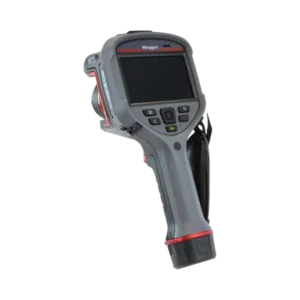
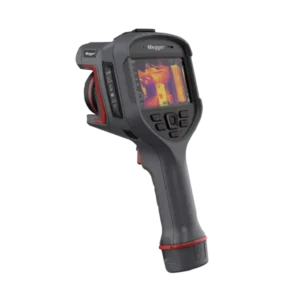
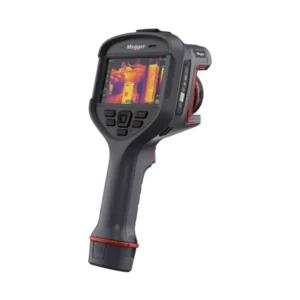
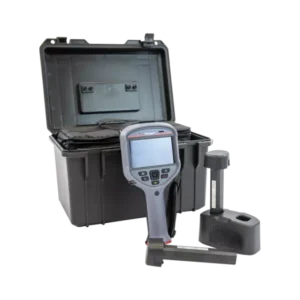
Megger TC640 Thermal Camera — 640×480 IR | Australia
$15,240.00 .( $16,764.00 inc. GST )
100 in stock
For all your equipment calibration needs, visit our MyCalibration website.
 Free Delivery on orders over $1000
Shipping time may vary for certain products*

Product Enquiry
If you would like more information regarding this product, simply email us here.

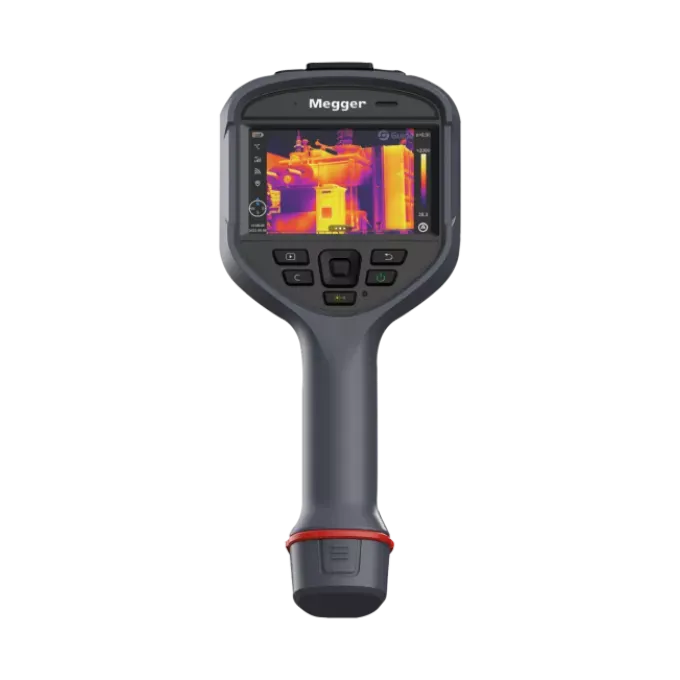
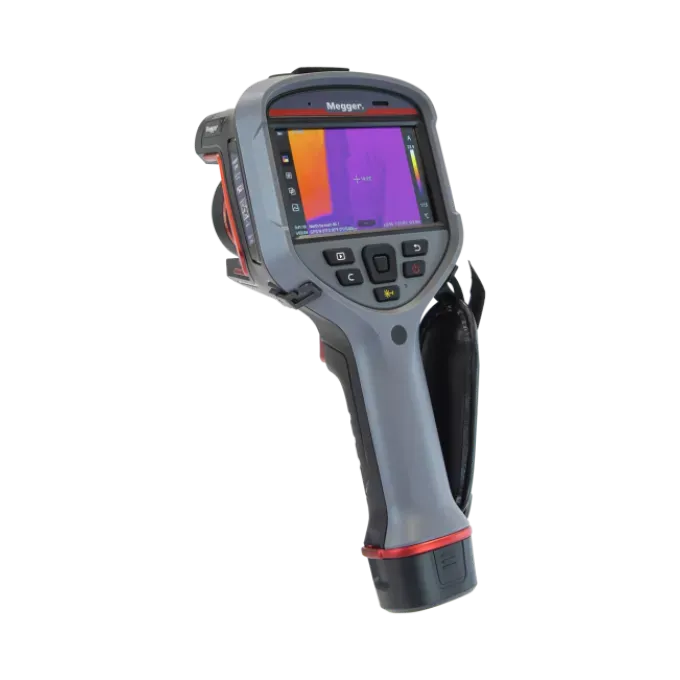
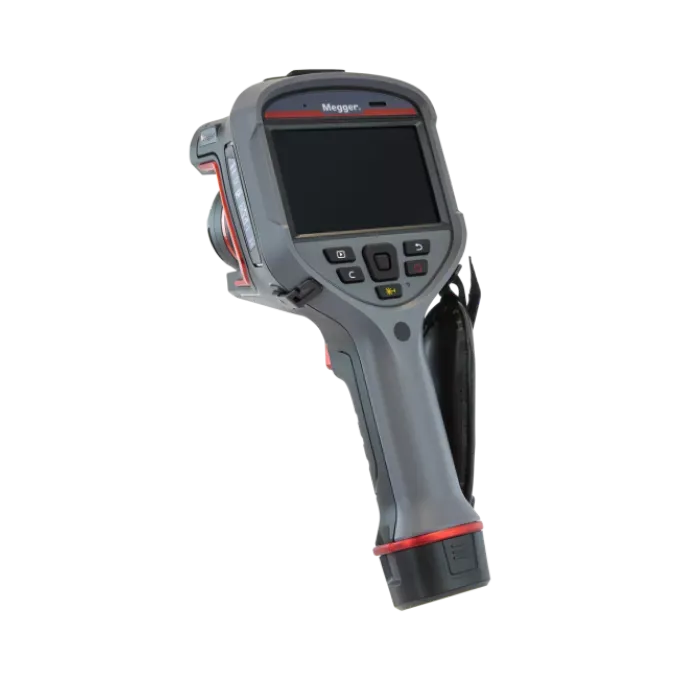
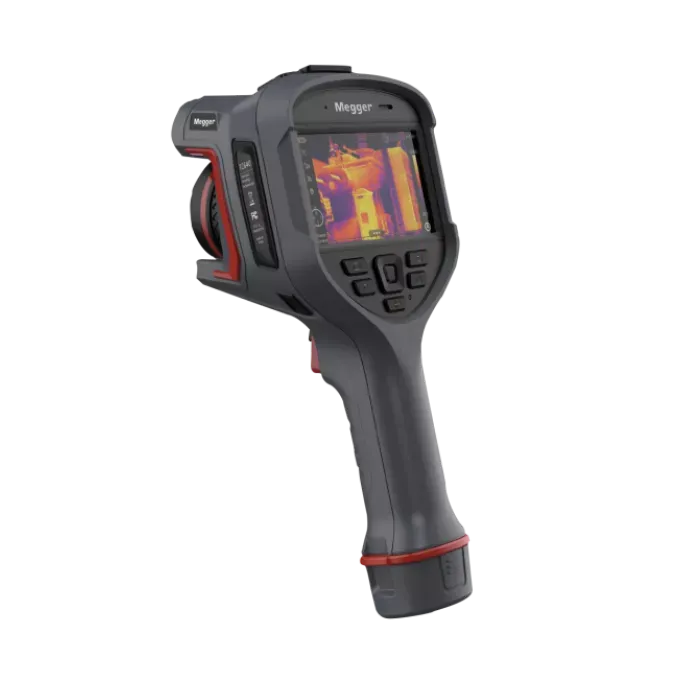
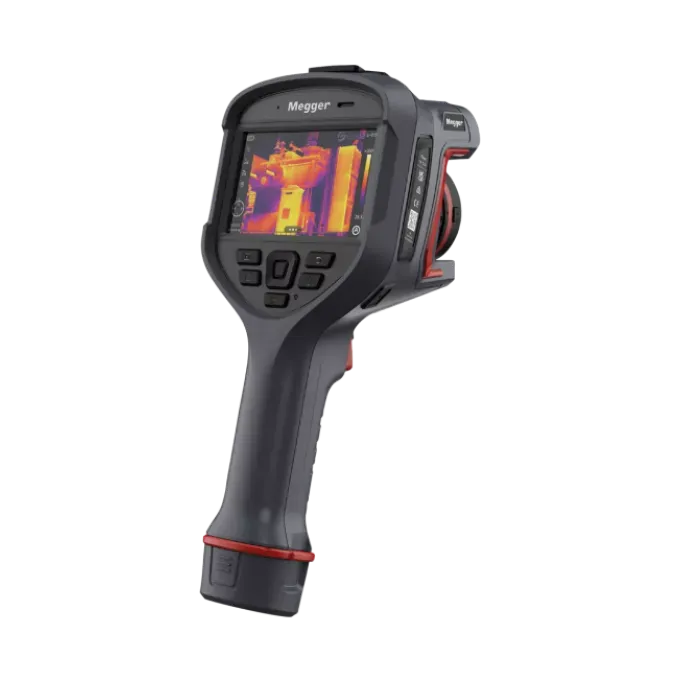
When faults hide inside live switchboards, motor control centres, and rooftop solar arrays, guesswork isn’t good enough. The Megger TC640 delivers 640×480 pixel infrared resolution — the highest in the Megger thermal imaging range — combined with super-resolution processing up to 1280×960 pixels, four imaging modes, and a 30 Hz frame rate that keeps up with moving targets. Built on Android with Wi-Fi, Bluetooth, USB-C, and on-device PDF reporting, it’s the complete thermal inspection tool for Australian electrical professionals.

The Problem: Electrical Faults You Can’t See Are the Ones That Hurt You Most
An overloaded cable connection running hot inside a distribution board. A failing motor bearing beginning to generate excess friction heat. A solar string with a shading mismatch that’s slowly costing yield. None of these faults announce themselves — until something trips, fails, or catches fire.
For Australian electrical contractors, industrial maintenance teams, and thermographers working to AS/NZS 3000 and IEC 62446-1 compliance requirements, the challenge is consistent: finding temperature anomalies before they escalate into unplanned outages or safety incidents. Entry-level thermal cameras with coarse resolution can confirm a hot spot exists, but they often can’t resolve the precise source — leaving technicians with inconclusive data and clients with unanswered questions.
When the job demands photographic-quality thermal evidence and report-grade documentation, you need a camera at a different tier entirely.
The TC640: Megger’s Flagship Thermal Imager
The Megger TC640 sits at the top of Megger’s thermal imaging range — above the entry-level TC120 and mid-range TC256 — and it shows in every aspect of its performance. This is a professional-grade, handheld infrared camera engineered for the inspection scenarios where resolution and analytical depth genuinely matter: high-voltage electrical systems, large-scale mechanical plant, critical infrastructure surveys, and building diagnostics.
At its core is a 640×480 pixel uncooled infrared detector — that’s 307,200 individual measurement points across every frame. Where a 120×90 camera captures roughly 10,800 points, the TC640 captures nearly 30 times more. The practical difference in the field is striking: subtle thermal gradients across busbar connections, early-stage insulation breakdown, and phase imbalances across three-phase 415V systems that would appear as noise on a lower-resolution unit become clearly distinguishable, documentable findings on the TC640.
Super-resolution processing extends this further, upsampling the native 640×480 image to 1280×960 pixels when you need the finest possible thermal detail for close-range component analysis.
Four Imaging Modes for Complete Fault Context
Thermal data alone rarely tells the complete story. The TC640 supports four imaging modes that let technicians layer context onto every inspection:
Infrared (IR) Mode — the primary thermal view, showing heat distribution across the target with full 640×480 resolution. Ideal for systematic sweeps of switchboards, motor windings, cable runs, and rooftop PV arrays.
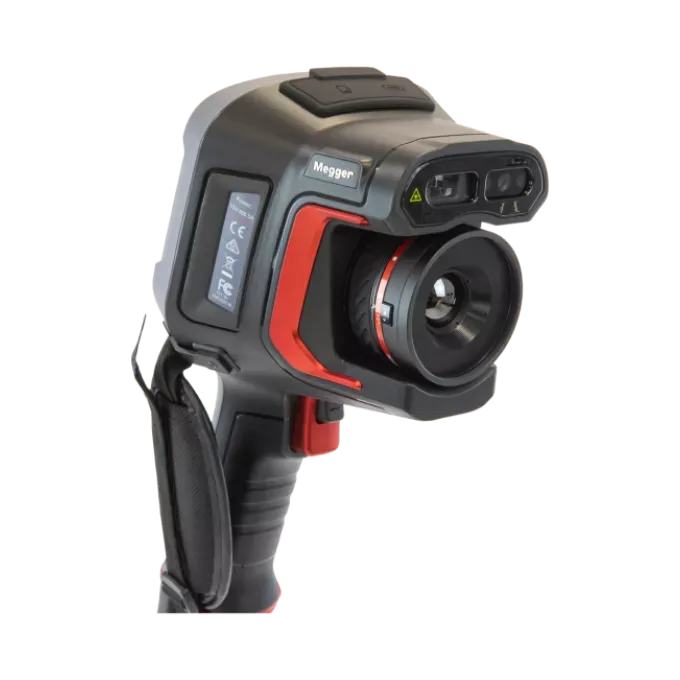
Visible Light (VL) Mode — the integrated 13 MP digital camera captures a standard photographic image of the same scene, providing precise spatial context for thermal findings. The dual LED spotlight illuminators ensure clear visible imaging even in poorly lit substation environments or confined plant rooms.
Picture-in-Picture (PIP) Mode — overlays a thermal image window onto the visible-light background image, so you can simultaneously see where a fault is located and how hot it is. Particularly effective for switchboard documentation where you need to identify individual components within a populated panel.
Multimodal Image Fusion (MIF) Mode — blends the infrared and visible images into a single composite frame. This is the mode that transforms a thermal finding into a client-ready deliverable: rather than submitting separate IR and VL images, one fused image communicates the complete picture without ambiguity.
Focus That Adapts to the Job
Fixed-focus thermal cameras work well in predictable, controlled scenarios. In the real world — inspecting equipment at varying distances, scanning building facades from the ground, reaching into tight electrical cabinets — focus precision matters.
The TC640 offers four focus modes to cover every scenario:
- Manual focus — full user control for precision work at defined distances, such as close-up inspection of terminal connections or motor windings.
- Semi-auto focus — a single trigger press locks sharp focus before you capture, preventing blurred images during sequential inspection runs.
- Touch focus — tap the touchscreen on the target of interest; the camera focuses precisely on that point. Intuitive and fast for multi-target inspections.
- Continuous autofocus — the TC640 maintains sharp focus as you move through a space, making it the right mode for walkthrough surveys of long cable trays, motor halls, or building perimeters. At 30 Hz infrared frame rate, the image updates fluidly even when panning across a moving conveyor or rotating equipment.
The integrated laser range finder supports accurate distance measurement, which feeds into emissivity-compensated temperature calculations — essential for reporting precise temperature values rather than relative heat maps.
Built for the Field: IP54, 2-Metre Drop Resistance
The TC640 isn’t designed for a temperature-controlled calibration lab. It’s designed for Australian industrial sites, outdoor switchyards, rooftop PV installations, and underground plant rooms.
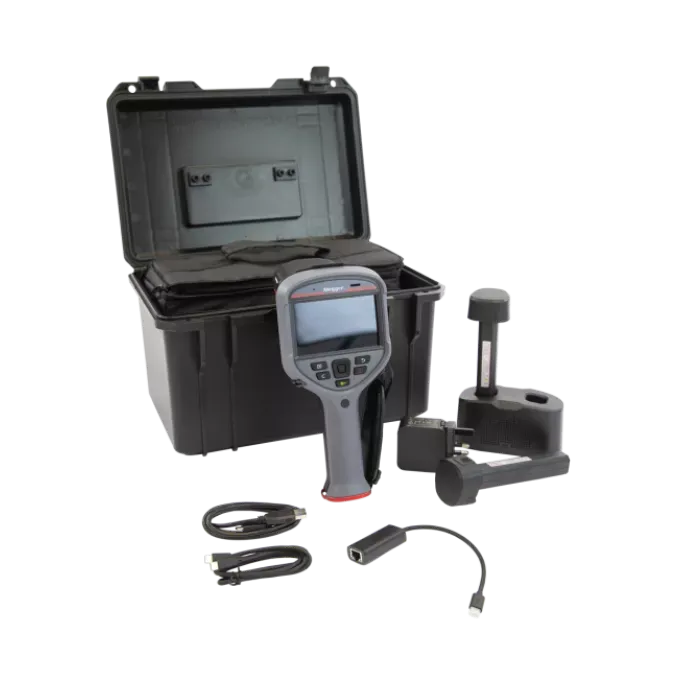
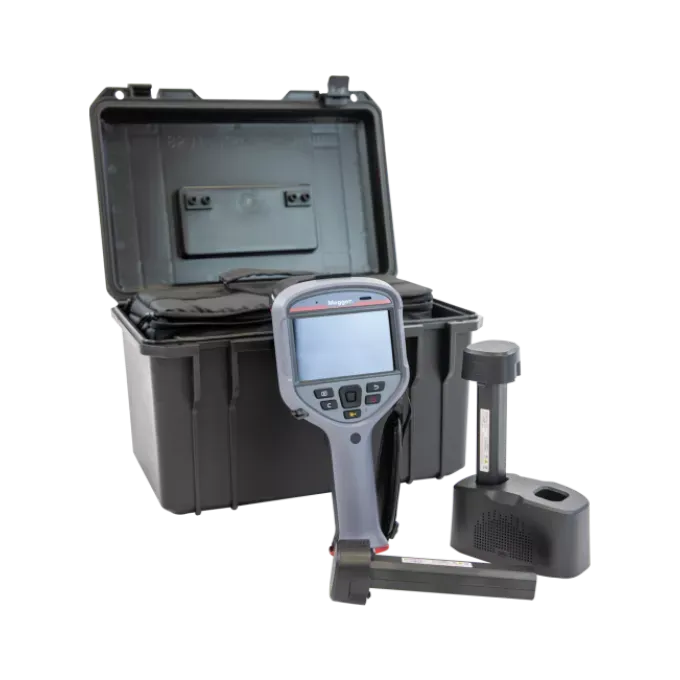
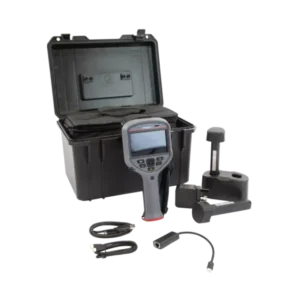
The body carries an IP54 rating (dust and splash resistance) and is tested to withstand 2-metre drops — covering the kind of accidental knocks that happen on real job sites. The compact, ergonomic form factor fits comfortably in one hand for extended inspection sessions, and the package includes a hard transport case and a soft carry case with shoulder strap for between-site transport.
Complete Connectivity: Wi-Fi, Bluetooth, and USB-C
Data that stays on the camera is data that can’t be actioned. The TC640 provides three transfer pathways:
- USB-C — direct transfer to a laptop or desktop, plus a power input for charging on-site.
- Wi-Fi — wireless data transfer, cloud service integration, and OTA (over-the-air) firmware updates to keep the unit current without requiring a service centre visit.
- Bluetooth — short-range connectivity for mobile device integration.
- SD card slot — local expandable storage for high-volume inspection sessions.
The Android-based operating system underpins all of this, providing a familiar touchscreen interface and access to cloud storage solutions for team-based inspection workflows.
On-Device Reporting: From Capture to PDF Without Leaving the Site
One of the most significant time costs in thermographic inspection work is post-processing: pulling images off the camera, loading them into reporting software, and assembling findings into a client-ready document.
The TC640 addresses this directly. The onboard software allows technicians to edit images, annotate findings, and generate PDF inspection reports directly on the device — before they even leave the site. For electrical contractors who charge by the job rather than the hour, compressing the reporting workflow into the inspection visit is a genuine commercial advantage.
Annual Calibration: Maintaining Measurement Confidence
Temperature accuracy is the currency of thermographic inspection. For compliance-focused applications — AS/NZS 3000 electrical installation verification, IEC 62446-1 solar PV commissioning audits, or AS/ISO 55000 asset management programs — the measurement values in your reports need to be defensible.
Megger recommends annual calibration of the TC640 to ensure measurement accuracy remains within specification throughout the instrument’s working life. We offer NATA-traceable calibration services for Megger thermal cameras, providing the calibration certificates your clients and compliance auditors expect.
Who Uses the TC640?
Electrical Contractors and Thermographers Performing scheduled thermal inspections of switchboards, distribution boards, busbars, cable terminations, and isolators to AS/NZS 3000 and AS/NZS 3760 maintenance requirements. The TC640’s resolution and on-device reporting make it the right tool for contractors who produce formal inspection reports as a core deliverable.
Industrial Maintenance Teams Monitoring motors, pumps, gearboxes, bearings, conveyor drives, and compressed air systems for early thermal anomalies. The 30 Hz frame rate and continuous autofocus enable effective inspection of rotating plant without stopping production lines.
Solar PV Installers and O&M Teams Conducting IEC 62446-1 commissioning thermography and ongoing O&M inspections of rooftop and ground-mount PV arrays. The TC640’s resolution is sufficient to identify cell-level hotspots, bypass diode failures, and string mismatch conditions across large commercial arrays in a single inspection pass.
Facility Managers and Building Diagnostics Professionals Detecting moisture ingress, insulation deficiencies, and thermal bridging in building fabric. The MIF imaging mode is particularly valuable here, overlaying thermal anomalies onto visible-light architectural context for non-specialist client communication.
HV Substation and Utilities Inspection Teams Inspecting high-voltage switchgear, transformer connections, and overhead line terminations where subtle temperature differences in critical assets carry major consequence. The TC640’s resolution and measurement accuracy support the detailed reporting that utility asset management programs demand.
Technical Specifications
| Specification | Value | Why It Matters |
|---|---|---|
| IR Resolution (Native) | 640 × 480 pixels | 307,200 measurement points per frame — 30× more than entry-level units. Resolves subtle thermal gradients in complex electrical equipment. |
| Super Resolution | 1280 × 960 pixels | Software-enhanced for maximum detail in close-range component analysis. |
| IR Frame Rate | 30 Hz | Smooth, real-time imaging of moving targets — essential for inspecting rotating plant without stopping machinery. |
| Visible Camera | 13 MP with dual LED spotlight | High-resolution visible images align precisely with thermal data for MIF and PIP modes. Spotlight illuminators support dark environments. |
| Imaging Modes | IR, Visible Light, PIP, MIF (Fusion) | Four modes covering all field scenarios from routine sweeps to complex multi-layer documentation. |
| Focus Options | Manual, semi-auto, touch, continuous autofocus | Complete flexibility from precision close-range work to rapid walkthrough surveys. |
| Laser Range Finder | Integrated | Supports accurate distance-compensated temperature measurement. |
| Operating Platform | Android | Touchscreen interface, cloud connectivity, OTA firmware updates. |
| Connectivity | USB-C, Wi-Fi, Bluetooth, SD card | Multiple transfer pathways for individual and team-based inspection workflows. |
| On-Device Reporting | Image editing + PDF generation | Complete the report before leaving the site. No additional software licence required. |
| IP Rating | IP54 | Protected against dust ingress and water splashing — suitable for industrial and outdoor use. |
| Drop Resistance | 2 metres | Survives real-world handling on construction and industrial sites. |
| Calibration | Annual calibration recommended | Maintain traceable measurement accuracy for compliance-grade reporting. |
Q: What is the resolution of the Megger TC640 thermal camera?
The Megger TC640 thermal camera features a native 640×480 pixel infrared detector, delivering 307,200 individual temperature measurement points per frame. Super-resolution processing can extend this to 1280×960 pixels for enhanced close-range detail. It also includes a 13 megapixel visible light camera with dual LED spotlights.
Q: What imaging modes does the Megger TC640 support?
The Megger TC640 supports four imaging modes: Infrared (IR) for thermal heat mapping, Visible Light (VL) for standard photographic context, Picture-in-Picture (PIP) which overlays thermal data onto a visible image, and Multimodal Image Fusion (MIF) which blends infrared and visible images into a single composite frame. These modes are designed to support comprehensive inspection documentation without requiring post-processing software.
Q: What focus options are available on the Megger TC640?
The Megger TC640 offers four focus modes: manual, semi-auto, touch focus (tap the touchscreen to focus on a specific point), and continuous autofocus. Continuous autofocus is particularly useful for walkthrough inspections where the distance to the target changes continuously. An integrated laser range finder supports accurate distance measurement for temperature calculations.
Q: Is the Megger TC640 suitable for solar PV inspections?
Yes. The Megger TC640 is well suited to IEC 62446-1 thermographic commissioning surveys and ongoing O&M inspections of solar PV systems. Its 640×480 native resolution can resolve cell-level hotspots, bypass diode failures, and string mismatch conditions across commercial-scale rooftop and ground-mount arrays. The on-device PDF reporting function supports the traceable documentation requirements of IEC 62446-1 inspection records.
Q: Can the Megger TC640 generate inspection reports on the device?
Yes. The TC640 runs an Android-based operating system with integrated inspection software that supports image editing, result annotation, and direct PDF report generation — all on the device itself, without requiring a separate laptop or software licence. Reports can be transferred via USB-C, Wi-Fi, or SD card.
Q: What is the IP rating and drop resistance of the Megger TC640?
The Megger TC640 carries an IP54 rating, providing protection against dust ingress and water splashing. It is tested to survive 2-metre drop impacts, making it suitable for regular use in industrial, construction, and outdoor electrical inspection environments.
Q: What connectivity options does the Megger TC640 have?
The Megger TC640 supports USB-C, Wi-Fi, and Bluetooth connectivity, plus an SD card slot for local storage. Wi-Fi enables wireless data transfer, cloud service integration, and over-the-air (OTA) firmware updates. Bluetooth supports integration with mobile devices.
| Weight | .5 kg |
|---|
Be the first to review “Megger TC640 Thermal Camera — 640×480 IR | Australia”
You must be logged in to post a review.
Technical Specifications
| Specification | Value | Why It Matters |
|---|---|---|
| IR Resolution (Native) | 640 × 480 pixels | 307,200 measurement points per frame — 30× more than entry-level units. Resolves subtle thermal gradients in complex electrical equipment. |
| Super Resolution | 1280 × 960 pixels | Software-enhanced for maximum detail in close-range component analysis. |
| IR Frame Rate | 30 Hz | Smooth, real-time imaging of moving targets — essential for inspecting rotating plant without stopping machinery. |
| Visible Camera | 13 MP with dual LED spotlight | High-resolution visible images align precisely with thermal data for MIF and PIP modes. Spotlight illuminators support dark environments. |
| Imaging Modes | IR, Visible Light, PIP, MIF (Fusion) | Four modes covering all field scenarios from routine sweeps to complex multi-layer documentation. |
| Focus Options | Manual, semi-auto, touch, continuous autofocus | Complete flexibility from precision close-range work to rapid walkthrough surveys. |
| Laser Range Finder | Integrated | Supports accurate distance-compensated temperature measurement. |
| Operating Platform | Android | Touchscreen interface, cloud connectivity, OTA firmware updates. |
| Connectivity | USB-C, Wi-Fi, Bluetooth, SD card | Multiple transfer pathways for individual and team-based inspection workflows. |
| On-Device Reporting | Image editing + PDF generation | Complete the report before leaving the site. No additional software licence required. |
| IP Rating | IP54 | Protected against dust ingress and water splashing — suitable for industrial and outdoor use. |
| Drop Resistance | 2 metres | Survives real-world handling on construction and industrial sites. |
| Calibration | Annual calibration recommended | Maintain traceable measurement accuracy for compliance-grade reporting. |
Q1: What resolution does the Megger TC640 thermal camera deliver?
The TC640 captures infrared images at a native 640×480 pixel resolution — 307,200 individual temperature measurement points per frame. Super-resolution processing can further enhance this to 1280×960 pixels for applications requiring the finest thermal detail. A 13 MP visible light camera with dual LED spotlights rounds out the imaging capability.
Q2: How does the TC640 differ from the TC256 and TC120 in Megger’s range?
The TC640 is Megger’s flagship thermal camera and sits above the TC256 (256×192) and TC120 (120×90) in terms of infrared resolution. It also uniquely offers continuous autofocus, a laser range finder, Bluetooth in addition to USB and Wi-Fi, a 30 Hz frame rate, and full Multimodal Image Fusion (MIF). For high-voltage electrical inspections, large industrial plant, and any application where subtle temperature differences carry significant consequence, the TC640 provides a level of diagnostic confidence the lower-resolution models cannot match.
Q3: Does the TC640 require a laptop or additional software to generate reports?
No. The TC640’s Android-based operating system includes integrated inspection software that allows image editing, data analysis, and PDF report creation directly on the device. This significantly compresses the inspection-to-report workflow, particularly valuable for contractors who complete multiple jobs per day.
Q4: What Australian electrical inspection applications is the TC640 suited to?
The TC640 is used across AS/NZS 3000 electrical installation maintenance thermography, AS/NZS 3760 in-service safety inspections, IEC 62446-1 solar PV commissioning and O&M surveys, AS/ISO 55000 asset management programs, and HV substation condition monitoring. Its resolution and measurement accuracy support the compliance-grade documentation these applications demand.
Q5: How often does the Megger TC640 need calibration?
Megger recommends annual calibration to maintain measurement accuracy within specification. For compliance-focused applications — particularly those requiring traceable temperature records for audit purposes — NATA-accredited calibration is the appropriate service. We offer NATA-traceable calibration for Megger thermal cameras as part of our wider calibration services.
Q6: Is the TC640 suitable for use on industrial sites and outdoors?
Yes. The TC640 carries an IP54 rating (dust and splash resistant) and is rated to withstand 2-metre drops. It ships with a hard transport case and a soft carry case with shoulder strap. For Australian site conditions — from rooftop PV installations and outdoor switchyards to underground plant rooms and manufacturing floors — the TC640’s build is designed for regular field use.
Q7: Can the TC640 be used for building diagnostics as well as electrical inspection?
Absolutely. The MIF (Multimodal Image Fusion) mode and high-resolution visible camera make the TC640 effective for building fabric diagnostics: detecting moisture ingress, identifying insulation deficiencies, and locating thermal bridging in walls and roofs. The fused image output is particularly useful for communicating findings to non-specialist building owners and facility managers.
Educational Products Megger VF-T5 Voltage Detector & Infrared Thermometer | CAT IV
Electrical Testers
Electrical Testers
AC only Clamps Related Products


Next day delivery
Finance services
Price Match
Technical support
Product training
Calibration servises
Need help? Call our support team 1800 358 531
Reviews
There are no reviews yet.