



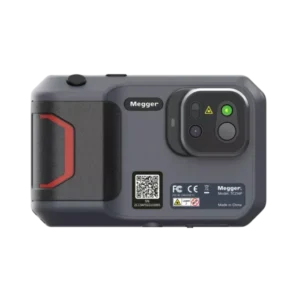
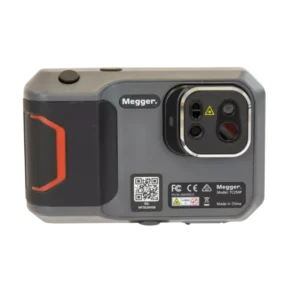
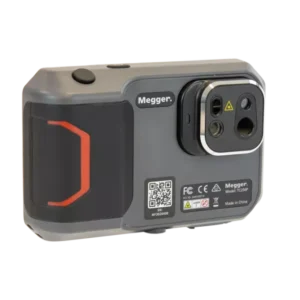
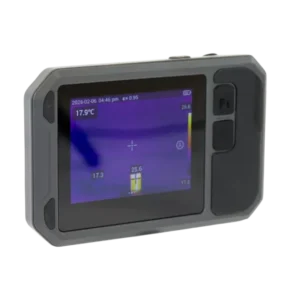
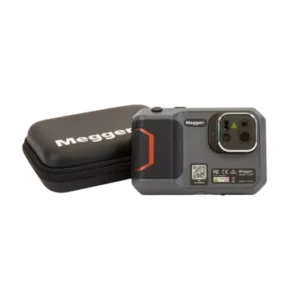
Megger TC256P Pocket Thermal Camera | 256×192 IR | 45 mK NETD
$1,042.00 .( $1,146.20 inc. GST )
100 in stock
For all your equipment calibration needs, visit our MyCalibration website.
 Free Delivery on orders over $1000
Shipping time may vary for certain products*

Product Enquiry
If you would like more information regarding this product, simply email us here.

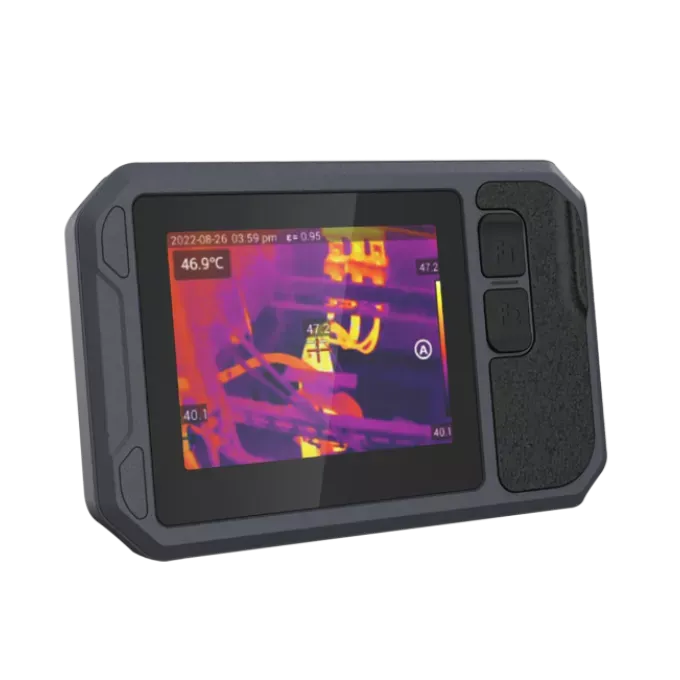
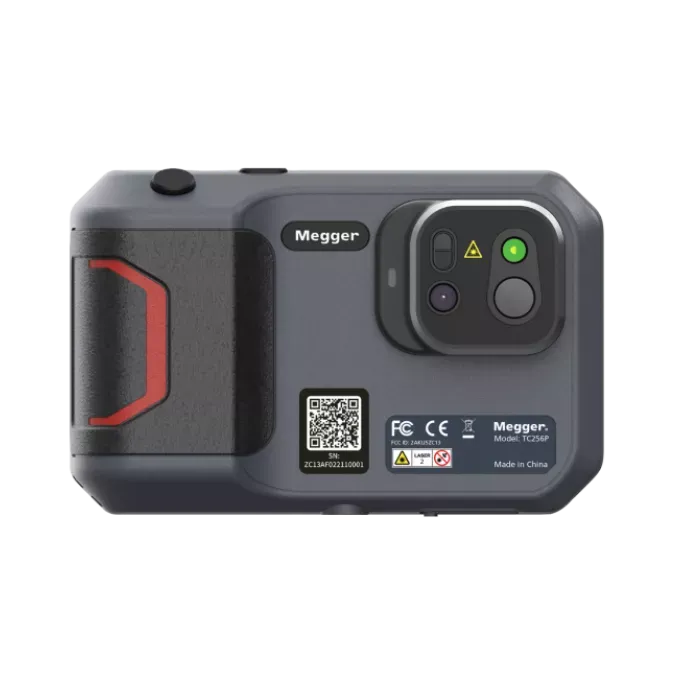
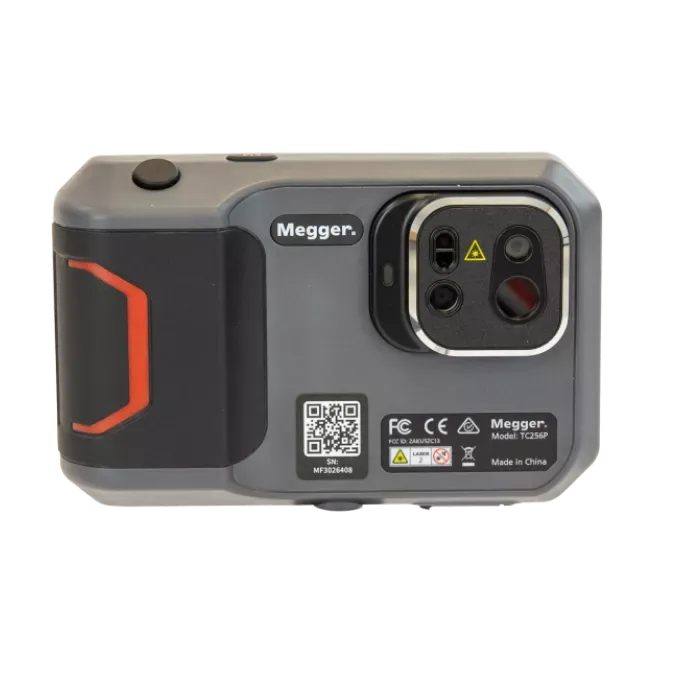
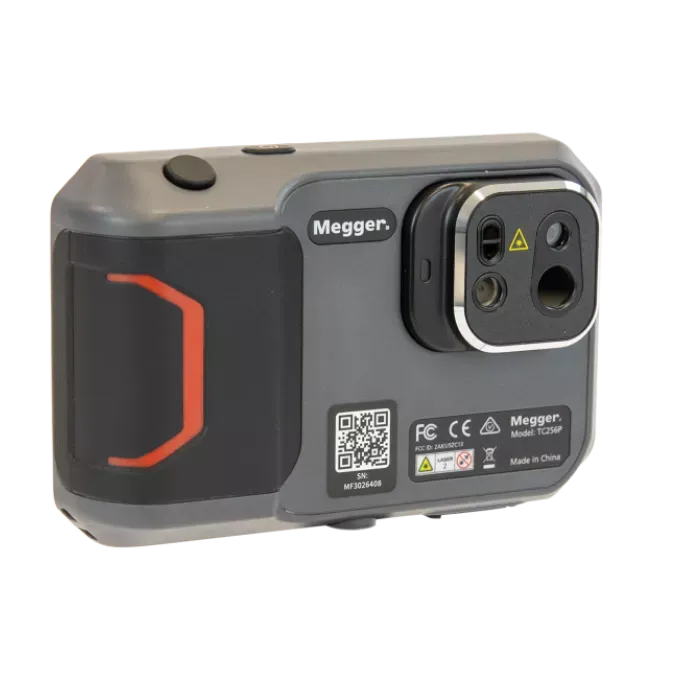
The Megger TC256P puts professional-grade thermal imaging in your shirt pocket. With a 256×192 IR detector, 45 mK thermal sensitivity, and four imaging modes — including Fusion and Picture-in-Picture — this compact camera helps electrical contractors, maintenance teams, and HVAC technicians spot faults before they become failures. A 3.5-inch touchscreen, Wi-Fi sharing, 16 GB storage, and up to four hours of battery life make it ready for a full day on-site.

The Problem With Faults You Can’t See
Overloaded terminations, failing motor bearings, missing insulation, blocked HVAC coils — the most costly electrical and mechanical failures all share one thing in common: they broadcast heat long before they announce themselves through noise, smoke, or tripped protection. For an electrical contractor working through a switchboard inspection, a maintenance tech running rounds on a production floor, or an HVAC technician servicing commercial plant, the ability to see temperature anomalies in real time changes everything. The catch has always been bulk and cost. A high-resolution thermal camera capable of meaningful fault detection has traditionally meant hauling a larger handheld unit around all day — one that lives in a carry bag and comes out only when you’ve specifically planned a thermal inspection.
The Megger TC256P is built around a different premise: that the best thermal camera for field professionals is the one that’s always with them.
Pocket-Sized, Not Compromised
Thermal cameras described as “compact” often make painful trade-offs in resolution, sensitivity, or usability. The TC256P doesn’t. Despite fitting in a shirt pocket or work vest, it houses the same 256×192 pixel infrared detector found in Megger’s larger TC256 model — 49,152 active sensing pixels producing sharp, detailed thermal images with a noise equivalent temperature difference (NETD) of just 45 mK.
That 45 mK sensitivity figure is the one that matters most in the field. It determines how small a temperature difference the camera can reliably detect and display. With 45 mK NETD, the TC256P can distinguish subtle heat differentials across a 415 V switchboard — distinguishing the normal warmth of load-carrying conductors from the localised hot spot of a loose lug or failing fuse, often invisible to a lower-sensitivity imager.
This is genuine diagnostic capability, not a marketing compromise.
Four Imaging Modes — See What the Job Demands
Any thermal inspection involves a core challenge: thermal images are powerful, but without spatial context, a hot spot can be difficult to localise precisely on the equipment face. The TC256P addresses this with four purpose-built imaging modes:
Infrared (IR): Full thermal display across the 256×192 pixel array, with temperature data and spot measurement overlaid. Ideal for sweeping panels, equipment banks, and cable runs for anomalies.
Visible Light (VL): 5-megapixel digital camera capture. Documents the physical state of equipment and provides the reference image for reporting.
Picture-in-Picture (PIP): An infrared window embedded within the visible image. Lets you see exactly where on a physical piece of equipment the heat anomaly sits — crucial when inspecting dense switchboards or cable trays where multiple conductors and devices sit millimetres apart.
Multimodal Image Fusion (MIF): The infrared data and visible image are blended into a single composite view. Particularly effective for building envelope surveys, where thermal bridging and moisture ingress need to be located against visible surface features, and for identifying the exact component on an electrical panel that’s generating heat.
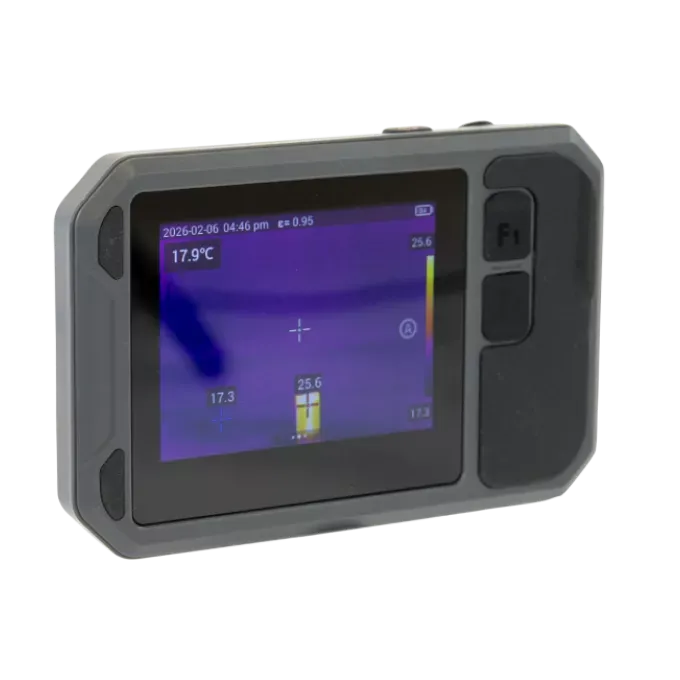
Switching between modes on the 3.5-inch colour touchscreen is immediate — no menu diving required.
Built for the Way Tradies Actually Work
The TC256P’s physical design reflects an understanding of how trade professionals use thermal cameras on real jobs.
The 3.5-inch LCD colour touchscreen (larger than many thermal cameras at this price tier) provides a clear, intuitive view even when working at arm’s reach inside enclosures. Interface operation is touch-driven, minimising the need to navigate button menus while wearing gloves or working in cramped conditions.
Laser ranging allows the TC256P to calculate distances to the target, feeding into the camera’s intelligent area calculation for rectangular objects. This is directly useful for estimating heat loss across wall sections, duct leakage areas, and switchboard compartments where knowing the size of the anomaly informs the urgency of the response.
Wi-Fi connectivity enables real-time image sharing to the Thermography mobile app on Android or iOS, as well as live video streaming — useful for showing a client the fault in real time or having an engineer review findings remotely without being on-site.
ThermoLink PC software is included. Images transfer to a Windows PC for deeper analysis, palette adjustments, isotherm configuration, and formal report generation — appropriate for maintenance records, insurance documentation, and AS/NZS 3000 compliance filing.
16 GB internal storage handles JPG images with embedded temperature data. For most inspection workloads, that’s thousands of documented images without the need to clear storage in the field.
Up to 4 hours of battery life on the integrated lithium-ion cell, with USB Type-C fast charging support. The TC256P can be charged from a power bank while in use — critical for long inspection shifts or remote site work where mains access is limited.
Where the TC256P Earns Its Keep
Electrical Contractors: Switchboard thermal surveys, termination inspections, and AS/NZS 3000 installation verification benefit directly from the TC256P’s 45 mK sensitivity and PIP mode. Spot a hot neutral bar, a failing MCCB contact, or an overloaded circuit breaker — and document it with a fusion image for the defect report — without carrying a separate full-size thermal imager.
Industrial Maintenance Teams: Conveyor drives, motor control centres, and production plant benefit from regular thermal sweeps. The TC256P’s pocket form factor means maintenance techs can carry it through the facility on regular rounds without dedicating a bag to it, enabling opportunistic thermal checks rather than scheduled-only inspections.
HVAC Technicians: Refrigerant distribution, coil fouling, compressor health, and building envelope performance all present in thermal imaging. The MIF mode is particularly effective for identifying insulation gaps and moisture damage in building fabric — the blended image makes it immediately legible to clients unfamiliar with reading thermal imagery.
Solar Installers and PV Maintenance: String performance variance, diode failures, and hot cells on PV arrays are classic thermal imaging applications. The TC256P’s portability and Wi-Fi sharing allow rapid on-roof inspection without lugging equipment and immediate sharing of findings with the system owner.
Facilities Managers: Routine building surveys, energy performance assessments, and preventive maintenance programs benefit from accessible thermal imaging. The TC256P lowers the barrier — a facilities manager or building maintenance officer can carry it daily and conduct inspections without specialist training or a dedicated instrument bag.
Field-Ready Out of the Box
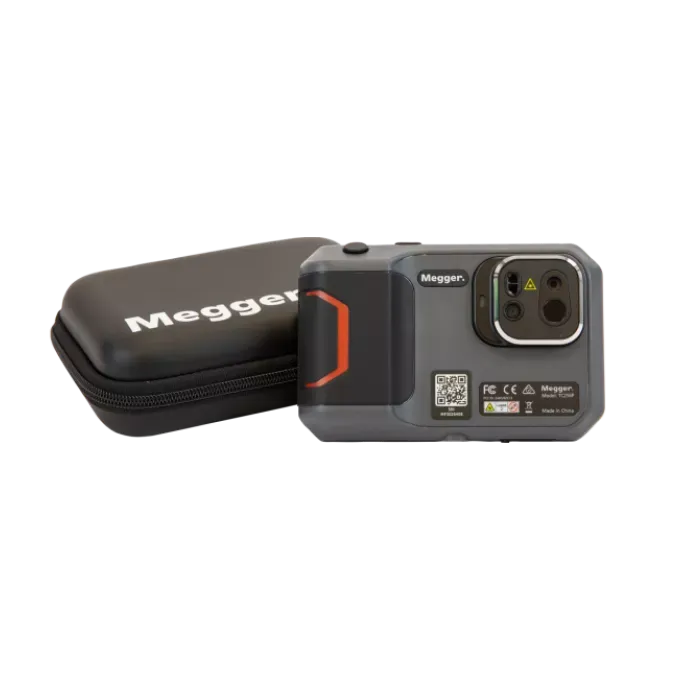
The TC256P ships with everything needed to go straight to work: protective carry case, USB-C charging cable, wrist strap, and quick start guide. Annual calibration is recommended to maintain measurement accuracy — we offer NATA-traceable calibration services to keep your TC256P performing to specification and your thermal reports defensible.
IP54 protection rating and a 1-metre drop test resistance mean the TC256P can handle the conditions typical Australian trade environments deliver — dust, humidity, and the occasional knock.
Technical Specifications
| Specification | Value | Why It Matters |
|---|---|---|
| IR Detector Resolution | 256 × 192 pixels (49,152 pixels) | High pixel count for a pocket camera — resolves small hot spots on dense switchboards and terminal blocks |
| Thermal Sensitivity (NETD) | ≤ 45 mK | Detects subtle 0.045°C temperature differences; essential for early fault detection before thermal runaway |
| Temperature Measurement Range | −20°C to +550°C | Spans everything from refrigeration inspection at sub-zero to high-temperature industrial processes |
| Visible Light Camera | 5 MP | High-resolution reference images alongside thermal data; supports professional reporting |
| Display | 3.5-inch LCD colour touchscreen | Clear, glove-friendly touch interface; viewable in bright site conditions |
| Imaging Modes | IR, Visible Light (VL), Picture-in-Picture (PIP), Multimodal Image Fusion (MIF) | Four modes allow context-rich fault documentation adaptable to any inspection scenario |
| Digital Zoom | 1.1× to 8× | Zoom into detail on thermal images without repositioning; useful in live panels or energised HV equipment |
| Laser Ranging | Yes | Distance measurement supports area calculation for heat loss estimations and reporting |
| Wi-Fi | Built-in | Real-time image sharing, live video streaming, and Thermography app connectivity |
| Data Transfer | USB-C | Fast image transfer to PC for ThermoLink software analysis and report generation |
| Storage | 16 GB internal | JPG with embedded temperature data; thousands of inspection images stored on-device |
| Image Format | JPG (with temperature metadata) | Industry-standard format, directly importable into reporting and maintenance management systems |
| Battery | Rechargeable Li-Ion, up to 4 hours | USB-C fast charging; operable while charging from power bank |
| Environmental Rating | IP54 | Dust and splash resistant — suitable for Australian outdoor and industrial environments |
| Drop Test | 1 m | Survives a drop from working height without damage |
| Operating Temperature | −10°C to +50°C | Suitable for Australian climate extremes, from alpine winter maintenance to summer industrial environments |
| Calibration Recommended | Annual | Maintains measurement accuracy and defensibility of thermal reports for compliance purposes |
| Supplied Accessories | Carry case, USB-C cable, wrist strap, quick start guide | Field-ready straight from the box |
What is the Megger TC256P and what is it used for?
The Megger TC256P is a pocket-sized thermal imaging camera designed for electrical, HVAC, mechanical, and building inspection work. It uses a 256×192 infrared detector to detect heat signatures invisible to the naked eye, enabling technicians to identify overloaded electrical connections, failing bearings, insulation defects, moisture ingress, and blocked HVAC components before they cause equipment failure or downtime. Its compact form factor means it can be carried on-site every day without a dedicated instrument bag.
How is the Megger TC256P different from the TC256?
Both cameras use the same 256×192 infrared detector. The key difference is form factor: the TC256 is a conventional handheld thermal camera with an 11-hour battery and Wi-Fi, while the TC256P is a pocket-sized version optimised for portability. The TC256P adds a larger 3.5-inch touchscreen (versus 2.4 inches on the TC256), a higher-resolution 5 MP visible camera, laser ranging, and image fusion modes, but trades the extended 11-hour battery for a 4-hour run time appropriate for its smaller body. The TC256P is the better choice for technicians who prioritise mobility; the TC256 suits longer inspection sessions where extended run time matters more.
What thermal sensitivity does the Megger TC256P have?
The Megger TC256P has a thermal sensitivity (NETD) of ≤ 45 mK (millikelvin). This means it can detect temperature differences as small as 0.045°C between adjacent areas of a target. For electrical inspection work, this level of sensitivity is sufficient to identify developing hot spots on terminations, busbars, and circuit breaker contacts that would be invisible on less sensitive cameras, enabling earlier intervention before faults escalate.
Can the Megger TC256P be used for switchboard thermal surveys?
Yes. The TC256P’s 256×192 resolution and 45 mK thermal sensitivity make it suitable for switchboard thermal surveys. The Picture-in-Picture (PIP) mode overlays the thermal image onto the visible camera view, enabling precise localisation of hot spots against the physical layout of busbars, MCBs, RCDs, and cable connections. Images are saved as JPGs with embedded temperature data and can be transferred to ThermoLink PC software for formal report generation — appropriate for maintenance records and electrical compliance documentation in Australia.
Does the Megger TC256P have Wi-Fi?
Yes. The TC256P includes built-in Wi-Fi for connecting to the Thermography mobile app (Android and iOS). This enables real-time image sharing with colleagues or clients, live thermal video streaming, and wireless report distribution without needing to connect a cable. Images can also be transferred via the USB-C connection to ThermoLink PC software for more detailed analysis.
What imaging modes does the Megger TC256P support?
The TC256P supports four imaging modes: Infrared (IR) for pure thermal imaging; Visible Light (VL) for standard 5 MP photography; Picture-in-Picture (PIP) which embeds a thermal window within the visible image for spatial reference; and Multimodal Image Fusion (MIF) which blends infrared and visible data into a single composite image. MIF is especially useful for building envelope surveys, moisture detection, and electrical panel inspections where clients or maintenance managers need to understand exactly where on the physical equipment a fault is located.
| Weight | .5 kg |
|---|
Be the first to review “Megger TC256P Pocket Thermal Camera | 256×192 IR | 45 mK NETD”
You must be logged in to post a review.
Technical Specifications
| Specification | Value | Why It Matters |
|---|---|---|
| IR Detector Resolution | 256 × 192 pixels (49,152 pixels) | High pixel count for a pocket camera — resolves small hot spots on dense switchboards and terminal blocks |
| Thermal Sensitivity (NETD) | ≤ 45 mK | Detects subtle 0.045°C temperature differences; essential for early fault detection before thermal runaway |
| Temperature Measurement Range | −20°C to +550°C | Spans everything from refrigeration inspection at sub-zero to high-temperature industrial processes |
| Visible Light Camera | 5 MP | High-resolution reference images alongside thermal data; supports professional reporting |
| Display | 3.5-inch LCD colour touchscreen | Clear, glove-friendly touch interface; viewable in bright site conditions |
| Imaging Modes | IR, Visible Light (VL), Picture-in-Picture (PIP), Multimodal Image Fusion (MIF) | Four modes allow context-rich fault documentation adaptable to any inspection scenario |
| Digital Zoom | 1.1× to 8× | Zoom into detail on thermal images without repositioning; useful in live panels or energised HV equipment |
| Laser Ranging | Yes | Distance measurement supports area calculation for heat loss estimations and reporting |
| Wi-Fi | Built-in | Real-time image sharing, live video streaming, and Thermography app connectivity |
| Data Transfer | USB-C | Fast image transfer to PC for ThermoLink software analysis and report generation |
| Storage | 16 GB internal | JPG with embedded temperature data; thousands of inspection images stored on-device |
| Image Format | JPG (with temperature metadata) | Industry-standard format, directly importable into reporting and maintenance management systems |
| Battery | Rechargeable Li-Ion, up to 4 hours | USB-C fast charging; operable while charging from power bank |
| Environmental Rating | IP54 | Dust and splash resistant — suitable for Australian outdoor and industrial environments |
| Drop Test | 1 m | Survives a drop from working height without damage |
| Operating Temperature | −10°C to +50°C | Suitable for Australian climate extremes, from alpine winter maintenance to summer industrial environments |
| Calibration Recommended | Annual | Maintains measurement accuracy and defensibility of thermal reports for compliance purposes |
| Supplied Accessories | Carry case, USB-C cable, wrist strap, quick start guide |
Q: Is the Megger TC256P suitable for professional electrical inspection work in Australia?
A: Yes. Despite its pocket-sized form factor, the TC256P delivers professional inspection capability with its 256×192 IR detector, 45 mK thermal sensitivity, and four imaging modes. It is appropriate for switchboard surveys, termination checks, motor inspections, and HVAC diagnostics. Annual NATA-traceable calibration keeps the unit’s measurements accurate and its thermal reports defensible for Australian compliance and maintenance documentation purposes.
Q: What is the temperature range of the Megger TC256P?
A: The TC256P measures surface temperatures from −20°C to +550°C, covering the full range of applications from refrigeration and cold-room inspections at sub-zero temperatures through to high-temperature industrial processes, electrical equipment, and solar PV systems operating in extreme summer conditions.
Q: How long does the battery last on the Megger TC256P?
A: The TC256P’s integrated lithium-ion battery provides up to 4 hours of continuous operation. It charges via USB Type-C and, importantly, can operate while connected to a USB-C power bank — useful for extended site shifts or remote locations without mains access.
Q: What software is included with the Megger TC256P?
A: The TC256P is compatible with ThermoLink PC software (Windows), which enables detailed image analysis, palette adjustment, isotherm and temperature alarm configuration, and professional report generation. The Thermography mobile app (Android and iOS) connects via Wi-Fi for on-site image sharing and live video streaming.
Q: What is the difference between PIP mode and Fusion mode on the TC256P?
A: Picture-in-Picture (PIP) mode displays the thermal image as an embedded window within the full visible camera view, making it easy to see where in the physical scene a heat anomaly is located. Multimodal Image Fusion (MIF) blends the thermal and visible images together into a single composite, creating an image where thermal data is overlaid across the entire scene. MIF is often preferred for building envelope and moisture surveys; PIP suits electrical panel work where precise component localisation within a crowded enclosure is the priority.
Q: Does the Megger TC256P require calibration?
A: Megger recommends annual calibration to maintain measurement accuracy. For thermographers and maintenance teams whose thermal survey reports form part of compliance documentation, maintenance records, or insurance assessments, NATA-traceable calibration is the appropriate standard. We offer calibration services to keep your TC256P performing to specification and your reports defensible.
Q: What is the IP rating of the Megger TC256P?
A: The TC256P carries an IP54 protection rating, meaning it is protected against dust ingress and water splashing from any direction. Combined with its 1-metre drop test resistance, this makes it suitable for regular trade use in Australian outdoor and industrial environments.
Q: Can the Megger TC256P detect moisture or building insulation issues?
A: Yes. Building envelope applications are well within the TC256P’s capability. Moisture ingress creates localised temperature anomalies that appear clearly in thermal imaging; missing or degraded insulation creates heat loss signatures visible against surrounding surfaces. The Multimodal Image Fusion mode makes these findings easy to communicate to building owners or facilities managers by blending the thermal signature with the visible image of the affected surface.
Educational Products Megger VF-T5 Voltage Detector & Infrared Thermometer | CAT IV
Electrical Testers
Electrical Testers
AC only Clamps Related Products


Next day delivery
Finance services
Price Match
Technical support
Product training
Calibration servises
Need help? Call our support team 1800 358 531
Reviews
There are no reviews yet.