



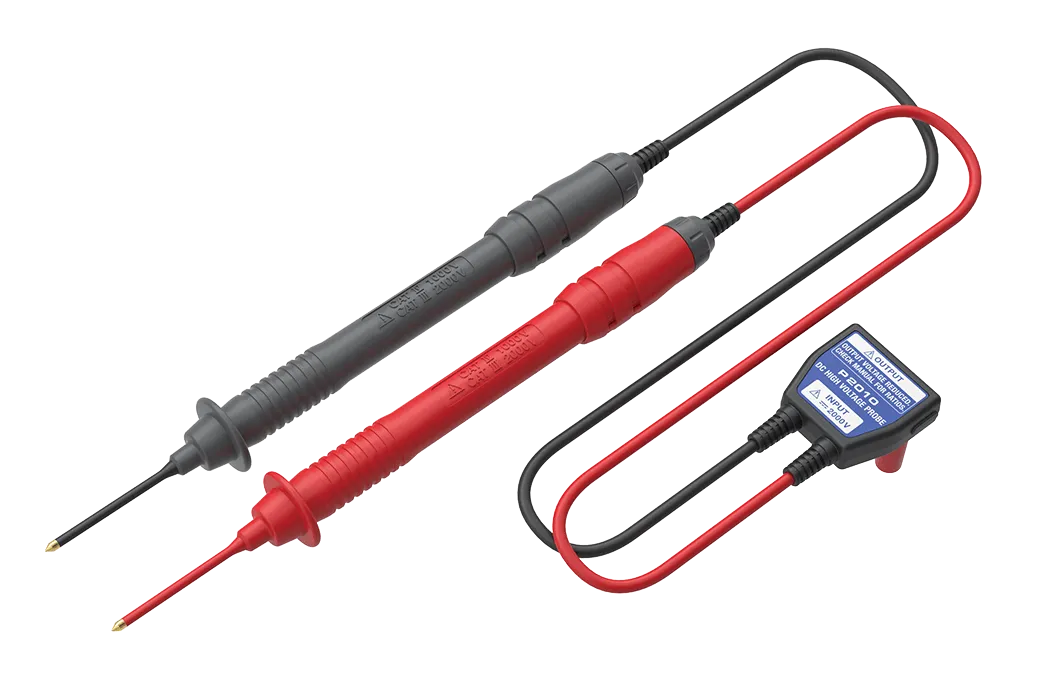
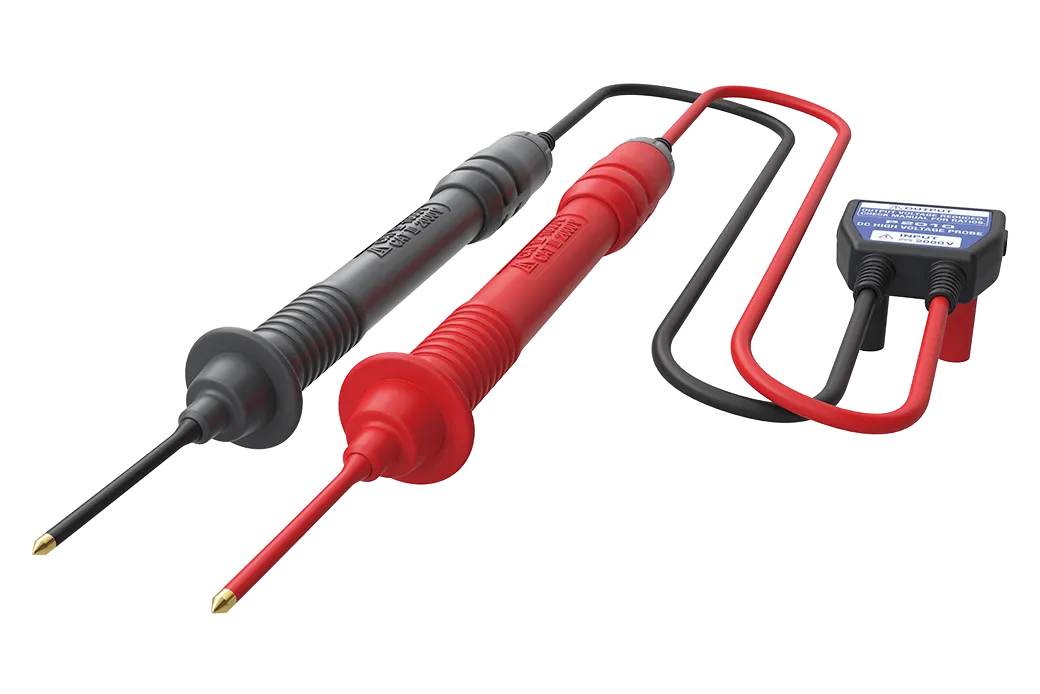
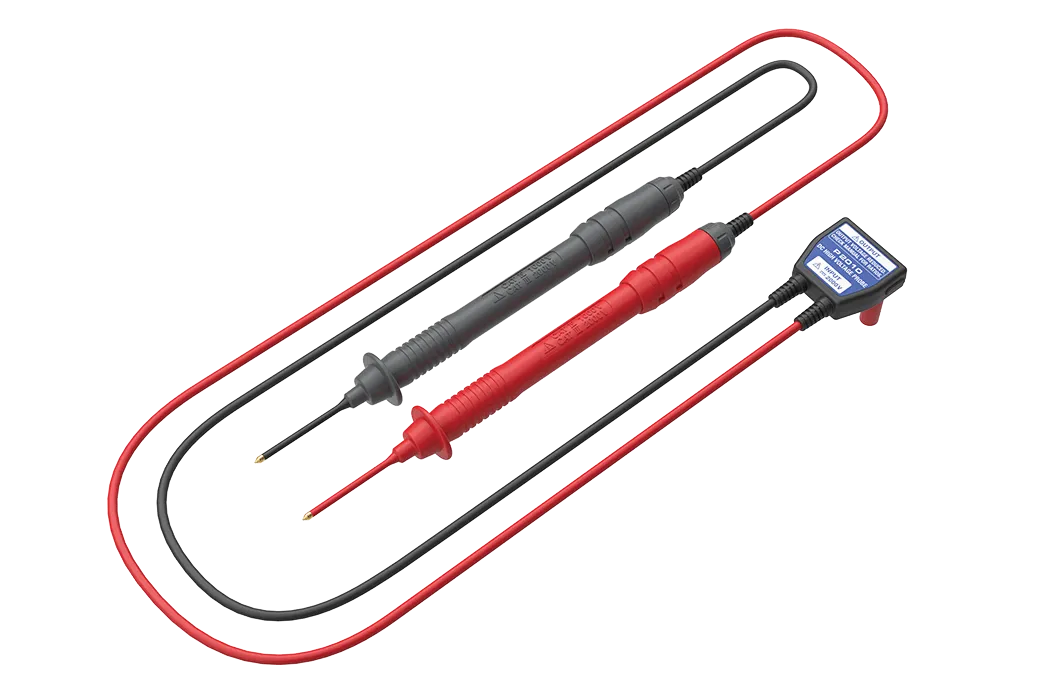
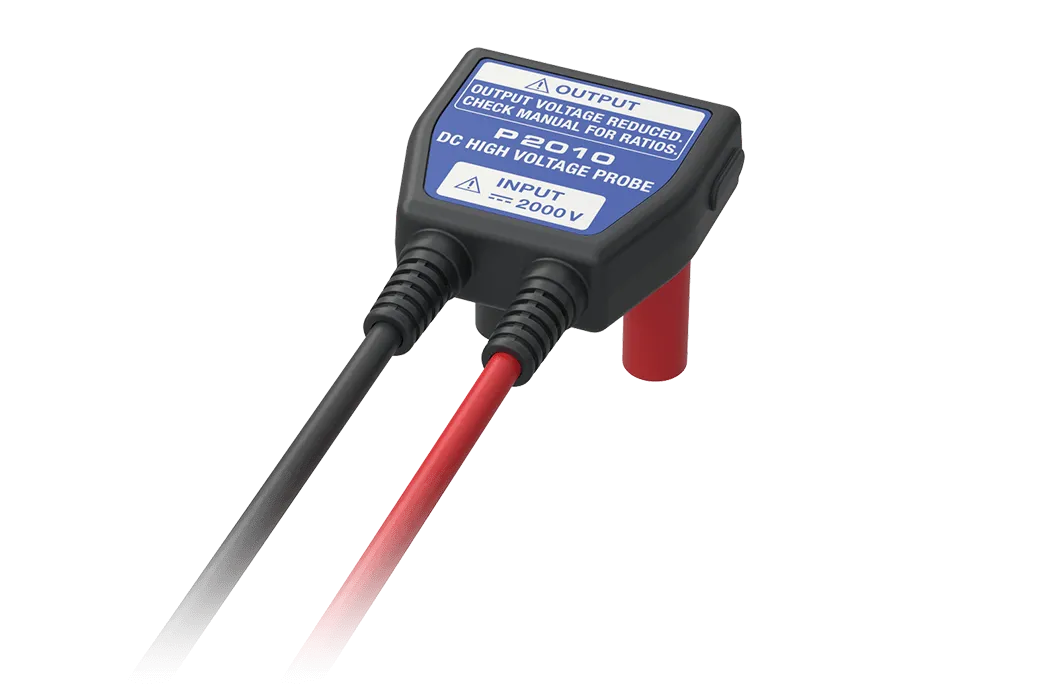
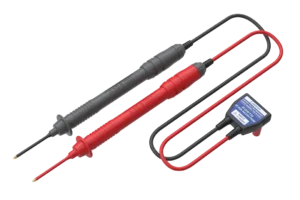
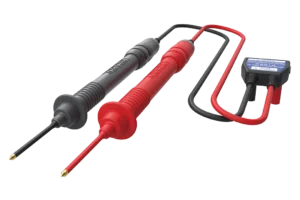
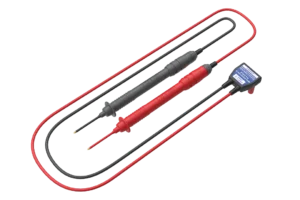
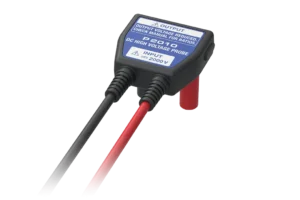
HIOKI P2010 DC High Voltage Probe — CAT III 2000 V Solar
$290.00 .( $319.00 inc. GST )
For all your equipment calibration needs, visit our MyCalibration website.
 Free Delivery on orders over $1000
Shipping time may vary for certain products*

Product Enquiry
If you would like more information regarding this product, simply email us here.

Working on a 1500 V solar installation without the right probe isn’t just inconvenient — it’s a serious safety risk. The HIOKI P2010 DC High Voltage Probe extends the measurement capability of compatible HIOKI clamp meters and digital multimeters to a full CAT III 2000 V, giving solar installers and maintenance technicians the headroom they need to work safely on large-scale PV systems. Compact, reliable, and built to IEC 61730-compliant standards — measure with confidence, not guesswork.
 Datasheet
The Problem with Standard Test Leads on Modern Solar Installations
Australia’s solar sector has grown dramatically. Utility-scale and commercial rooftop installations operating at 1000 V and above are now the norm, with 1500 V DC string systems increasingly common on large ground-mount and commercial-scale arrays. The challenge? Most general-purpose clamp meters and multimeters are rated to CAT II or CAT III 1000 V — meaning they simply aren’t equipped for the transient overvoltages that can occur in these higher-voltage environments.
Using an under-rated instrument on a high-voltage PV array isn’t just a compliance issue — it’s a genuine electrocution risk. IEC 61730-1 (the standard for PV module safety qualification) explicitly classifies solar installations as Measurement Category III environments. If your instrument doesn’t match the category and voltage of the site, you’re working outside its safe operating envelope.
That’s the problem the HIOKI P2010 DC High Voltage Probe was designed to solve.
What the HIOKI P2010 Does
The P2010 is a DC high voltage probe accessory that plugs directly into compatible HIOKI clamp meters and digital multimeters via standard 4 mm banana terminals. Once connected, it upgrades the instrument’s measurement capability to CAT III 2000 V DC — pushing the voltage ceiling well beyond what most standalone meters can handle.
It works by scaling the input voltage through a precision 20 MΩ resistive divider network, delivering a proportionally reduced output signal to the connected meter. Depending on the instrument, the P2010 operates in either “DC High V Probe Mode” (for compatible clamp meters like the CM4373-50 and CM4375-50, and the DT4261 DMM) or “1/10 output rate mode” (for other compatible HIOKI DMMs).
The key point: the probe does the heavy lifting — handling the dangerous high-voltage input — while the meter simply reads the scaled output. The result is a measurement chain that’s safe, compliant, and accurate at voltages your standard test leads can’t touch.
Built for Australian Solar Professionals
For solar installers and commissioning engineers working to AS/NZS 5033 (Installation and Safety Requirements for PV Arrays) and IEC 62446-1 (Grid-Connected PV Systems — Minimum Requirements for Documentation, Commissioning Tests and Inspection), correct instrument categorisation is a fundamental requirement. The P2010’s CAT III 2000 V rating satisfies the overvoltage category requirements for PV string and combiner testing in large commercial and utility installations.
CEC accredited designers and installers working on systems with string voltages above 1000 V will find the P2010 fills a genuine gap in their test kit — it’s the accessory that makes a capable HIOKI clamp meter or DMM fully PV-system capable.
Key Benefits
Measurement Safety Without Compromise The P2010 carries a CAT III 2000 V rating — the same category as solar PV installations per IEC 61730-1. Overload protection is rated to 2200 V DC/AC for one minute between the input terminals. You’re not working at the ragged edge of your instrument’s limits; you have genuine safety margin built in.
Non-Intrusive Measurement — No System Shutdown Required One of the practical advantages of voltage probing over current-injection testing is that you can take live measurements without interrupting generation. The P2010 allows high-voltage DC string and array measurements while the system remains connected and generating. This is valuable for fault-finding, commissioning verification, and regular maintenance inspections without costly downtime.
Extends Your Existing HIOKI Instrument Investment If your team already carries HIOKI CM4373-50, CM4375-50, CM4371-50, CM4141-50, or DT4261/DT4281/DT4282 instruments, the P2010 is the most cost-effective way to add high-voltage PV measurement capability. You don’t need to purchase a dedicated high-voltage meter — the P2010 transforms your existing instrument into a fully rated 2000 V DC measurement solution.
Wide Operating Temperature Range Solar work happens outdoors, often in harsh Australian conditions. The P2010 operates from –25°C to +65°C, making it equally capable during a crisp winter commissioning job in the Victorian Alps or summer maintenance work on a rooftop array in Darwin.
Precision Input Resistance The 20 MΩ ±5.0% input resistance ensures the probe draws negligible current from the circuit under test — important when working with string configurations where load disturbance can affect readings and potentially trigger protection equipment.
Compatible Instruments
The P2010 is compatible with the following HIOKI instruments. Note that connection modes differ:
DC High V Probe Mode (direct 2000 V range):
- CM4141-50 AC Clamp Meter
- CM4371-50 AC/DC Clamp Meter
- CM4373-50 AC/DC Clamp Meter
- CM4375-50 AC/DC Clamp Meter
- DT4261 Digital Multimeter
1/10 Output Rate Mode (scaled reading):
- DT4252, DT4253, DT4255, DT4256
- DT4281, DT4282
Note: The P2010 requires a compatible HIOKI clamp meter or DMM, purchased separately. Always confirm your instrument model before ordering.
Application Use Cases
1. Utility-Scale and Commercial Solar PV Commissioning When commissioning a large-scale solar installation with string voltages at or approaching 1500 V DC, AS/NZS 5033 and IEC 62446-1 require measurement of open-circuit voltage and operating voltage for each string. The P2010 makes this task safe and straightforward — connect to your HIOKI clamp meter or DMM and verify string voltages with a CAT III rated instrument without improvised workarounds.
2. Fault Diagnosis on High-Voltage PV Strings String-level faults — failed bypass diodes, shading losses, degraded modules — often require live voltage measurements across strings and sub-arrays to isolate the fault. The P2010 allows this diagnostic work to be performed at full system voltage with confidence, without needing to de-energise the array.
3. Combiner Box and DC Distribution Inspections Combiner boxes on utility installations can see bus voltages above 1000 V DC. Verifying bus voltage, checking string input voltages, and confirming fuse/circuit breaker operation all require high-category measurement tools. The P2010 combined with a compatible HIOKI clamp meter gives technicians the right instrument for the task.
4. Maintenance Inspections on Aging Installations As Australia’s early large-scale solar installations approach 10+ years of operation, scheduled maintenance and performance inspections are increasingly common. Measuring degradation trends in string output voltage requires repeatable, accurate, high-voltage capable measurements — exactly what the P2010 delivers.
5. Safety Audits and Compliance Verification Safety officers and accredited auditors verifying PV system installations against AS/NZS 5033 or IEC 62446-1 need to document voltage measurements made with correctly rated instruments. The P2010’s CAT III 2000 V rating ensures the measurement chain meets the overvoltage category requirements specified in the applicable standards.
Technical Specifications
| Specification | Value | Why It Matters |
|---|---|---|
| Maximum Input Voltage | 2000 V DC | Covers 1500 V DC solar installations with substantial safety headroom |
| Max Rated Line-to-Ground Voltage | 1000 V CAT IV / 2000 V CAT III | Matches IEC 61730-1 requirements for PV module overvoltage category |
| Anticipated Transient Overvoltage | 12,000 V (CAT IV) / 15,000 V (CAT III) | Protection against voltage spikes common in large PV installations |
| Input Resistance | 20 MΩ ±5.0% | Negligible loading on the circuit under test — won’t disturb string voltage readings |
| Overload Protection (Input terminals) | 2200 V DC/AC for 1 minute | Genuine safety margin above the measurement limit |
| Overload Protection (Output terminals) | 600 V DC/AC for 1 minute | Protects connected meter from output-side overvoltage |
| Output Terminal | 4 mm banana | Compatible with standard HIOKI meter input sockets |
| Operating Temperature | –25°C to +65°C | Suitable for all Australian climate zones, from alpine to tropical |
| Operating Humidity | Up to 80% RH (non-condensing) to 40°C | Suitable for coastal and tropical environments |
| Storage Temperature | –30°C to +70°C | Transport and storage in vehicles in Australian summer heat |
| Standards | EN 61010 | Meets international electrical safety standard for measurement equipment |
| Accuracy Guarantee | 1 Year | Annual recalibration cycle aligns with typical NATA-accredited calibration schedules |
| Included Accessories | Instruction Manual ×1, Operating Precautions ×1 | — |
Combined Accuracy (with compatible instruments):
| Instrument | Range | Combined Accuracy |
|---|---|---|
| DT4261 | 600.0 V | ±0.8% rdg ±0.2 V |
| DT4261 | 2000 V | ±0.8% rdg ±5 V |
| CM4141-50 / CM4371-50 / CM4373-50 / CM4375-50 | 600.0 V | ±1.0% rdg ±0.3 V |
| CM4141-50 / CM4371-50 / CM4373-50 / CM4375-50 | 2000 V | ±1.0% rdg ±3 V |
| DT4281 / DT4282 | 60.000 V (1/10 mode) | ±0.8% rdg ±0.002 V |
| DT4281 / DT4282 | 600.00 V (1/10 mode) | ±0.8% rdg ±0.02 V |
| DT4252 / DT4253 | 60.00 V (1/10 mode) | ±1.2% rdg ±0.05 V |
| DT4255 / DT4256 | 60.00 V (1/10 mode) | ±1.2% rdg ±0.03 V |
Included in the Box
- HIOKI P2010 DC High Voltage Probe ×1
- Instruction Manual ×1
- Operating Precautions ×1
Compatible HIOKI clamp meter or DMM must be purchased separately.
Optional: Carrying Case C0203 available separately.
Q: What is the HIOKI P2010 used for? The HIOKI P2010 is a DC high voltage probe accessory used to extend the voltage measurement capability of compatible HIOKI clamp meters and digital multimeters to 2000 V DC with a CAT III safety rating. It is primarily used for safe inspection, commissioning, and maintenance of high-voltage solar PV installations, including large-scale systems operating at 1500 V DC.
Q: What CAT rating do I need to measure solar PV installations? According to IEC 61730-1 (PV module safety qualification standard), solar PV installations are classified as Measurement Category III (CAT III) environments. Any instrument or probe used for voltage measurement on PV strings, combiners, or arrays must carry a CAT III rating appropriate to the system voltage. For modern 1500 V DC systems, a CAT III 1500 V or higher rating is required.
Q: Is 2000 V measurement safe for a 1500 V solar installation? Yes. Using a 2000 V rated probe like the HIOKI P2010 on a 1500 V DC solar installation provides a safe margin above the system’s operating voltage. The CAT III 2000 V rating also accounts for transient overvoltages — voltage spikes that can significantly exceed the nominal system voltage during switching events or fault conditions.
Q: Can I use my standard multimeter on a 1500 V solar installation? Standard multimeters rated to CAT III 1000 V or CAT II 1000 V are not suitable for direct measurement on solar PV strings operating at or above 1000 V DC. You either need a dedicated high-voltage meter, or an accessory like the HIOKI P2010 that extends a compatible meter’s rating to CAT III 2000 V.
| Weight | .2 kg |
|---|
Basic specifications
| Maximum input voltage (*1) | 2000 V DC |
|---|---|
| Maximum rated line-to-ground voltage | 1000 V (Measurement Category IV), Anticipated transient overvoltage 12000 V 2000 V (Measurement Category III), Anticipated transient overvoltage 15000 V |
| Input resistance | 20 MΩ ±5.0% (between INPUT H and INPUT L, when OUTPUT terminal is open) |
| Overload protection | 2200 V DC/2200 V AC (applied for 1 minute) (between INPUT H and INPUT L) 600 V DC/600 V AC (applied for 1 minute) (between OUTPUT H and OUTPUT L) |
| OUTPUT terminal | 4 mm banana terminal |
| Operating temperature and humidity range | Temperature: -25°C to 65°C (-13°F to 149°F)Humidity: −25°C to 40°C (−13°F to 104°F): 80% RH or less (non-condensing) 40°C to 65°C (104°F to 149°F): Linearly reduces from 80% RH or less at 40°C (104°F) to 25% RH or less at 65°C (149°F) (non-condensing) |
| Storage temperature and humidity range | -30°C to 70°C (-22°F to 158°F) 90% RH or less (non-condensing) |
| Standards | EN 61010 |
| Included accessories | Instruction Manual ×1, Operating Precautions ×1 |
Accuracy table for compatible instruments
| Model | Combined accuracy |
|---|---|
| DT4261 | Range 600.0 V: Combined accuracy ±0.8% rdg ±0.2 V Range 2000 V: Combined accuracy ±0.8% rdg ±5 V |
| CM4141-50 CM4371-50 CM4373-50 CM4375-50 |
Range 600.0 V: Combined accuracy ±1.0% rdg ±0.3 V Range 2000 V: Combined accuracy ±1.0% rdg ±3 V |
| DT4281 DT4282 |
Range 60.000 V: Combined accuracy ±0.8% rdg ±0.002 V (output rate 1/10) Range 600.00 V: Combined accuracy ±0.8% rdg ±0.02 V (output rate 1/10) |
| DT4252 DT4253 |
Range 60.00 V: Combined accuracy ±1.2% rdg ±0.05 V (output rate 1/10) Range 600.0 V: Combined accuracy ±1.2% rdg ±0.5 V (output rate 1/10) |
| DT4255 DT4256 |
Range 60.00 V: Combined accuracy ±1.2% rdg ±0.03 V (output rate 1/10) Range 600.0 V: Combined accuracy ±1.2% rdg ±0.3 V (output rate 1/10) |
- *1:Maximum rated voltage between INPUT H and INPUT L
Q1: What does the HIOKI P2010 actually do? The P2010 is a DC high voltage probe that connects to compatible HIOKI clamp meters and digital multimeters to extend their voltage measurement capability to 2000 V DC with a CAT III safety rating. It uses a precision resistive divider to scale down the high-voltage input to a level the connected meter can safely and accurately read.
Q2: Is the HIOKI P2010 suitable for Australian solar PV installations? Yes. IEC 61730-1 (PV module safety qualification) classifies PV installations as Measurement Category III environments. The P2010’s CAT III 2000 V rating satisfies this requirement, making it appropriate for commissioning, maintenance, and fault-finding on Australian solar PV systems operating under AS/NZS 5033 and IEC 62446-1.
Q3: Does the P2010 work with 1500 V DC solar installations? Yes. The P2010 has a maximum input voltage of 2000 V DC, which provides genuine headroom above the 1500 V DC string voltage common in modern utility-scale solar systems. The CAT III rating accounts for transient overvoltages up to 15,000 V.
Q4: Which HIOKI meters are compatible with the P2010? The P2010 is compatible with the following HIOKI instruments: CM4141-50, CM4371-50, CM4373-50, CM4375-50 (clamp meters) and DT4261, DT4252, DT4253, DT4255, DT4256, DT4281, DT4282 (digital multimeters). Note that compatibility mode differs: CM series and DT4261 support DC High V Probe Mode (direct 2000 V range); other DT series meters use 1/10 output rate mode with scaled readings.
Q5: Do I need to buy anything else to use the P2010? Yes — a compatible HIOKI clamp meter or digital multimeter must be purchased separately. The P2010 is an accessory that works in conjunction with the main instrument. An optional carrying case (C0203) is also available.
Q6: Can I take measurements on a live solar installation without shutting it down? Yes. Voltage measurement using the P2010 is non-intrusive — the 20 MΩ input resistance draws negligible current, so measurements can be taken on live PV strings without interrupting system generation. Always follow safe work procedures and relevant AS/NZS standards when working on live installations.
Q7: What is the accuracy of the P2010? Accuracy depends on the connected instrument. With the DT4261 on the 2000 V range, combined accuracy is ±0.8% rdg ±5 V. With CM series clamp meters on the 2000 V range, combined accuracy is ±1.0% rdg ±3 V. Accuracy is guaranteed for 1 year from calibration.
Q8: What safety standards does the P2010 comply with? The P2010 is manufactured to EN 61010 — the international standard for electrical equipment for measurement, control, and laboratory use. Its CAT III 2000 V rating satisfies the overvoltage category requirements of IEC 61730-1 for solar PV measurement environments.
Q9: Can I use the P2010 for AC voltage measurements? No. The P2010 is designed for DC voltage measurement only. It is specifically intended for solar PV applications where the string and array voltages are DC. For AC measurements, use your connected meter’s standard voltage input directly.
Q10: How does input resistance affect my measurement accuracy? The P2010’s 20 MΩ input resistance is intentionally high to minimise circuit loading. In a PV string, this means the probe draws so little current that it won’t meaningfully affect the voltage it’s measuring — important in string configurations where even small load changes can shift readings.
Q11: Does the P2010 need calibration? Yes. HIOKI guarantees accuracy for 1 year from the date of calibration. For professionals working under AS/NZS 3760 or maintaining NATA-accredited test records, annual recalibration is standard practice. We offer calibration services for HIOKI accessories and instruments.
Q12: Can the P2010 handle voltage spikes and transients on PV systems? Yes. At CAT III 2000 V, the P2010 is rated to withstand anticipated transient overvoltages up to 15,000 V. The overload protection on the input terminals is rated to 2200 V DC/AC for one minute — giving practical protection above the maximum measurement limit.
Be the first to review “HIOKI P2010 DC High Voltage Probe — CAT III 2000 V Solar”
You must be logged in to post a review.
Related Products

Next day delivery
Finance services
Price Match
Technical support
Product training
Calibration servises
Need help? Call our support team 1800 358 531
Reviews
There are no reviews yet.