



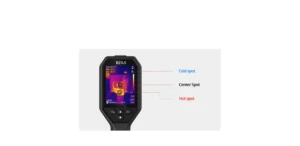
HIKMICRO B21LS Thermal Imaging Camera | 256×192, 550°C
$730.00 .( $803.00 inc. GST )
For all your equipment calibration needs, visit our MyCalibration website.
 Free Delivery on orders over $1000
Shipping time may vary for certain products*

Product Enquiry
If you would like more information regarding this product, simply email us here.

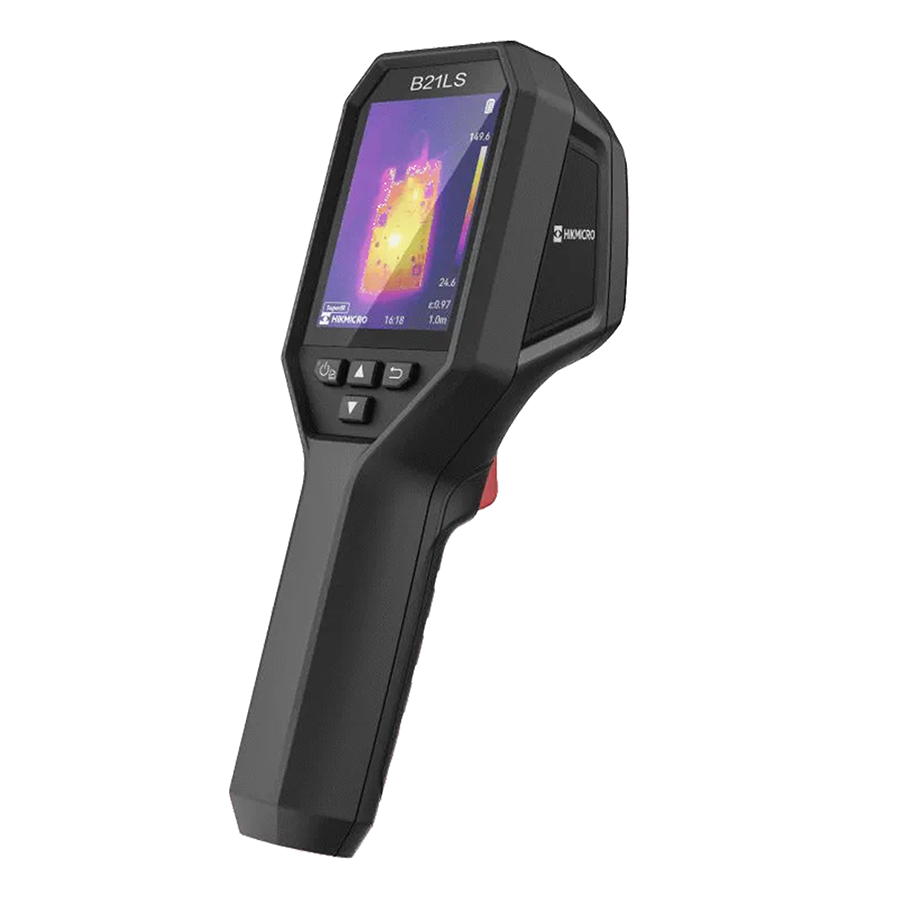
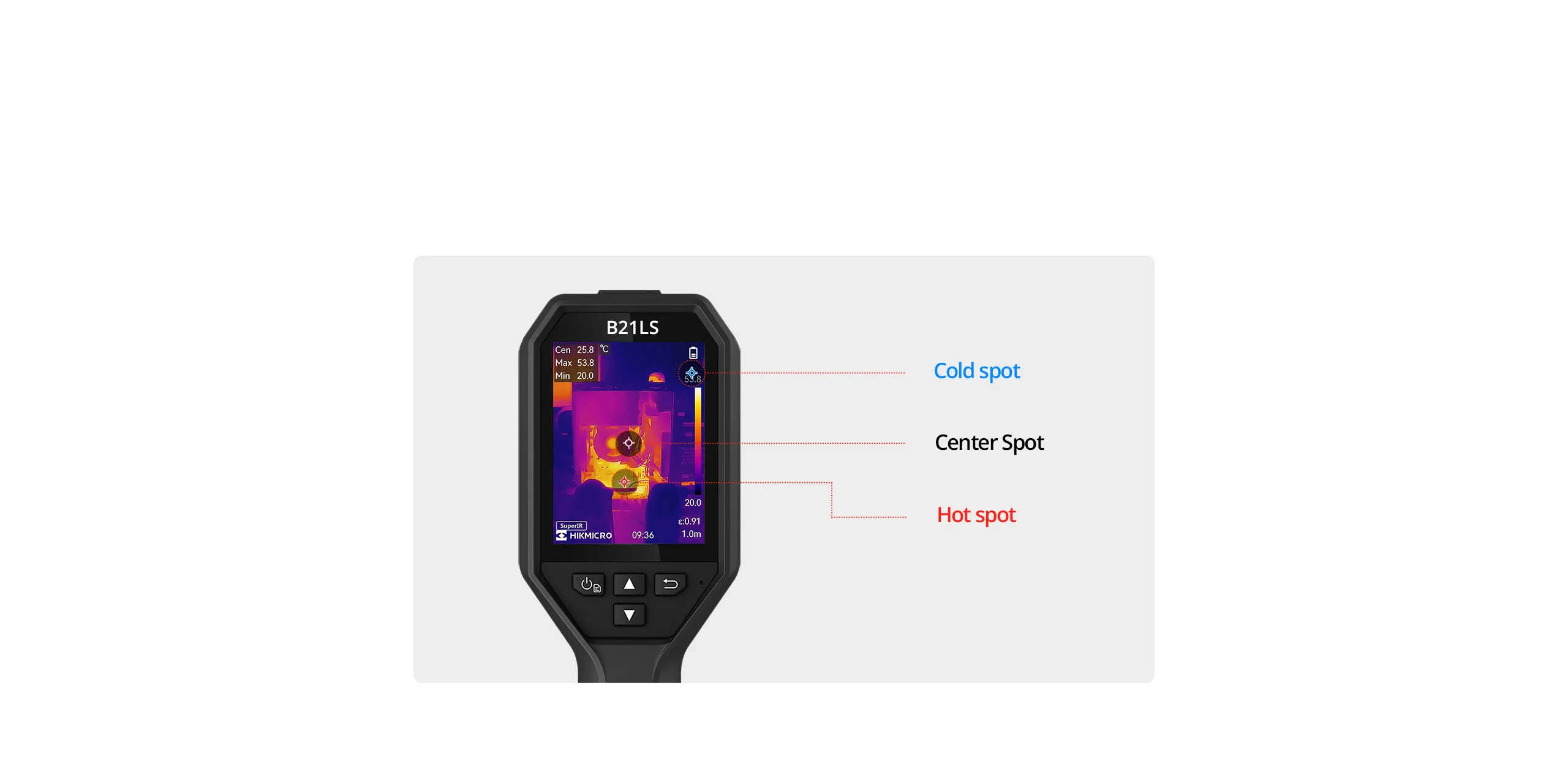
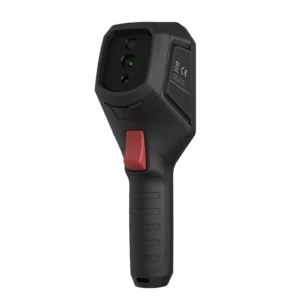
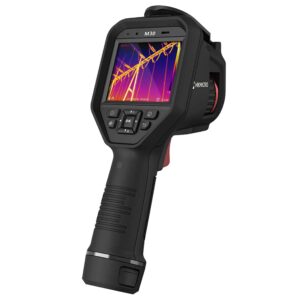
Pinpoint hidden faults before they become costly failures. The HIKMICRO B21LS handheld thermal imaging camera delivers a 256 x 192 thermal detector with SuperIR enhancement to 640 x 480, NETD below 40 mK, and a wide -20°C to 550°C measurement range — ideal for electrical fault-finding, HVAC diagnostics, building inspections, and automotive work. With SuperScene presets, Wi-Fi image transfer, and an IP54-rated, drop-tested housing, the B21LS is built for real trade conditions across Australian job sites.
 B21LS Datasheet

Finding What the Naked Eye Can’t See
Every electrician, HVAC technician, and maintenance professional knows the most expensive faults are the ones you can’t see coming. A loose lug in a switchboard, a failing bearing in a motor, a moisture track behind a wall, or an overheating solar connector — these problems radiate heat long before they cause a breakdown, a fire, or an insurance claim. The challenge has always been catching that heat signature quickly, accurately, and with enough detail to justify a decision or back up a report.
The HIKMICRO B21LS handheld thermal imaging camera is built to close that gap. It pairs a genuine radiometric thermal detector with a set of scene-specific tools that take the guesswork out of interpreting what you’re looking at — so instead of squinting at a blurry heat blob, you get a clear, documented answer you can act on and hand to a client.
A Detector Built for Real Fault-Finding, Not Just Pretty Pictures
At the core of the B21LS is a 256 x 192 thermal detector (49,152 pixels) with an NETD (Noise Equivalent Temperature Difference) of less than 40 mK at 25°C. In plain terms, NETD is a measure of how small a temperature difference the sensor can actually distinguish from background noise — the lower the number, the more subtle the fault it can pick up. A sub-40 mK sensitivity rating means the B21LS is capable of resolving fine thermal gradients, which matters when you’re trying to catch an early-stage connection fault that’s only a couple of degrees above ambient, not a glowing hotspot that’s already about to fail.
To sharpen the practical detail further, HIKMICRO’s SuperIR image enhancement technology upscales both live view and captured images to 640 x 480 — effectively giving you a clearer, more defined thermal picture without needing a physically larger detector array. Combined with a 25 Hz image refresh rate, this means panning across a switchboard, a roofline, or a row of machinery stays smooth, rather than the laggy, stuttering feed that makes it easy to miss a fault while you’re moving the camera.
Temperature measurement range runs from -20°C to 550°C (-4°F to 1022°F), covering everything from cold-store and building envelope work at the low end through to industrial process equipment and switchgear at the high end. Accuracy is rated at a maximum of ±2°C/3.6°F or ±2% of reading (whichever is greater), specified for ambient temperatures between 15°C and 35°C and object temperatures above 0°C — figures worth knowing if you’re taking readings in a cold plant room or an unconditioned roof space in winter, where ambient conditions outside that band may affect measurement accuracy.
SuperScene Modes: Purpose-Built Presets for Specific Trades
Rather than leaving every technician to manually configure palettes and alarm thresholds from scratch, the B21LS ships with SuperScene intelligent scene modes: Custom, Water Leak, Insulation, Floor Heating, Electrical Faults, Solar Panel, Macro Mode, Insulation Pro, and Condensation. Each preset adjusts the camera’s display and analysis settings to suit the job at hand — an electrician chasing a hot terminal in Electrical Faults mode is working with different visual emphasis to a building inspector scanning a roof cavity in Insulation mode.
On top of the scene presets, Smart SuperScene Alarm functionality is available for Water Leak, Insulation, and Floor Heating scenarios, with configurable “more than” or “less than” thresholds and audible warning linkage. That means the camera can flag an anomaly for you in real time during a scan, rather than relying purely on the operator to spot a subtle colour shift on a small screen.
For technicians who need to get in close — PCB-level electrical work, component-level fault-finding, small connector inspection — the optional clip-on macro lens (HM-B201-MACRO) extends the B21LS down to fine-detail work, resolving features as small as 500 microns. It’s a genuinely useful accessory for anyone doing panel-level or board-level diagnostic work where a standard lens’s field of view is too broad to isolate the fault.
Built to Survive the Job, Not Just the Showroom
A thermal camera that lives in a ute tool bag or gets passed between site teams needs to handle more than gentle office use. The B21LS carries an IP54 ingress protection rating and has been drop-tested from 2 metres, giving it a genuine buffer against dust, light moisture, and the inevitable knock or drop that happens on an active job site. Working temperature range is rated from -10°C to 50°C, and storage temperature from -20°C to 60°C, so it’s designed to tolerate being left in a van overnight through most Australian seasonal extremes without drama.
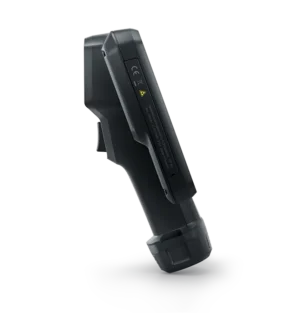
Battery life is rated at approximately 6 hours of continuous running, with a full recharge taking around 3 hours via USB-C (5V/2A) — meaning it’ll comfortably see out a full day of inspections on a single charge for most trade workflows, and top up quickly overnight or during a lunch break using widely available USB-C chargers. At approximately 380 g and 221.7 x 73.5 x 123.8 mm, it’s light enough to carry all day without becoming a burden, while still offering a comfortable, purpose-built handheld grip rather than feeling like a repurposed consumer device.
Documentation, Sharing, and Getting Data Off the Camera
Every fault you find is only useful if you can document it and get it in front of the right person. The B21LS includes 16 GB of built-in eMMC storage (rated for up to approximately 30,000 radiometric JPEG images), so you can capture extensive job documentation without constantly managing storage. Images are saved in radiometric JPEG format, meaning the full temperature data behind each pixel is retained in the file — useful if you need to re-analyse an image back at the office rather than relying purely on what you saw on-site.
Built-in Wi-Fi (802.11 b/g/n, 2.4 GHz) connects the B21LS to the HIKMICRO Viewer App, letting you transfer images to a phone or tablet for quick sharing with a client, a supervisor, or straight into a compliance report — no cables required in the field. Back at the desk, HIKMICRO’s companion analysis software provides point, line, rectangle, circle, and polygon measurement tools for a more detailed review of captured images, which is particularly handy when preparing a formal inspection report rather than a quick site photo.
A Class II laser pointer helps with precise on-target aiming when you need to confirm exactly what area of a scene the temperature reading corresponds to — useful when briefing a client or cross-referencing a hotspot against a physical component.
Where the B21LS Earns Its Keep
Electrical contractors and switchboard inspections: The Electrical Faults SuperScene mode combined with sub-40 mK sensitivity makes the B21LS well suited to picking up early-stage loose connections, overloaded circuits, and unbalanced loads during routine switchboard and distribution board inspections — the kind of preventative check that can catch a fault before it becomes a callback or, worse, a fire risk.
HVAC technicians: From diagnosing refrigerant flow issues to checking compressor and condenser temperatures, or verifying even heat distribution across ductwork, the wide -20°C to 550°C range and Insulation/Floor Heating presets give HVAC techs a single tool that covers both the cold and hot sides of the job.
Building and facility inspectors: Insulation and Insulation Pro scene modes, paired with the Water Leak alarm function, support common building diagnostic work — locating missing or degraded insulation, tracking moisture ingress before it becomes visible mould or structural damage, and documenting findings for a client report.
Solar installers and maintenance teams: The dedicated Solar Panel SuperScene mode is built specifically for identifying underperforming cells, hotspots from micro-cracks, or faulty connections across PV arrays — a scan that’s far faster and safer than a manual panel-by-panel visual check, particularly on rooftop installations.
Automotive and industrial maintenance teams: From diagnosing brake and bearing overheating to catching motor and gearbox faults before a breakdown, the combination of a wide temperature range and fast 25 Hz refresh rate suits diagnostic work on moving or rotating equipment.
What’s in the Box
The B21LS ships with the handheld thermal camera itself, a USB 2.0 A to USB Type-C cable, a wrist strap, a factory calibration certificate, and a quick start guide. An optional clip-on macro lens (HM-B201-MACRO) and a protective pouch (HM-B01-POUCH) are available separately for technicians doing fine-detail or PCB-level work, or wanting extra protection for transport between sites.
A Practical Tool for Everyday Diagnostic Work
The HIKMICRO B21LS isn’t trying to be a lab-grade research instrument — it’s built as a genuinely useful, rugged, everyday diagnostic tool for trade professionals who need to find a fault, confirm it, document it, and move on to the next job. Between its scene-specific presets, wide temperature range, rugged IP54/2 m drop-rated housing, and Wi-Fi-enabled reporting workflow, it covers the core diagnostic needs of electrical, HVAC, building, solar, and industrial maintenance work in one handheld unit.
Technical Specifications Table
| Specification | Value | Why It Matters |
|---|---|---|
| IR Resolution | 256 x 192 (49,152 pixels) | Determines the level of thermal detail captured — enough resolution to isolate individual components, connections, or small hotspots rather than broad heat blurs. |
| SuperIR Enhancement | Up to 640 x 480 (live view and captured images) | Sharpens the displayed and saved image beyond the native detector resolution, making faults easier to interpret and report on without extra hardware cost. |
| NETD | < 40 mK (@ 25°C, F#=1.0) | A lower NETD means the camera can distinguish smaller temperature differences from background noise — critical for catching early-stage faults before they become severe. |
| Temperature Measurement Range | -20°C to 550°C (-4°F to 1022°F) | Covers everything from cold building envelope and refrigeration work through to hot industrial and switchgear applications in a single instrument. |
| Accuracy | Max (±2°C/3.6°F, ±2%) — ambient 15°C–35°C, object >0°C | Defines the confidence level of a given reading; important to note when working outside the specified ambient band (e.g. cold roof spaces). |
| Image Frequency | 25 Hz | Keeps the live feed smooth when panning across switchboards, roofs, or moving equipment, reducing the chance of missing a transient fault. |
| Distance to Spot Ratio (D:S) | 45:1 | Indicates how far the camera can be from a target while still resolving a usable measurement spot — relevant for inspecting equipment from a safe distance. |
| Field of View (FOV) | 37.2° x 50.0° | A wide-angle lens suited to scanning larger areas such as walls, roofs, and switchboard panels without needing to step back excessively. |
| Min. Focus Distance | 0.3 m | Focus-free wide-angle lens with a practical close-focus limit for standard inspection work (a macro lens extends this for fine-detail applications). |
| Display | 3.2″ LCD, 480 x 640 resolution | A crisp, readable on-device screen for confirming a reading or composing a shot before capture, without needing to tether to a phone. |
| Storage | Built-in 16 GB eMMC, up to ~30,000 radiometric JPEG images | Ample on-device capacity for a full day (or many days) of job documentation without needing to manage external memory cards. |
| Image File Format | Radiometric JPEG | Retains full temperature data behind every pixel, allowing later re-analysis of an image rather than relying only on the on-site view. |
| SuperScene Modes | Custom, Water Leak, Insulation, Floor Heating, Electrical Faults, Solar Panel, Macro Mode, Insulation Pro, Condensation | Purpose-built presets tailor the camera’s display and analysis to the specific trade task, reducing setup time and interpretation error. |
| Smart SuperScene Alarm | Water Leak, Insulation, Floor Heating (more than/less than, audible warning) | Provides real-time alerting during a scan, helping catch anomalies the operator might otherwise miss on a small screen. |
| Wi-Fi | 802.11 b/g/n (2.4 GHz), HIKMICRO Viewer App | Enables fast, cable-free image transfer to a phone or tablet for on-site sharing or reporting. |
| Laser Pointer | Class II | Assists with precise on-target aiming to confirm exactly which component or area a reading refers to. |
| Battery Operating Time | Approx. 6 hours | Supports a full working day of inspections on a single charge for most trade workflows. |
| Battery Charging Time | Approx. 3 hours (USB-C, 5V/2A) | Quick top-up via standard USB-C charging hardware, minimising downtime between jobs. |
| Protection Level | IP54 | Provides resistance to dust and light water exposure, suited to genuine job-site conditions rather than office-only use. |
| Drop Test Height | 2 m | Indicates the camera is built to survive an accidental drop from typical handheld working height. |
| Working Temperature Range | -10°C to 50°C | Confirms the camera itself will keep operating reliably across most Australian seasonal site conditions. |
| Weight | Approx. 380 g | Light enough for extended handheld use across a full day of inspections without operator fatigue. |
| Dimensions | 221.7 x 73.5 x 123.8 mm | Compact enough to carry in a tool bag or dedicated pouch alongside other trade instruments. |
| Tripod Mounting | UNC ¼”-20 | Standard thread compatible with common tripods and mounting accessories for hands-free or fixed monitoring setups. |
What is the temperature range of the HIKMICRO B21LS? The HIKMICRO B21LS measures temperatures from -20°C to 550°C (-4°F to 1022°F), with a maximum accuracy of ±2°C/3.6°F or ±2% of reading, specified for ambient temperatures between 15°C and 35°C.
What resolution does the HIKMICRO B21LS thermal camera have? The B21LS has a native IR resolution of 256 x 192 (49,152 pixels), with HIKMICRO’s SuperIR technology enhancing both live view and captured images up to 640 x 480 for greater displayed detail.
Is the HIKMICRO B21LS suitable for electrical fault-finding? Yes. The B21LS includes a dedicated Electrical Faults SuperScene mode and an NETD below 40 mK, allowing it to detect subtle temperature differences typical of early-stage loose connections, overloaded circuits, and unbalanced electrical loads.
Can the HIKMICRO B21LS be used for solar panel inspections? Yes. It includes a dedicated Solar Panel SuperScene mode designed to help identify underperforming cells, hotspot faults, and connection issues across PV arrays.
How long does the HIKMICRO B21LS battery last? The B21LS is rated for approximately 6 hours of continuous operation on a full charge, with a full recharge taking approximately 3 hours via USB-C (5V/2A).
Is the HIKMICRO B21LS waterproof or dustproof? The B21LS carries an IP54 ingress protection rating, providing resistance to dust ingress and light water splashes, and has been drop-tested from 2 metres — suited to genuine job-site handling rather than a fully waterproof or submersible rating.
Does the HIKMICRO B21LS connect to a phone or tablet? Yes. It has built-in Wi-Fi (802.11 b/g/n, 2.4 GHz) and pairs with the HIKMICRO Viewer App for wireless image transfer and sharing directly from the camera.
| Weight | 3 kg |
|---|
Technical Specifications
| Specification | Value | Why It Matters |
|---|---|---|
| IR Resolution | 256 x 192 (49,152 pixels) | Determines the level of thermal detail captured — enough resolution to isolate individual components, connections, or small hotspots rather than broad heat blurs. |
| SuperIR Enhancement | Up to 640 x 480 (live view and captured images) | Sharpens the displayed and saved image beyond the native detector resolution, making faults easier to interpret and report on without extra hardware cost. |
| NETD | < 40 mK (@ 25°C, F#=1.0) | A lower NETD means the camera can distinguish smaller temperature differences from background noise — critical for catching early-stage faults before they become severe. |
| Temperature Measurement Range | -20°C to 550°C (-4°F to 1022°F) | Covers everything from cold building envelope and refrigeration work through to hot industrial and switchgear applications in a single instrument. |
| Accuracy | Max (±2°C/3.6°F, ±2%) — ambient 15°C–35°C, object >0°C | Defines the confidence level of a given reading; important to note when working outside the specified ambient band (e.g. cold roof spaces). |
| Image Frequency | 25 Hz | Keeps the live feed smooth when panning across switchboards, roofs, or moving equipment, reducing the chance of missing a transient fault. |
| Distance to Spot Ratio (D:S) | 45:1 | Indicates how far the camera can be from a target while still resolving a usable measurement spot — relevant for inspecting equipment from a safe distance. |
| Field of View (FOV) | 37.2° x 50.0° | A wide-angle lens suited to scanning larger areas such as walls, roofs, and switchboard panels without needing to step back excessively. |
| Min. Focus Distance | 0.3 m | Focus-free wide-angle lens with a practical close-focus limit for standard inspection work (a macro lens extends this for fine-detail applications). |
| Display | 3.2″ LCD, 480 x 640 resolution | A crisp, readable on-device screen for confirming a reading or composing a shot before capture, without needing to tether to a phone. |
| Storage | Built-in 16 GB eMMC, up to ~30,000 radiometric JPEG images | Ample on-device capacity for a full day (or many days) of job documentation without needing to manage external memory cards. |
| Image File Format | Radiometric JPEG | Retains full temperature data behind every pixel, allowing later re-analysis of an image rather than relying only on the on-site view. |
| SuperScene Modes | Custom, Water Leak, Insulation, Floor Heating, Electrical Faults, Solar Panel, Macro Mode, Insulation Pro, Condensation | Purpose-built presets tailor the camera’s display and analysis to the specific trade task, reducing setup time and interpretation error. |
| Smart SuperScene Alarm | Water Leak, Insulation, Floor Heating (more than/less than, audible warning) | Provides real-time alerting during a scan, helping catch anomalies the operator might otherwise miss on a small screen. |
| Wi-Fi | 802.11 b/g/n (2.4 GHz), HIKMICRO Viewer App | Enables fast, cable-free image transfer to a phone or tablet for on-site sharing or reporting. |
| Laser Pointer | Class II | Assists with precise on-target aiming to confirm exactly which component or area a reading refers to. |
| Battery Operating Time | Approx. 6 hours | Supports a full working day of inspections on a single charge for most trade workflows. |
| Battery Charging Time | Approx. 3 hours (USB-C, 5V/2A) | Quick top-up via standard USB-C charging hardware, minimising downtime between jobs. |
| Protection Level | IP54 | Provides resistance to dust and light water exposure, suited to genuine job-site conditions rather than office-only use. |
| Drop Test Height | 2 m | Indicates the camera is built to survive an accidental drop from typical handheld working height. |
| Working Temperature Range | -10°C to 50°C | Confirms the camera itself will keep operating reliably across most Australian seasonal site conditions. |
| Weight | Approx. 380 g | Light enough for extended handheld use across a full day of inspections without operator fatigue. |
| Dimensions | 221.7 x 73.5 x 123.8 mm | Compact enough to carry in a tool bag or dedicated pouch alongside other trade instruments. |
| Tripod Mounting | UNC ¼”-20 | Standard thread compatible with common tripods and mounting accessories for hands-free or fixed monitoring setups. |
Q: What’s the difference between the B21LS and a standard non-radiometric thermal camera? A: The B21LS captures full radiometric JPEG images, meaning every pixel retains actual temperature data rather than just a colour-mapped picture. This allows for detailed re-analysis, point/line/area measurement, and formal reporting after the image is captured — not just a visual reference.
Q: Does the B21LS come with a calibration certificate? A: A factory calibration certificate is included with the unit as standard. If your application requires NATA-traceable calibration for compliance or audit purposes, please contact us to confirm current calibration service options for this model.
Q: Can the macro lens be added later, or does it need to be purchased with the camera? A: The HM-B201-MACRO clip-on macro lens is an optional accessory that can be purchased separately at any time and fitted as needed for fine-detail work such as PCB inspection.
Q: How much storage does the B21LS have, and can it be expanded? A: The B21LS has 16 GB of built-in eMMC storage, rated for approximately 30,000 radiometric JPEG images. Storage is built-in rather than via removable memory card.
Q: Is the B21LS suitable for use in cold environments, like a roof cavity or cold store? A: The camera measures down to -20°C and has a working temperature range of -10°C to 50°C. Note that stated accuracy (±2°C/3.6°F or ±2%) is specified for ambient temperatures between 15°C and 35°C, so readings taken well outside that ambient band should be treated with appropriate allowance.
Q: What’s included in the box with the HIKMICRO B21LS? A: The standard package includes the B21LS handheld thermal camera, a USB 2.0 A to USB Type-C cable, a wrist strap, a factory calibration certificate, and a quick start guide.
Q: What is SuperScene mode and why does it matter? A: SuperScene is HIKMICRO’s set of scene-specific presets — including Water Leak, Insulation, Floor Heating, Electrical Faults, and Solar Panel modes — that adjust the camera’s display and analysis settings to suit a specific inspection task, reducing setup time and helping less experienced operators interpret results correctly.
Be the first to review “HIKMICRO B21LS Thermal Imaging Camera | 256×192, 550°C”
You must be logged in to post a review.
Handheld Thermal Imager
Handheld Thermal Imager Related Products



Next day delivery
Finance services
Price Match
Technical support
Product training
Calibration servises
Need help? Call our support team 1800 358 531
Reviews
There are no reviews yet.