


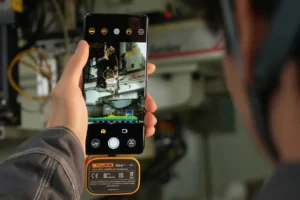

Fluke iSee ii01 Acoustic Imaging Camera | Smartphone Leak Detector | Australia
$1,390.00 .( $1,529.00 inc. GST )
For all your equipment calibration needs, visit our MyCalibration website.
 Free Delivery on orders over $1000
Shipping time may vary for certain products*

Product Enquiry
If you would like more information regarding this product, simply email us here.

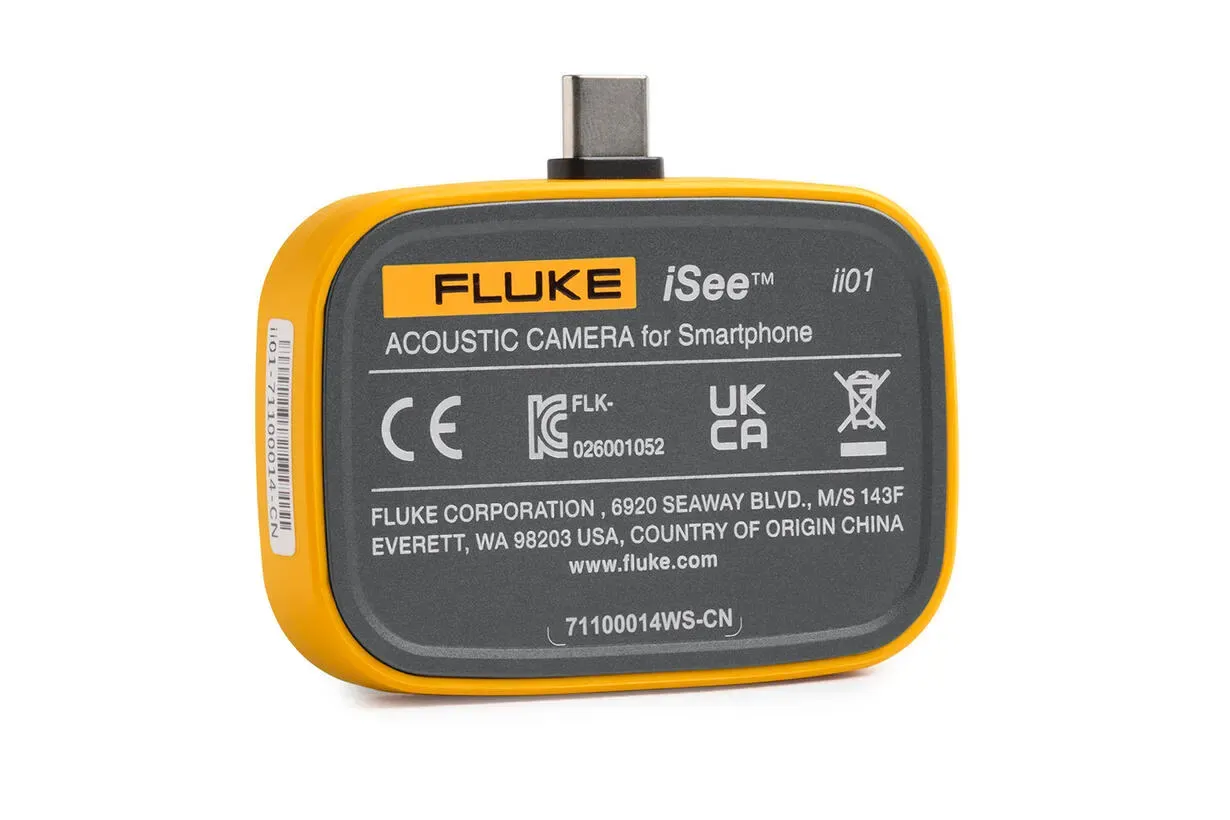
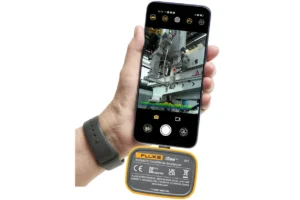
The Fluke iSee™ ii01 turns your Android smartphone into a professional acoustic imaging system — no training required, no bulky gear, no downtime for the line. Simply plug it into your phone’s USB-C port and Fluke’s SoundMap™ technology immediately visualises compressed air leaks, gas escapes, and mechanical abnormalities across a wide 2 kHz–48 kHz frequency range. At just 50 g, it’s the acoustic expert that lives in your pocket. Backed by Fluke’s 2-year warranty.

The Problem with Finding What You Can’t Hear
Compressed air and gas leaks are some of the most expensive problems in Australian manufacturing and process facilities — and they’re almost entirely invisible. You can’t see them. You usually can’t hear them above the ambient noise of a working plant. And by the time a leak becomes obvious, the cost in wasted energy and compromised system pressure has already accumulated for weeks or months.
Traditional approaches have real limitations. Soap-water bubble testing means coating every joint by hand and waiting. Single-sensor ultrasonic detectors require slow, row-by-row scanning and struggle at distances. Dedicated acoustic imaging systems solve both problems brilliantly, but they’ve historically carried price tags that restrict them to one shared instrument for an entire organisation — if any budget is available at all.
The Fluke iSee™ ii01 changes the equation. It’s an entry-level acoustic imaging camera that plugs directly into the USB-C port of any compatible Android or HarmonyOS smartphone, transforming a device that’s already in your pocket into a professional-grade SoundMap™ imaging system. Point. Scan. Locate. Done — often in minutes rather than hours.
How the ii01 Works: Acoustic Imaging Explained
When compressed air or gas escapes through a small opening, the turbulence generated produces ultrasonic sound waves above 20 kHz — far beyond the range of human hearing, but well within the detection band of the ii01’s sensor array.
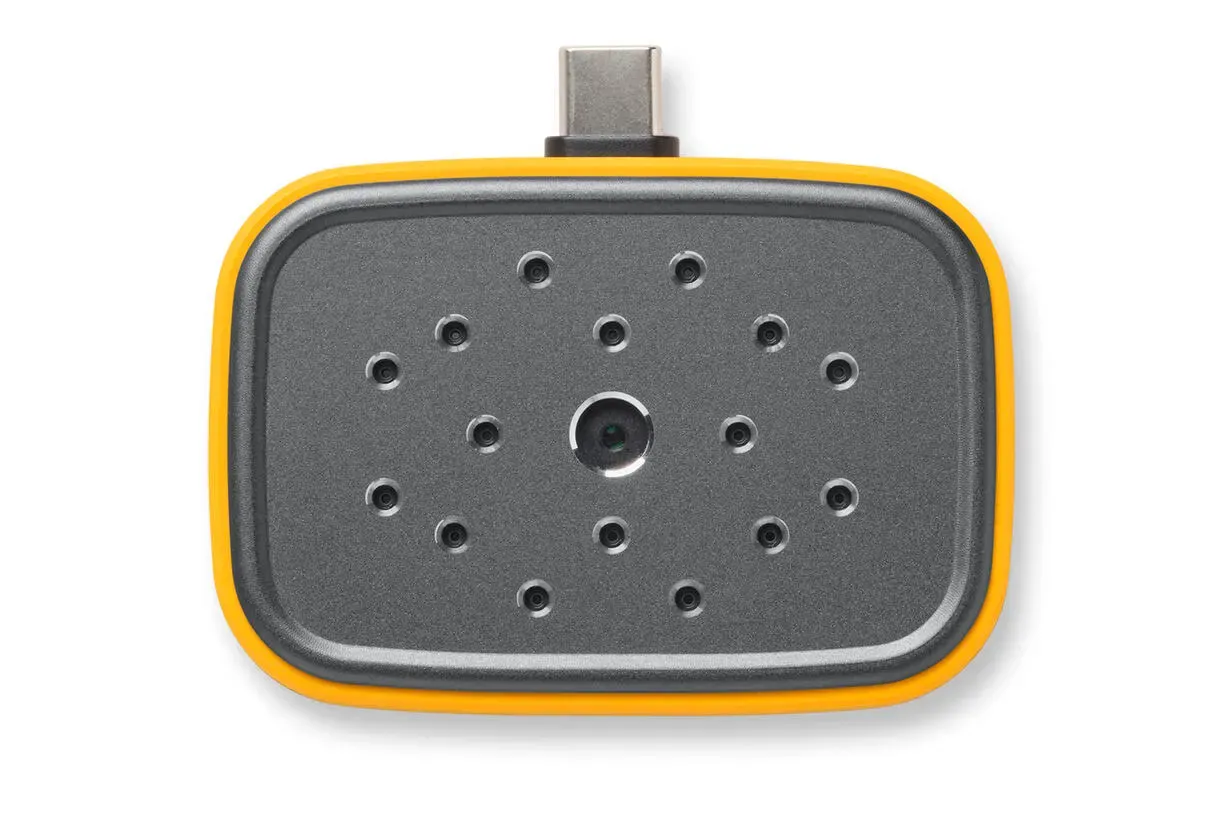
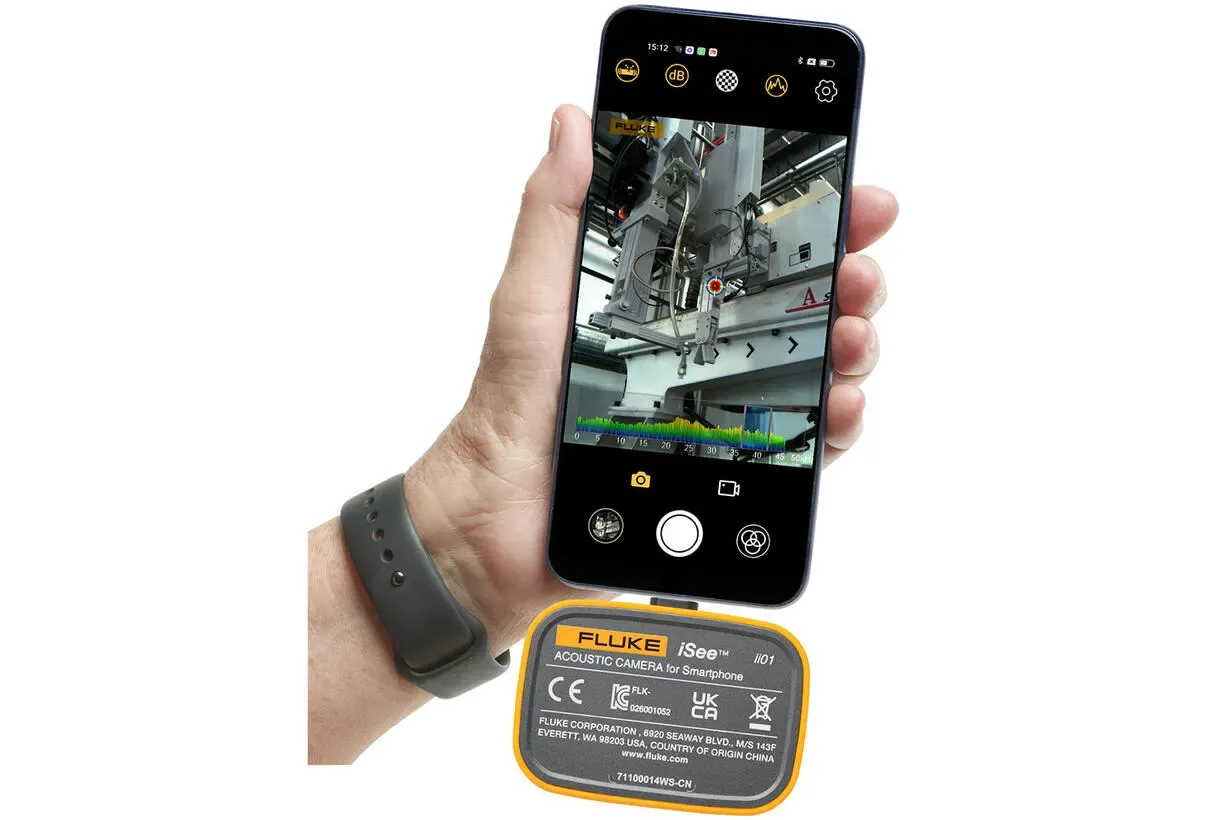
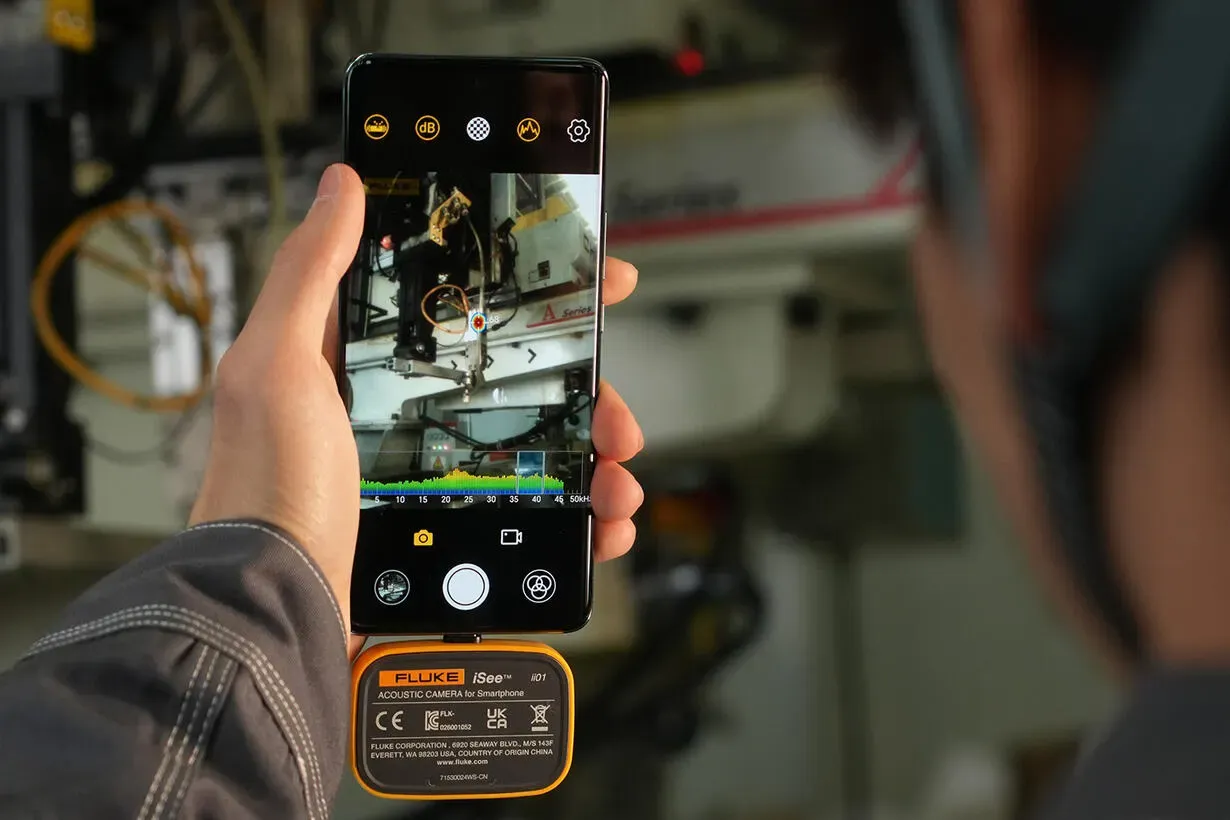
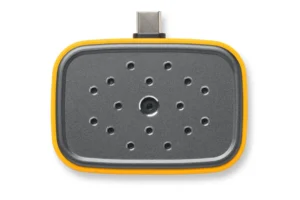
The ii01 uses 16 high-precision MEMS microphones arranged in an array to capture those ultrasonic signals from multiple directions simultaneously. Fluke’s proprietary SoundMap™ beamforming algorithm then calculates the precise origin of the sound and overlays a colour-coded acoustic heat map directly onto the live camera image on your phone screen. The loudest source — the likely leak point — appears as a bright hot spot on your display, at distances from 0.5 m right out to 50 m depending on site conditions.
Because most industrial equipment produces low-frequency background noise while gas leaks generate high-frequency ultrasonic signatures, the ii01 can reliably distinguish leak signals even in noisy operating environments. Scans can be performed while equipment is running — no production shutdown required.
SoundMap™ Leak Detection Mode
For frontline leak detection tasks, the ii01 includes a dedicated Quick Leak Detection mode that locks the frequency band to 37.4 kHz–42.6 kHz (the optimal ultrasonic range for compressed air and gas leak signatures) with a single tap. Real-time dB values for the target centre point are displayed on screen, giving technicians an immediate quantitative indicator to help assess leak severity and prioritise repairs.
For broader acoustic investigation — locating mechanical abnormalities, assessing air tightness on complex pipeline assemblies, or noise source identification — the full 2 kHz to 48 kHz frequency range is available with manual slider control.
Three colour palette options (IronRed, Blue-Red, and Grayscale) with fully adjustable colour blending (0–100%) give you control over how the acoustic overlay appears against the visible image, making it easy to adapt display settings to different lighting conditions and environments.
Built for the Realities of the Job
The ii01 was designed with working maintenance teams in mind, not lab environments.
Plug and play, no setup overhead. Connect the ii01 to your smartphone’s USB-C port and open the Fluke iSee™ app — you’re imaging immediately. No batteries to charge, no boot sequence, no configuration menus to navigate before you can start. The ii01 draws power directly from your phone.
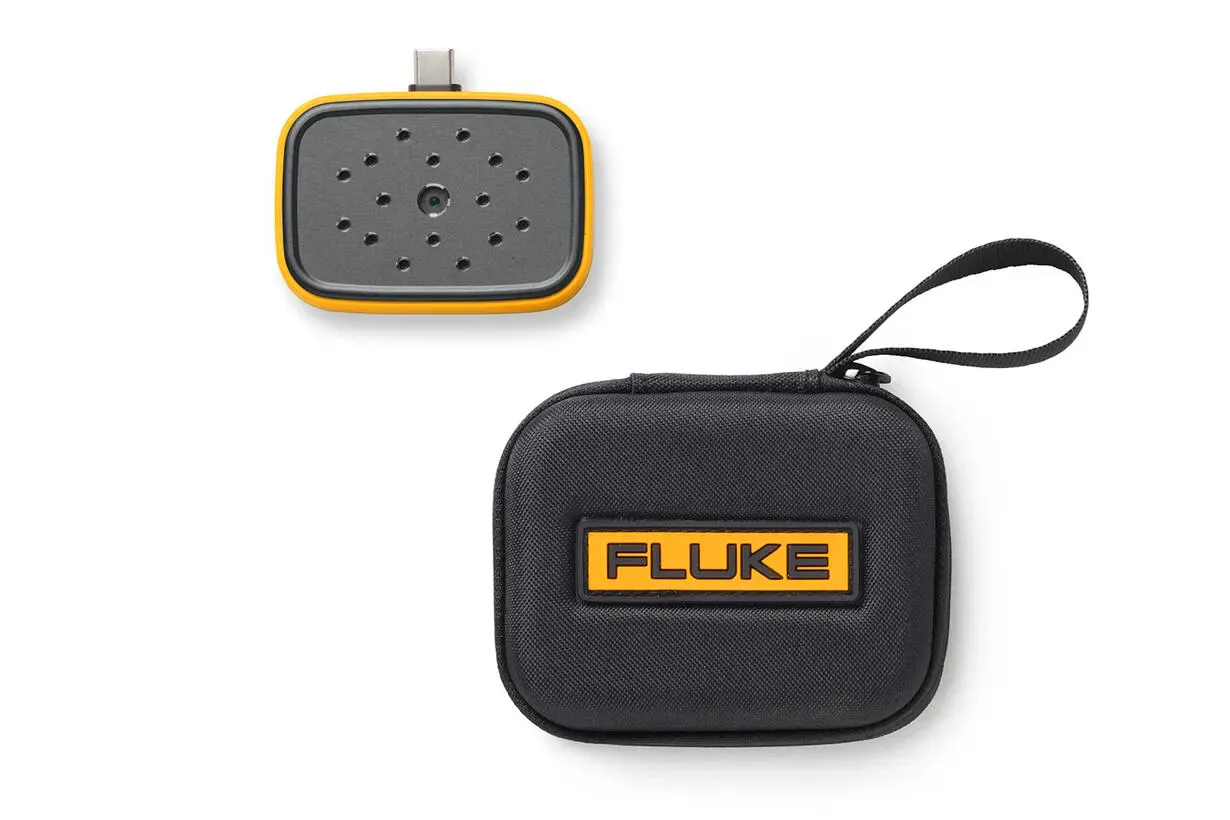
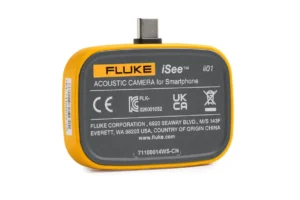
50 grams. Pocket-sized. The all-aluminium housing measures just 61 × 50 × 12 mm and weighs 50 g — lighter than most multi-tools and far smaller than any standalone acoustic imager on the market. Drop it in a shirt pocket and carry it to every job on site.
No buttons to learn. The minimalist hardware design means there’s nothing to accidentally press or configure. All controls are handled through the simplified iSee™ app UI, which is designed for fast, intuitive operation by technicians who need to get results rather than learn a new software platform.
Share findings instantly. Images (JPG) and videos (MP4, up to 5 minutes) are saved directly to your phone’s photo library with customisable watermarks for documentation purposes. Share them via text, email, or any messaging platform without needing to transfer files to a computer. For maintenance teams that need to escalate findings or brief supervisors while still on the floor, that immediacy is genuinely valuable.
IP54 ingress protection. Rated to IEC 60529 IP54, the ii01 handles the dust and light moisture exposure typical in industrial environments.
Where the ii01 Delivers Value in Australian Industry
General manufacturing and process facilities. Compressed air systems typically account for a significant portion of facility energy consumption. Poorly maintained systems can waste a substantial fraction of compressed air output through undetected leaks. The ii01 lets maintenance technicians walk a production area, rapidly scanning for leaks — without interrupting operations — and document findings for a scheduled repair programme.
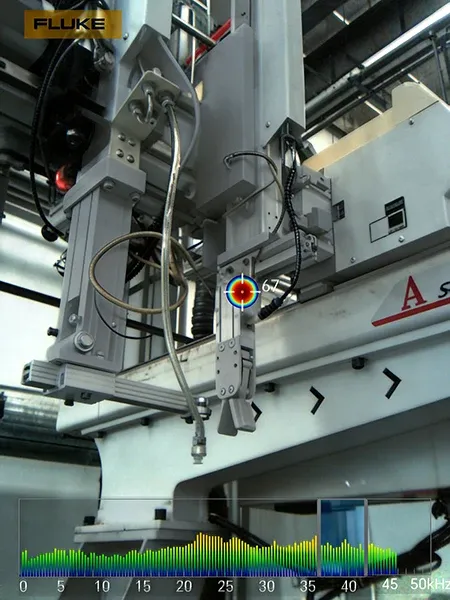
Injection moulding and plastics. Compressed air leak detection in injection moulding machines is a primary application. Leaks reduce system pressure, reducing pneumatic tool efficiency and introducing variability into production quality. The ii01 locates the source visually rather than requiring section-by-section disassembly.
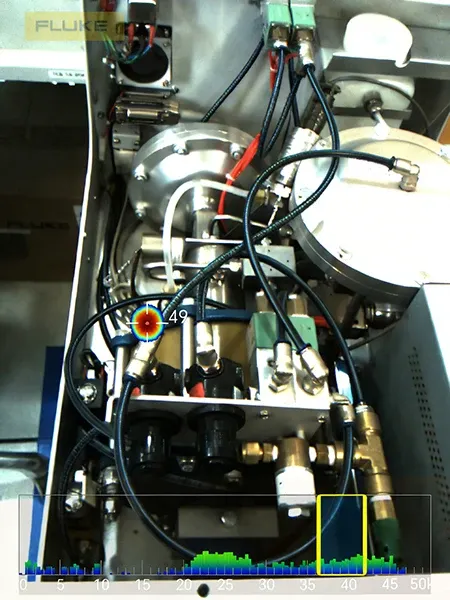
Energy storage and battery manufacturing. Pre-commissioning pipeline air tightness testing on energy storage cabinets is a documented use case. The ii01 can scan complex pipeline assemblies quickly before equipment leaves the factory, confirming system integrity.
Chemical, gas, and metallurgical plants. Process gas leak detection on chemical reactors, pressure vessels, and piping systems operating under high-pressure or high-temperature conditions. The ii01’s non-contact imaging capability means technicians can scan from a safe working distance rather than approaching potentially hazardous pipework directly.
Food, beverage, and pharmaceutical production. Hygiene-critical environments where rapid non-contact detection and documented reporting are part of standard maintenance practice.
Refrigeration and HVAC. Compressor and refrigeration equipment leak assessments, where gas tightness directly impacts system efficiency and regulatory compliance.
Facilities management. Building air tightness inspections and mechanical plant maintenance assessments, where a lightweight, easy-to-use device is far more practical than booking out a shared specialist instrument.
Comparing the ii01 to Higher-End Acoustic Imaging Systems
The ii01 is the entry point to Fluke’s acoustic imaging range — specifically designed to be accessible to individual technicians and smaller maintenance teams rather than requiring a shared, high-investment instrument. It delivers qualitative SoundMap™ imaging and single-source identification (the point with the highest acoustic energy) across the 2–48 kHz band, with leak mode, real-time dB display, and full image/video documentation.
Fluke’s higher-tier ii500, ii905, and ii915 series instruments add capabilities including multi-source acoustic imaging, preliminary quantitative analysis modes (LeakQ, PDQ, MecQ), wider frequency ranges, and advanced analytical tools suited to systematic reliability programmes. The ii01 is not a replacement for those instruments — but for organisations looking to put acoustic imaging capability in the hands of every maintenance technician at an affordable per-unit cost, it’s a compelling first step.
Unparalleled usability
 |
 |
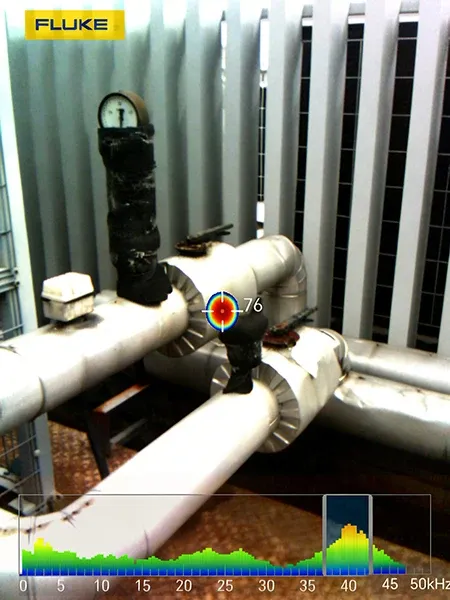 |
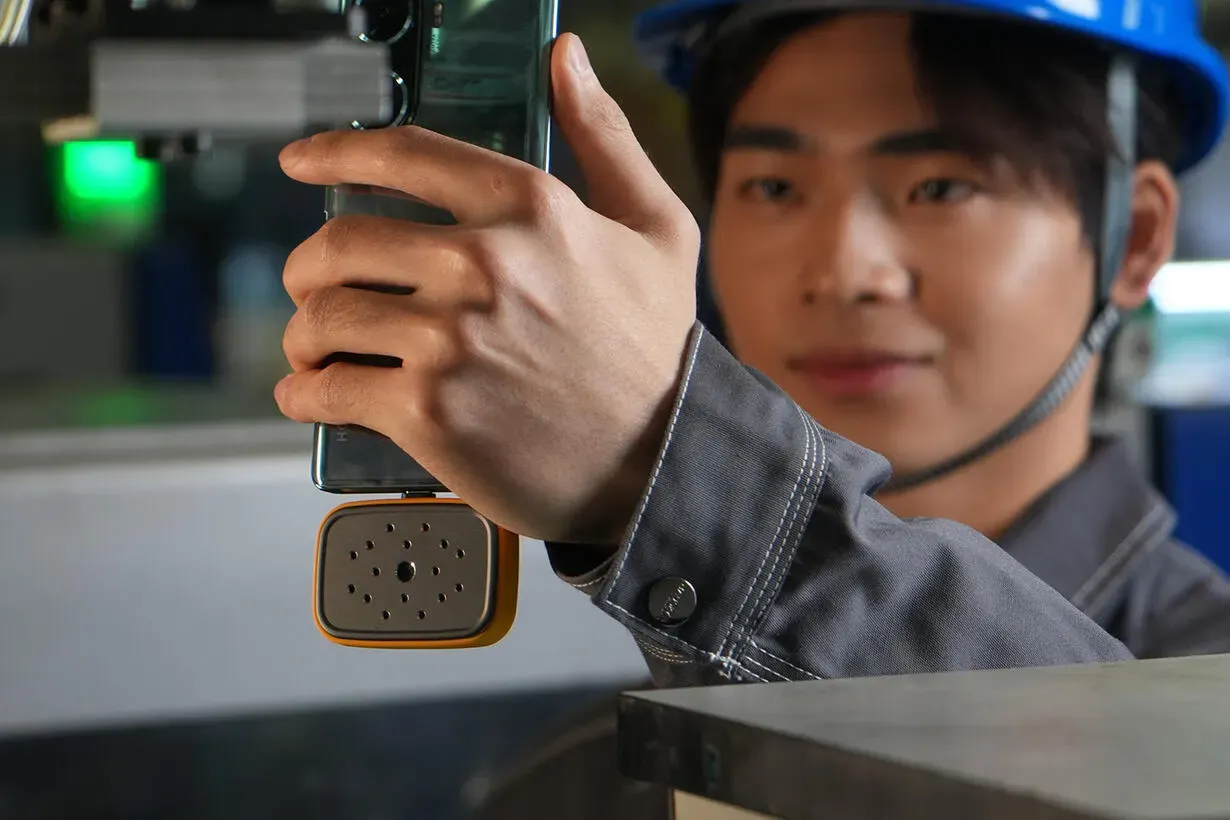
| Compressed air leak detection of injection molding machines | Air tightness inspection of complicated equipment pipelines | Pipeline leak detection |
In the Box
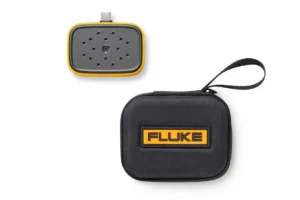
- Fluke ii01 Acoustic Camera for Android Smartphone
- Soft protective carry bag
- Quick Reference Guide
Requires: Compatible Android (6.0+) or HarmonyOS (2.0+) smartphone with USB-C port and OTG enabled. Download the Fluke iSee™ app from the Google Play Store.
TECHNICAL SPECIFICATIONS TABLE
| Specification | Value | Why It Matters |
|---|---|---|
| Microphones | 16 high-precision MEMS sensors | Multi-sensor array enables directional acoustic imaging (beamforming) — single-sensor detectors cannot locate leaks visually |
| Frequency band | 2 kHz to 48 kHz | Covers both low-frequency mechanical noise and high-frequency gas leak signatures across a single device |
| Quick Leak Detection mode | Locks at 37.4–42.6 kHz | Optimised for compressed air and gas leak detection with a single tap; removes guesswork about frequency selection |
| dB value display | Target centre point; enable/disable | Real-time quantitative indicator supports severity assessment and repair prioritisation on site |
| Detection range | 0.50 m to 50 m (site-dependent) | Wide standoff range lets you scan from a safe distance, including hard-to-reach or elevated pipework |
| Field of view | 50° (H) × 38° (V) | Wide angular coverage means less repositioning when scanning large equipment or panel arrays |
| Frame rate | 20 Hz | Smooth, responsive acoustic image — not a static snapshot |
| Sensitivity | −38 dBV | High sensitivity MEMS sensors detect low-level leak signatures that lower-sensitivity detectors would miss |
| Signal-to-noise ratio | 73 dBA | Strong SNR means the ii01 can distinguish real leak signals even in noisy industrial environments |
| Visible lens resolution | 2 MP | Background image is sharp enough for accurate overlay interpretation and documentation |
| Acoustic image | Fluke SoundMap™ | Proprietary Fluke technology for overlaying directional acoustic data onto the live camera view |
| Focal length | 50 cm to infinity | Set-and-forget focus — no adjustment needed across typical industrial inspection distances |
| Image format | JPG / MP4 (up to 5 min) | Saves directly to phone library; no separate software or USB transfer required |
| Colour palettes | IronRed, Blue-Red, Grayscale | Three options with 0–100% blending for different viewing environments |
| Customised watermark | Image or text characters | Branded documentation directly from the device — no post-processing required |
| Interface | USB Type-C | Direct phone connection; powers from phone — no separate battery or charger |
| OS supported | Android 6.0+ / HarmonyOS 2.0+ | Compatible with a broad range of current Android devices |
| Ingress protection | IP54 (IEC 60529) | Dust-partial and splash-resistant for industrial use |
| Operating temperature | 0 °C to +40 °C | Suitable for standard industrial and outdoor Australian environments |
| Storage temperature | −30 °C to +60 °C | Handles vehicle storage and warehouse temperature extremes |
| Operating humidity | 10–90% RH, non-condensing | Suitable for humid manufacturing and food production environments |
| Operating altitude | Up to 2,000 m | Covers most Australian industrial sites including highland mining |
| Power consumption | 1.2 W (typical) | Low draw — minimal impact on smartphone battery life |
| Size (L × W × H) | 61 × 50 × 12 mm | Truly pocket-sized; smaller than a standard credit card in length and width |
| Weight | 50 g | Lighter than most smartphones; no fatigue from extended scanning sessions |
| EMC | IEC 61326-1; CISPR 11 Group 1, Class A | Industrial electromagnetic compatibility standard |
| Warranty | 2 years | Standard Fluke warranty |
Q: What is the Fluke iSee ii01?
The Fluke iSee™ ii01 is a smartphone-connected acoustic imaging camera that detects compressed air and gas leaks, assesses air tightness, and locates mechanical noise sources. It connects directly to any compatible Android smartphone’s USB-C port and uses Fluke’s SoundMap™ beamforming technology to overlay a colour-coded acoustic heat map onto the phone’s live camera feed in real time. Weighing just 50 g at 61 × 50 × 12 mm, it’s designed to give individual maintenance technicians access to professional acoustic imaging without the cost or complexity of a dedicated standalone instrument.
Q: How does acoustic leak detection work?
When compressed air or gas escapes through a small gap or fitting, it creates turbulence that produces ultrasonic sound waves above 20 kHz — inaudible to the human ear but detectable by sensitive microphone arrays. The Fluke ii01 captures these signals using 16 high-precision MEMS sensors, calculates the direction and source of the sound through beamforming algorithms, and displays a SoundMap™ acoustic image overlaid on the live camera view, visually pinpointing the leak location. Because most industrial machinery generates low-frequency background noise while gas leaks produce high-frequency ultrasonic signatures, the system can reliably locate leaks even in noisy operating environments, and inspections can usually be conducted while equipment remains in service.
AEO Block 3: What can the Fluke ii01 detect?
Q: What can the Fluke ii01 detect?
The Fluke ii01 covers a 2 kHz to 48 kHz frequency range, which spans the following applications: compressed air leaks in pneumatic systems and pipework; gas leaks in process pipelines, chemical reactors, and pressure vessels; air tightness assessment of complex pipeline assemblies and sealed equipment; and identification of mechanical abnormal sounds in rotating or pressurised machinery. A dedicated Quick Leak Detection mode locks the frequency band to 37.4–42.6 kHz (optimised for compressed air and gas leak signatures) with a single tap. Real-time dB values at the target centre point provide on-site severity assessment.
Q: What is the detection range of the Fluke ii01 acoustic camera?
The Fluke ii01 supports a detection range of 0.5 m to 50 m, subject to site conditions including ambient noise levels, leak size, and system pressure. The wide-angle field of view (50° × 38°) allows broad area scanning without frequent repositioning, and the focal length covers 50 cm to infinity. This standoff range allows technicians to scan elevated pipework, hard-to-access equipment, or potentially hazardous process areas from a safe working distance while still accurately identifying the acoustic source.
Q: What smartphones does the Fluke ii01 work with?
The Fluke ii01 connects via USB Type-C and is compatible with Android smartphones running Android 6.0 or later, and devices running HarmonyOS 2.0 or later. The OTG (On-The-Go) feature must be enabled on the smartphone. The free Fluke iSee™ application is available for download from the Google Play Store. The ii01 is not compatible with iOS (Apple iPhone) devices. It draws power from the connected smartphone — no separate charging or battery is required.
Q: How does the Fluke ii01 compare to Fluke’s higher-end acoustic imaging cameras?
The ii01 is Fluke’s entry-level acoustic imager, designed to make qualitative SoundMap™ imaging accessible to individual technicians at a significantly lower price point than dedicated standalone instruments. It identifies the single strongest sound source (the point with the highest acoustic energy), displays real-time dB readings, and supports full image and video documentation. Fluke’s higher-tier ii500, ii905, and ii915 series add multi-source acoustic display, preliminary quantitative analysis (LeakQ, PDQ, MecQ modes), wider frequency ranges, and advanced analytics suited to systematic reliability programmes. The ii01 is best suited for individual or team-level compressed air and gas leak detection and air tightness assessments; the higher-tier instruments are suited to large-scale reliability and predictive maintenance programmes.
Q: What industries is the Fluke ii01 acoustic camera used in?
The Fluke ii01 is used across general manufacturing (compressed air leak detection and noise location); metallurgy, gas, and chemical processing (process gas and hazardous gas pipeline inspection); food, beverage, and pharmaceutical production (air tightness and hygiene-critical maintenance); power generation; hospital and healthcare facilities (oxygen station and pipeline inspection); and equipment manufacturing including compressors, refrigeration systems, and energy storage devices. In Australia, it’s particularly relevant for industrial maintenance teams, facilities managers, EHS compliance officers, and product quality engineers responsible for maintaining sealed or pressurised systems.
Specifications: Fluke iSee™ Mobile Acoustic Imaging Camera – ii01
| Performance specifications and features | |
| Microphones | 16 high-precision MEMS sensors |
| Frequency band | 2kHz to 48kHz |
| Detection range | 0.50 m to 50 m (based on site conditions) |
| Field of view (H x V) | 50° x 38° |
| Frame rate | 20 Hz |
| Sensitivity | -38 dBV |
| Signal-to-noise ratio | 73 dBA |
| Visible lens resolution | 2 MP |
| Acoustic image | SoundMap™ image |
| Quick leak detection mode | Leak mode enabled: Frequency band locks at 37.4 kHz to 42.6 kHz: Leak mode disabled: Frequency band selection through manual slider |
| dB value of the target centerpoint | Yes, it can be enabled or disabled |
| Focal length | 50cm to infinity |
| Image format | JPG, MP4 (up to 5 minutes) |
| Color palettes | 3: IronRed, Blue-Red and Grayscale |
| Palette: Color Blending % | Yes: 0 %-100 % |
| Customized watermark | Image or English characters watermarks |
| General Specifications | |
| Interface | Type-C |
| Operating system supported | Android / HarmonyOS |
| Operating temperature | 0 °C to +40 °C |
| Storage temperature | -30 °C to +60 °C |
| Operating humidity | 10% to 90% RH, non-condensing |
| Operating altitude | Up to 2000 m |
| Storage altitude | Up to 12000 m |
| Power consumption | 1.2 W (Typical) |
| Ingress protection | IEC 60529: IP54 |
| Size (L x W x H) | 61 x 50 x 12 mm |
| Weight | 50g |
| EMC Environment | International IEC 61326-1: Electromagnetic environment for portable equipments CISPR 11: Group 1, Class A Group 1: Equipment intentionally generates and/or uses conductive-coupled RF energy, which is necessary for its internal operation. Class A: Equipment is suitable for use in all establishments other than domestic and those directly connected to a low-voltage power supply network that supplies buildings used for domestic purposes. There may be potential difficulties in ensuring electromagnetic compatibility in other environments due to conducted and radiated disturbances. Caution: This equipment is not intended for use in residential environments and may not provide adequate protection to radio reception in such environments. |
| Warranty | 2 years |
Q: Does the Fluke ii01 require batteries or charging? A: No. The ii01 draws its operating power directly from the connected smartphone via the USB-C interface. There is no internal battery to charge, and no separate power source is required. This also means startup is truly instant — connect and scan, no boot delay.
Q: Is the Fluke ii01 compatible with iPhones? A: No. The ii01 is designed for Android and HarmonyOS smartphones only. Compatible devices must have a USB-C port, run Android 6.0 or later (or HarmonyOS 2.0 or later), and have OTG (On-The-Go) enabled in device settings. Apple iOS is not supported.
Q: How do I download the Fluke iSee app for the ii01? A: The Fluke iSee™ app is a free download from the Google Play Store. Search for “Fluke iSee” or scan the QR code included in the product’s Getting Started Guide. The app is also compatible with the Fluke iSee TC01A/B/C Mobile Thermal Camera range.
Q: Can I use the Fluke ii01 while equipment is running? A: Yes, in most cases. The ii01 is designed for non-contact inspection, and because it detects high-frequency ultrasonic leak signatures that are distinct from the low-frequency background noise produced by running machinery, inspections can typically be conducted without shutting down the production line. This reduces downtime and allows leak surveys to be integrated into routine operational rounds.
Q: What file types does the Fluke ii01 save? A: Still images are saved as JPG files. Video captures are saved as MP4 files of up to 5 minutes in length. Both are stored directly to the connected smartphone’s photo library, with optional customised watermarks (image or text). Files can then be shared immediately via any app on the smartphone — no additional software, USB cable transfer, or cloud upload is required to report findings.
Q: What is the IP rating of the Fluke ii01? A: The ii01 is rated IP54 to IEC 60529, meaning it is protected against dust ingress and splashing water from any direction. This makes it suitable for industrial environments including manufacturing floors, outdoor plant areas, and light-moisture conditions typical of washdown facilities. It is not rated for submersion.
Q: What is the Quick Leak Detection mode on the Fluke ii01? A: Quick Leak Detection mode locks the frequency band to 37.4–42.6 kHz, which is optimised for detecting compressed air and gas leak signatures. It is activated with a single tap on the main app menu, removing the need to manually select the correct frequency band for standard leak detection tasks. When Quick Leak Detection mode is disabled, the frequency band is selected manually using a slider across the full 2–48 kHz range.
Q: What colour palettes are available on the Fluke ii01? A: Three acoustic colour palettes are available: IronRed, Blue-Red, and Grayscale. All three support continuous colour blending from 0% to 100%, allowing users to adjust the transparency of the acoustic overlay relative to the visible camera image to suit different lighting conditions and environments.
Q: What warranty does the Fluke ii01 come with? A: The Fluke ii01 carries a 2-year standard warranty from Fluke. No product registration is required to activate the warranty.
Q: How is the Fluke ii01 different from a single-sensor ultrasonic leak detector? A: A traditional single-sensor ultrasonic leak detector uses a single microphone to detect elevated sound energy in the ultrasonic range, requiring the user to scan slowly across an area — row by row — to find the approximate location of a leak. The Fluke ii01 uses an array of 16 MEMS sensors and beamforming technology to calculate and visually display the acoustic source in real time as a colour overlay on the camera image. This means the leak location is identified visually and immediately, rather than by feel and approximation. The ii01 can also operate at significantly greater standoff distances and covers a wider area per scan.
Q: What is SoundMap™ technology? A: SoundMap™ is Fluke’s proprietary acoustic imaging technology. It processes signals from the ii01’s 16-sensor MEMS array using beamforming algorithms to calculate the directional origin of ultrasonic sound sources, then renders this data as a colour-coded heat map overlaid on the live smartphone camera image. The result is a visual representation of where sound is emanating from — similar in principle to how a thermal camera visualises temperature, but applied to ultrasonic acoustic energy.
Q: Can the Fluke ii01 detect both air and gas leaks? A: Yes. The ii01 is designed to detect compressed air leaks and gas leaks across industrial applications. It covers process gas detection on chemical and metallurgical plant pipework, compressed air leak surveys on pneumatic systems and injection moulding machinery, and air tightness assessment on sealed equipment including energy storage systems and pressure vessels. The relevant frequency band for gas and air leak detection (37.4–42.6 kHz) is pre-configured as the Quick Leak Detection mode for ease of use.
Acoustic Leak Detector HIKMICRO AI56L (Air Leaks only) Acoustic Imaging Camera – Advanced Gas Leak Detection
Hikmicro HIKMICRO POCKET2 Water Detection Kit – Advanced Leak & Temperature Diagnostic Set for ProfessionalsRelated Products


Next day delivery
Finance services
Price Match
Technical support
Product training
Calibration servises
Need help? Call our support team 1800 358 531