

 Clearance
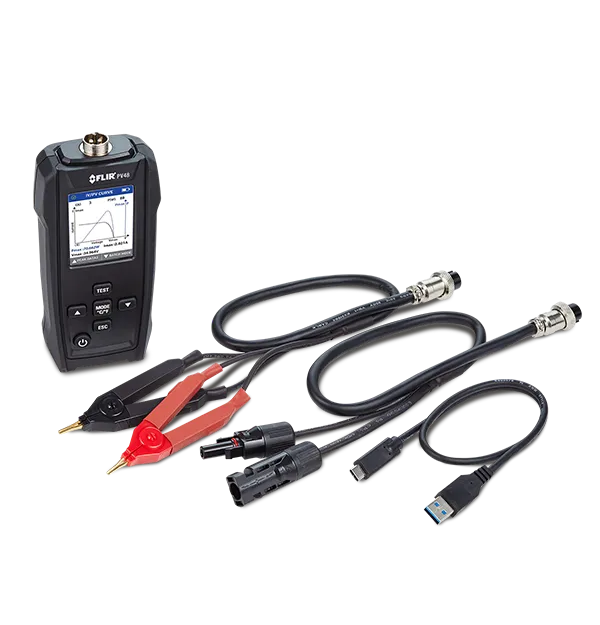
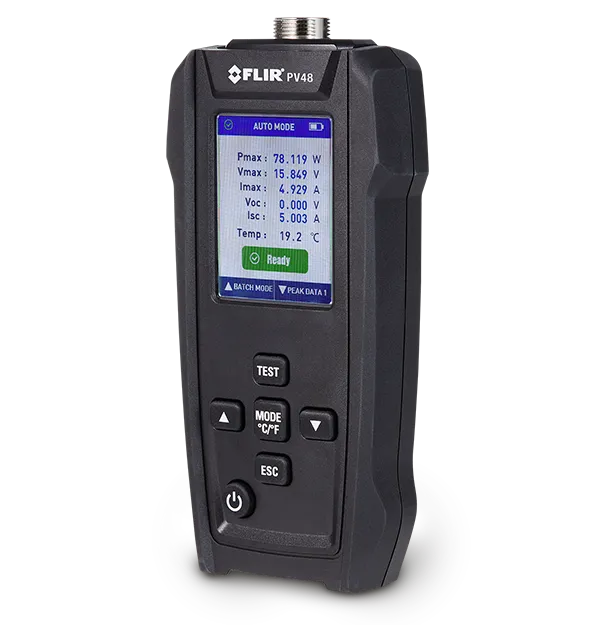
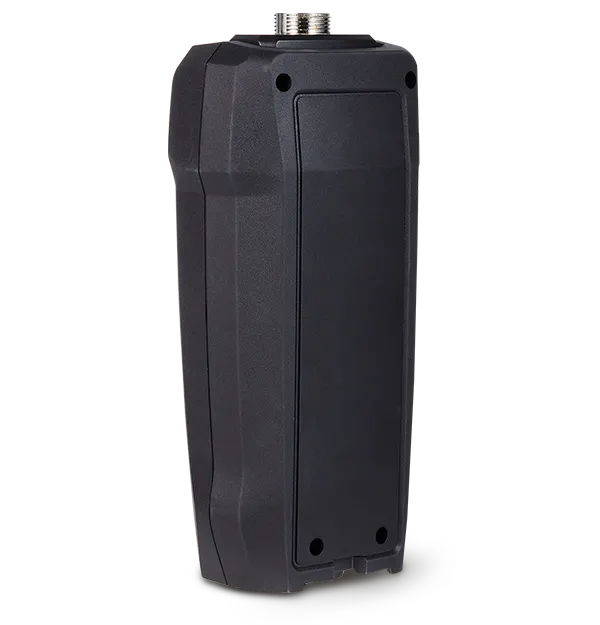
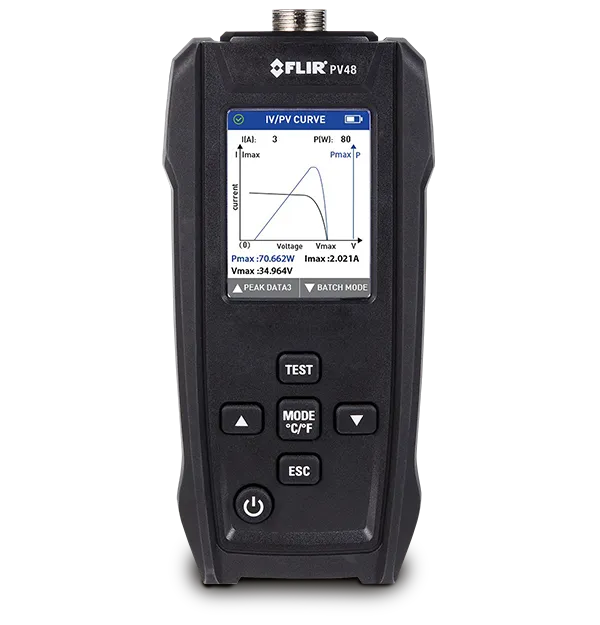
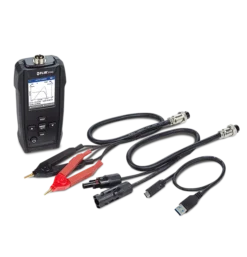
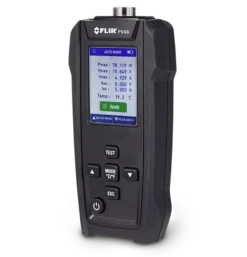
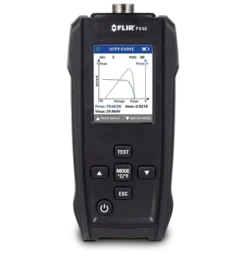
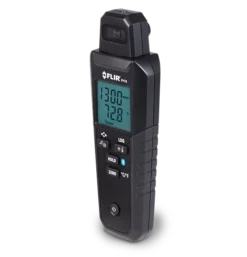
FLIR PV48 Solar Panel I-V Curve Tracer | 800W Testing
$300.00 .( $330.00 inc. GST )
For all your equipment calibration needs, visit our MyCalibration website.
 Free Delivery on orders over $1000
Shipping time may vary for certain products*

Product Enquiry
If you would like more information regarding this product, simply email us here.

Stop guessing whether your solar panels are performing as rated. The FLIR PV48 gives solar installers and maintenance technicians instant, on-panel I-V curve analysis and key electrical parameters — including VOC, ISC, and Pmax — for panels up to 800W. With a sunlight-readable LCD, built-in lithium battery, and included CAT III-300V MC4 connectors, this compact tester delivers accurate performance verification and fault diagnosis right at the panel. Ready to work straight out of the box.

FLIR PV48 Solar Panel Tester and I-V Curve Tracer with Temperature Measurement
Is Your Solar Array Actually Delivering What It Should?
You’ve just commissioned a new rooftop installation, or you’re six months into a service contract and a customer is reporting lower-than-expected yield. Without the right test gear, you’re guessing. Shading losses, panel mismatch, cell degradation, or a faulty bypass diode can silently rob kilowatt-hours — and tracking down the culprit with a basic multimeter takes time you don’t have on a busy site.
For Australian solar installers and maintenance teams working across residential rooftops, commercial arrays, and utility-scale projects, having a purpose-built panel tester isn’t a luxury — it’s the difference between a quick sign-off and a costly callback.
One Tool. Every Key Panel Parameter.
The FLIR PV48 is built specifically for on-panel performance testing. Rather than cycling through a multimeter’s measurement modes and manually calculating Pmax, this dedicated I-V curve tracer captures the complete current-voltage characteristic of a solar panel in a single test sweep. The result is a real-time graphical I-V curve plotted on the large, high-contrast LCD — immediately showing whether the panel is producing power along its expected characteristic curve or whether something is pulling performance off-spec.
In a single test, the PV48 simultaneously captures:
- Pmax — maximum power output in watts
- Voc — open-circuit voltage
- Isc — short-circuit current
- Vmax — voltage at maximum power point
- Imax — current at maximum power point
- Ambient temperature — for contextual STC correction
The graphical I-V curve overlay is the key differentiator here. Rather than just reading a number, you can visually identify whether the curve shape indicates shading, bypass diode issues, internal resistance problems, or general degradation — all without needing to pull the panel off the roof.
Built for the Australian Worksite
The PV48 handles panels up to 800W — which covers the broad majority of residential and commercial modules in Australian installations today, including common 400–700W mono-PERC and TOPCon panels.
The large, high-contrast LCD remains readable even under direct Queensland or WA sun — a practical necessity that many importers overlook. The instrument is powered by a built-in lithium-ion battery, so there are no AA batteries to track down mid-job.
The included CAT III-300V MC4 PV plugs and CAT III-300V double-moulded alligator clips mean you can connect directly to panel terminals without sourcing aftermarket adapters. The compact 206g body — roughly the size of a large smartphone — tucks easily into a tool bag and doesn’t add fatigue on multi-array inspection days.
Certified to IEC 61010-1 safety standards with CE and RCM marks, the PV48 meets the compliance expectations you’d expect from a professional-grade instrument.
Who Uses the FLIR PV48?
Solar installers and CEC-accredited designers use the PV48 during pre-energisation commissioning to confirm each panel meets its rated output before sign-off under AS/NZS 5033. A quick sweep of each string confirms the panels are healthy before the inverter goes live.
Solar maintenance contractors carry the PV48 as their first diagnostic tool when a customer reports reduced generation. An I-V curve sweep quickly distinguishes between a panel fault, a string wiring issue, or an inverter-side problem — reducing callout time significantly.
O&M teams on commercial and industrial solar arrays use the PV48 in scheduled maintenance rounds to track panel performance over time, identifying early-stage degradation or bypass diode failures before they cause larger system losses.
Solar panel importers and quality assurance teams use it in goods-in inspection to verify panel performance against manufacturer datasheets, catching underperforming batches before they’re installed.
Testing Modes
The PV48 offers multiple testing modes to suit different workflows:
- I-V / PV Curve mode — captures and displays the full I-V and P-V characteristic curve with Pmax, Vmax, and Imax
- Batch mode — runs a quick 10-reading test session for rapid screening of multiple panels
- Peak Data mode — takes 30 readings across three data pages for thorough per-panel analysis
- Manual mode — high-accuracy measurements for low-power panels (≤100W), ideal for small or damaged modules requiring careful assessment
Technical Specifications
| Specification | Value | Practical Significance |
|---|---|---|
| Maximum Panel Power | 800 W per panel | Covers most residential and commercial PV modules in Australian installations |
| Measured Parameters | Pmax, Voc, Isc, Vmax, Imax, ambient temperature | Complete performance profile in one test sweep |
| I-V Curve Display | Graphical on large LCD | Visually identifies shading, degradation, and bypass diode faults |
| Safety Rating (leads/clips) | CAT III-300 V | Rated for direct panel terminal connection |
| Battery | Built-in 3.7 V Li-ion | Rechargeable — no field battery changes required |
| Operating Temperature | −10 °C to 50 °C | Suited to Australian summer rooftop conditions |
| Storage Temperature | −20 °C to 60 °C | Safe in tool vehicle or shed storage |
| Operating Humidity | < 80% RH | Handles coastal and humid tropical environments |
| Operating Altitude | 2,000 m (6,560 ft) | Suitable for alpine and elevated site installations |
| Pollution Degree | 2 | Standard for professional field instruments |
| Weight | 206 g (0.45 lbs) | Lightweight enough for all-day rooftop use |
| Dimensions (L × W × H) | 151.6 × 72.5 × 38 mm | Pocketable form factor |
| Safety Standards | IEC 61010-1 | International electrical safety compliance |
| EMC Standards | EN 61326-1 | Electromagnetic compatibility certified |
| Certifications | CE, RCM, FCC | RCM mark confirms Australian regulatory compliance |
| Calibration Cycle | Annual (recommended) | Maintain measurement accuracy and traceability |
| Warranty | 3 years (FLIR Limited) | Industry-leading coverage for professional instruments |
Conversational query: “What does an I-V curve tracer tell you about a solar panel?”
An I-V curve tracer maps the current-voltage relationship of a solar panel across its full operating range in a single sweep. The shape of the resulting curve reveals how well the panel is performing — a healthy panel produces a characteristic S-shaped curve reaching its maximum power point cleanly. Flat spots, kinks, or a reduced fill factor can indicate shading, bypass diode failure, internal cell damage, or series resistance problems. The FLIR PV48 displays this curve graphically on screen, making it possible to visually diagnose panel faults on-site without sending data to a laptop.
Conversational query: “How do I check if a solar panel is performing to specification?”
To verify a solar panel against its datasheet spec, you need to measure open-circuit voltage (Voc), short-circuit current (Isc), and maximum power (Pmax) under known irradiance and temperature conditions. A dedicated I-V curve tracer like the FLIR PV48 captures all three parameters — plus the full current-voltage curve — in one test. Pair it with the FLIR PV78 irradiance meter to record simultaneous irradiance and module temperature, giving you everything needed to calculate STC-corrected performance and confirm compliance with the panel’s rated specifications.
|
Electrical Measurement |
Range |
Accuracy |
|
Maximum Power Value (Pmax) |
0 W to 800 W |
±5% |
|
Voltage at MMPT point (Vmax) |
0 V to 60 V |
±5% |
|
Current at MMPT point (Imax) |
0 A to 30 A |
±5% |
|
Open Circuit Voltage (VOC) |
0 V to 60 V |
±1% |
|
Short Circuit Current (ISC) |
0 A to 30 A |
±1% |
|
Device Temperature Protection |
0°C to 60°C |
±3% |
|
Measuring rate |
3 samples per second |
|
|
Power System |
||
|
Display |
TFT Display |
|
|
Backlight |
White LED array |
|
|
Warranty |
Limited 3-Year Warranty https://www.flir.com/testwarranty |
|
|
Calibration cycle |
Once per year, recommended |
|
|
Certifications |
||
|
Certifications |
CE, RCM, FCC |
|
|
Safety standards |
IEC 61010-1 |
|
|
EMC standards |
EN61326-1 |
|
Environmental Data |
|
|
Operating ambient temperatures and relative humidity (RH) |
−10°C to 50°C (14°F to 122°F), <80% RH |
|
Storage temperature and RH |
−20°C to 60°C (−4°F to 140°F), 0 to 80% RH |
|
Operating altitude |
2000 m (6560 ft) |
|
Pollution degree |
2 |
|
Meter Physical Data |
|
|
Weight |
206 g (0.45 lbs) |
|
Dimensions (L × W × H) |
151.6 mm × 72.5 mm × 38 mm (5.97 in × 2.85 in × 1.50 in) |
|
Included in the box |
PV48 Carrying Pouch CAT III-300 V Double-Molded Alligator Clips CAT III-300 V MC4 PV Plugs 1 × 3.7 V Li-ion Battery User Manual |
Specifications subject to change. For the most up-to-date specifications, please visit flir.com.
Q: Can the FLIR PV48 test panels in a connected string, or does it require individual panel disconnection?
The PV48 is designed for single-panel testing. For accurate I-V curve results, the panel under test should be disconnected from the string. Testing a string in isolation is possible but the results will reflect the combined string behaviour rather than individual panel performance.
Q: Does the PV48 correct panel output to Standard Test Conditions (STC)?
The PV48 captures ambient temperature alongside the electrical parameters, which provides the data needed for manual STC correction calculations. It does not perform automatic STC normalisation in-device — for that workflow, pairing the PV48 with the FLIR PV78 irradiance meter gives you the full dataset for STC comparison.
Q: Is the FLIR PV48 suitable for the high-efficiency panels common in Australian installations today?
Yes. Modern mono-PERC and TOPCon panels typically rated 400–700W are well within the PV48’s 800W capacity. The I-V curve tracer works with any crystalline silicon panel within that power range.
Q: What is the difference between Batch mode and Peak Data mode?
Batch mode is designed for rapid screening — it takes 10 quick readings in a session. Peak Data mode is more thorough, capturing 30 readings displayed across three data pages, making it better suited for detailed individual panel assessment and documentation.
Q: Does the PV48 carry RCM certification for use in Australia?
Yes. The FLIR PV48 holds RCM (Regulatory Compliance Mark) certification, confirming it meets Australian electromagnetic compatibility and safety requirements.
Be the first to review “FLIR PV48 Solar Panel I-V Curve Tracer | 800W Testing”
You must be logged in to post a review.
You may also like…


AC/DC Clamps
AC/DC Clamps
AC/DC Clamps
Test Equipment For Electricians
Data Logger Related Products






Next day delivery
Finance services
Price Match
Technical support
Product training
Calibration servises
Need help? Call our support team 1800 358 531
Reviews
There are no reviews yet.