

 Clearance
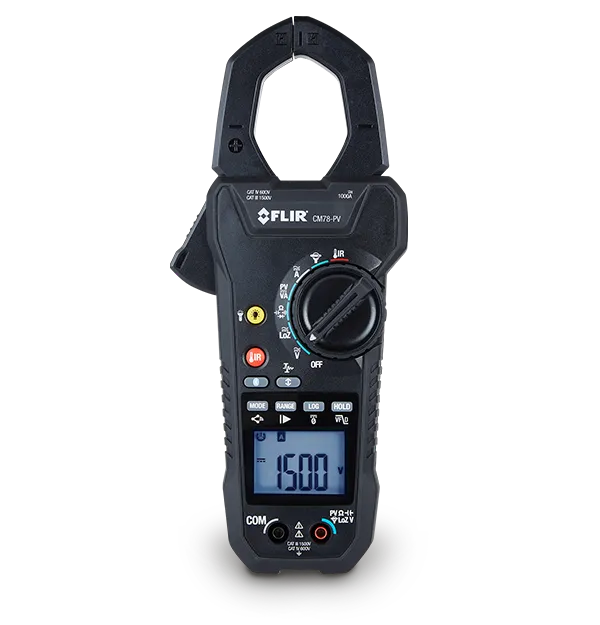
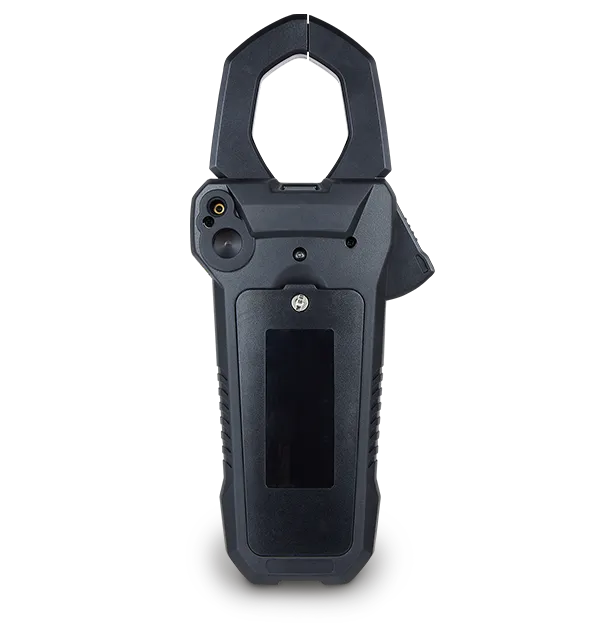
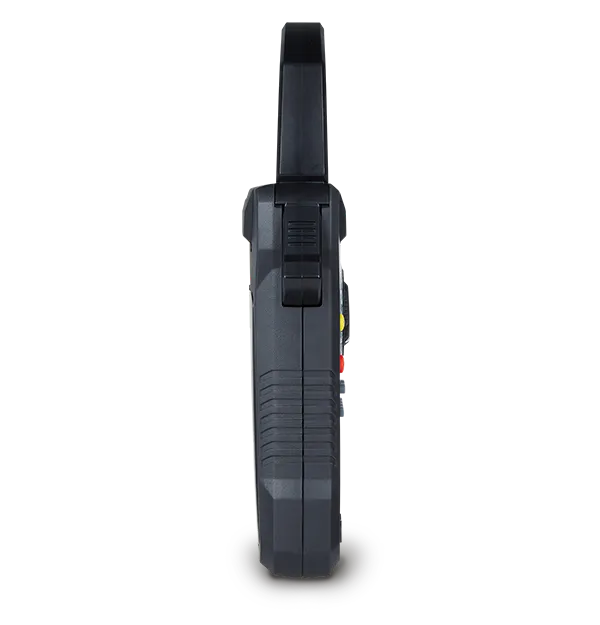
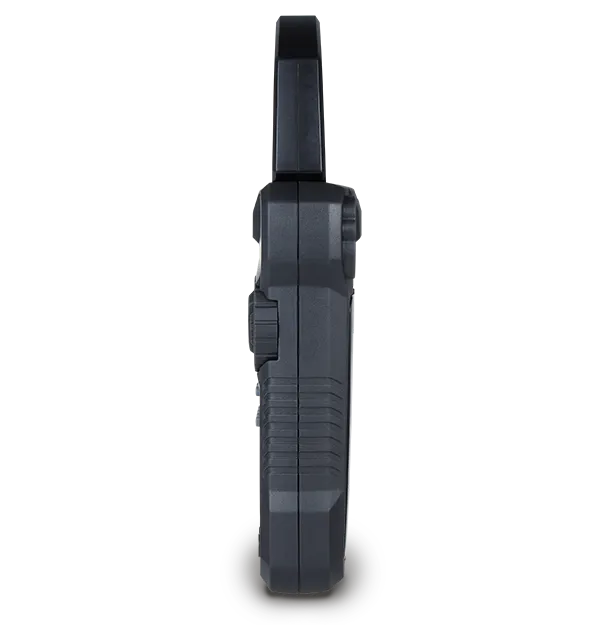
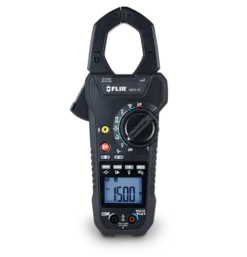
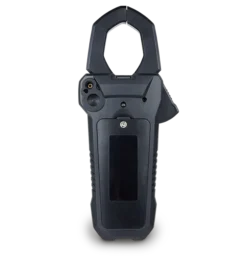
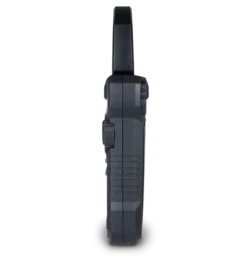
FLIR CM78-PV CAT III 1500V Solar Clamp Meter | TRMS
$970.00 .( $1,067.00 inc. GST )
For all your equipment calibration needs, visit our MyCalibration website.
 Free Delivery on orders over $1000
Shipping time may vary for certain products*

Product Enquiry
If you would like more information regarding this product, simply email us here.

High-voltage solar DC measurements demand a clamp meter built specifically for the job. The FLIR CM78-PV handles PV DC voltages up to 1,500V via test leads and AC/DC current to 1,000A through the clamp jaw — with CAT III 1500V safety rating throughout. True RMS, VFD mode, LoZ, a built-in non-contact IR thermometer, datalogging, and METERLiNK® Bluetooth make this the definitive all-in-one electrical testing tool for commercial and industrial solar installations in Australia.

FLIR CM78-PV CAT III 1500V Solar Clamp Meter with True RMS and METERLiNK
Working on Modern Solar Strings? Your Old Clamp Meter Isn’t Rated for It.
Today’s commercial solar arrays routinely operate at string voltages above 1,000V DC. Utility-scale and large commercial systems push further still — many reaching the 1,500V DC ceiling that represents the current practical limit for standard silicon inverter technology. For solar electricians and maintenance technicians working on these systems, a clamp meter that isn’t explicitly rated for 1,500V DC is not just inadequate — it’s a safety hazard.
The voltage and current characteristics of high-voltage DC solar strings differ meaningfully from the AC circuits that most general-purpose clamp meters are designed around. DC arcs are harder to extinguish, fault energies are higher, and the consequences of using under-rated equipment on live systems are severe. The right tool for this environment carries the right rating, clearly stated on the instrument.
Designed End-to-End for Solar PV Electrical Testing
The FLIR CM78-PV is a clamp meter built from the ground up for high-voltage photovoltaic environments — not a general electrical meter with a solar mode added as an afterthought. Every specification, from the safety rating to the included accessories, reflects the demands of commercial and industrial solar work.
1,500V DC Measurement via Test Leads The CM78-PV measures PV DC voltage up to 1,500V via its included CAT III-rated test leads — with the full CAT III 1500V rating that modern commercial string configurations require. Whether you’re measuring open-circuit string voltage on a 1,000V system or verifying combiner box voltages on a 1,500V utility installation, the CM78-PV has the range and the rating.
1,000A AC/DC via Clamp Jaw The clamp jaw handles up to 1,000A AC or DC, making it equally capable across solar string current measurements, combiner box DC feeds, inverter AC output circuits, and grid connection points. A 1.7-inch jaw opening accommodates the larger conductor sizes found in commercial and industrial installations.
True RMS for Accurate AC-Side Measurements On the AC side of the inverter — grid connection circuits, transformer primaries, switchboard feeds — the CM78-PV’s True RMS measurement engine delivers accurate readings regardless of waveform distortion. This matters when working in commercial buildings where non-linear loads create harmonic-rich waveforms that fool average-responding meters into incorrect readings.
VFD Mode for Inverter Output Verification Variable Frequency Drive (VFD) mode filters out the high-frequency switching noise present on inverter output waveforms, giving clean, accurate voltage and frequency readings without noise-induced errors. This is directly relevant when verifying AC output parameters of solar inverters during commissioning or fault diagnosis.
Low Impedance (LoZ) Mode for Ghost Voltage Elimination LoZ mode suppresses capacitively-induced ghost voltages on de-energised circuits — a practical safeguard when isolating and testing circuits in complex commercial electrical installations where induced voltages can mislead fault-finding without LoZ enabled.
Built-in Non-Contact IR Thermometer with Laser Pointer Here’s where the CM78-PV goes beyond being an electrical meter. The integrated non-contact infrared thermometer lets technicians scan panel surfaces, combiner boxes, cable conduits, junction boxes, and inverter components for thermal anomalies — without touching live equipment or reaching into energised enclosures. Spot a hot junction box terminal or an overheating panel from a safe distance, then confirm with contact measurement before opening anything up. The laser pointer ensures accurate targeting in the field.
Datalogging for Intermittent Fault Capture Solar systems can exhibit intermittent faults — a loose MC4 connector that only drops out under thermal expansion, or a bypass diode that triggers only under specific irradiance conditions. The CM78-PV’s datalogging function allows you to set the meter up to record measurements over time, capturing transient events that would be missed by a single-point measurement. This is particularly valuable for fault investigation work where the fault isn’t reproducible on demand.
METERLiNK® Bluetooth — Stay Off the Roof When You Don’t Need to Be There The CM78-PV’s METERLiNK Bluetooth connectivity is a genuine safety and workflow feature for solar electrical work. Connect the meter via the METERLiNK app on your iOS or Android device and monitor live readings from ground level while the meter remains at the panel. For measurements in difficult or elevated positions, this keeps technicians safer and speeds up multi-point testing workflows. Data can be logged, shared, and incorporated into job reports without manual transcription.
Trade Applications for Australian Solar Electricians
Commercial rooftop installation commissioning: Verify string open-circuit voltages and short-circuit currents on each MPPT input before inverter energisation. Confirm AC output voltage, frequency, and current after grid connection. Use LoZ to safely test isolated circuits and the IR thermometer to scan terminations before final sign-off.
Industrial PPA and large commercial O&M: Carry out scheduled electrical testing across combiner boxes, string fusing, and inverter AC connections. Use datalogging to capture performance over time and build maintenance records. The METERLiNK app provides a digital log for each test point without paper-based site records.
Fault investigation on 1,500V systems: Safely measure DC string voltages up to the 1,500V limit, locate thermal anomalies with the IR thermometer, and use datalogging to capture intermittent faults that aren’t present at the time of arrival.
Inverter AC output verification and recommissioning: After a string inverter replacement, use True RMS and VFD mode to verify AC output parameters match inverter datasheet specifications before reconnecting to the grid supply.
Technical Specifications
| Specification | Value | Practical Significance |
|---|---|---|
| DC Voltage (test leads) | Up to 1,500 V | Full-range measurement for 1,000V and 1,500V commercial solar strings |
| AC/DC Current (clamp) | Up to 1,000 A | Covers solar string, combiner, and inverter AC output circuits |
| Safety Category | CAT III 1,500 V | Meets safety requirements for high-voltage PV installations |
| True RMS | Yes | Accurate AC measurement in harmonically distorted grid environments |
| VFD Mode | Yes | Clean inverter output readings without switching noise interference |
| Low Impedance (LoZ) Mode | Yes | Suppresses ghost voltages on de-energised circuits |
| Inrush AC Current | Yes | Capture startup current surges without triggering alarms |
| Jaw Opening | ~43 mm (1.7 in) | Suits commercial conductor sizes at PV installations |
| Non-Contact IR Thermometer | Built-in with laser pointer | Remote thermal scanning of panels, conduits, and enclosures |
| Datalogging | Yes | Records measurements over time to capture intermittent faults |
| Wireless Connectivity | FLIR METERLiNK® Bluetooth | Live monitoring and logging via smartphone app |
| Mobile App | iOS and Android (METERLiNK) | Supports up to 7 simultaneous FLIR meters |
| Battery Life | Approx. 50 hours | Extended field use on alkaline batteries |
| Operating Temperature | −10 °C to 50 °C | Rated for Australian rooftop and industrial site conditions |
| Included Test Leads | CAT III-1500V double-moulded | No aftermarket lead sourcing required |
| Included MC4 Leads | CAT III-1500V MC4 PV plugs | Direct panel connector testing out of the box |
| Certifications | CE, RCM | Confirms Australian market compliance |
|
Electrical Measurement |
Range |
Accuracy |
|
Display count |
6000 |
|
|
True RMS |
Yes |
|
|
AC V |
1000 V |
±1.0% |
|
DC V |
1500 V |
±1.0% |
|
VFD AC V |
1000 V AC |
±2.0% at 45 Hz to 65 Hz |
|
AC LoZ V |
1000 V |
±1.5% |
|
DC LoZ V |
1500 V |
±1.5% |
|
AC/DC A |
1000 A |
±2.0% |
|
VFD AC A |
1000 A |
±5.0% |
|
AC Inrush A |
1000 A |
±3.0% |
|
Frequency counter |
60 kHz |
±1.0% |
|
Resistance |
60 KΩ |
±1.0% |
|
Continuity check |
<50 Ω beeper on, >150 Ω beeper off |
|
|
Diode test |
3.0 V |
±1.5% |
|
Capacitance |
6000 µF |
±3.0% |
|
Flex AC A |
3000 A |
±3.0% |
|
PV DC V |
1500 V |
±2.0% |
|
PV DC Power |
1500 kVA |
±2.0% |
|
Measuring rate |
3 samples per second |
|
|
Over- and under-range indication |
OL |
|
Static Datalogging and Storage |
|
|
Data storage interval |
1 second |
|
Readings per memory set |
999 set per file |
|
Connectivity |
|
|
Wireless technology |
Bluetooth BLE |
|
Communications protocol |
METERLiNK |
|
Bluetooth range |
10 m (32 ft) |
|
Power System |
|
|
Battery |
6 × AAA Alkaline batteries |
|
Battery life |
Approx. 50 hours, with alkaline batteries |
|
Auto power off |
After approximately 15 minutes of inactivity |
|
General Information |
|
|
Display |
6000 count display |
|
Worklight |
2 × White LED |
|
Jaw opening |
42 mm (1.7 in) |
|
Category rating |
CAT IV-600 V, CAT III-1500 V |
|
Warranty |
Limited Lifetime Warranty https://www.flir.com/testwarranty |
|
Calibration cycle |
Once per year, recommended |
|
Certifications |
|
|
Certifications |
ETL, CE, FCC, FDA, RCM |
|
Safety standards |
IEC 61010-1 CAT IV-600 V, CAT III-1500 V |
|
EMC standards |
EN61326-1, EN61326-2-2, EN300328, EN301489-1, EN301489-17, EN62478, FCC PART 15B/15C |
|
Environmental Data |
|
|
Operating ambient temperatures and relative humidity (RH) |
-10°C to 30°C (14°F to 86°F), <85% RH 30°C to 40°C (86°F to 104°F), <75% RH 40°C to 50°C (104°F to 122°F), <45% RH |
|
Storage temperature and RH |
-20°C to 60°C (-4°F to 140°F), 0 to 80% RH (without batteries) |
|
Temperature coefficient |
0.2 × (specified accuracy)/°C, <18°C (64.4°F), >28°C (82.4°F) |
|
Operating altitude |
2000 m (6560 ft) |
|
Pollution degree |
2 |
|
Meter Physical Data |
|
|
Weight |
630 g (1.39 lbs) |
|
Dimensions (L × W × H) |
257 × 110 × 50 mm (10.2 × 4.3 × 2 in) |
|
Included in the box |
CM78-PV Carrying Pouch (TA91) CAT III-1500 V double molded test leads (TA90) CAT III-1500 V MC4 PV Plugs (TA89) 6 × AAA (LR03) Battery User Manual |
Specifications subject to change. For the most up-to-date specifications, please visit flir.com.
Q: Why does a solar clamp meter need a CAT III 1500V rating rather than standard CAT III 600V or 1000V?
Modern commercial and utility-scale solar arrays frequently operate at DC string voltages between 600V and 1,500V. Standard CAT III 600V or even CAT III 1000V instruments are not rated for the full voltage levels present on these systems. Using an under-rated meter on a live 1,200V or 1,500V DC string creates a serious risk of insulation breakdown and arc flash. The FLIR CM78-PV’s CAT III 1500V rating specifically covers the voltage levels encountered in current-generation commercial solar installations.
Q: What is the difference between measuring DC current with the clamp jaw versus measuring DC voltage with the test leads on the CM78-PV?
The clamp jaw is inductive — it measures the magnetic field produced by current flowing through a conductor, allowing non-contact AC/DC current measurement. The test leads connect directly to circuit terminals for voltage measurement. On solar systems, you’d typically use the test leads to measure string or combiner DC voltage (up to 1,500V), and the clamp jaw to measure DC or AC current (up to 1,000A) through cables and conductors without breaking the circuit.
Q: How does the built-in IR thermometer add value for solar electrical work?
The non-contact IR thermometer allows rapid thermal scanning of panels, MC4 connectors, junction boxes, combiner bus bars, and cable conduits — all without touching live equipment. Hot spots at termination points can indicate loose connections, corrosion, or overcurrent events. Finding a thermal anomaly during a routine inspection is far better than finding it during an arc flash event. The laser pointer ensures accurate targeting at distance.
Q: Can the CM78-PV be used for general commercial electrical work, or is it restricted to solar applications?
The CM78-PV is a full-featured True RMS clamp meter with VFD mode, LoZ, Inrush AC current, and a 1,000A clamp range — making it equally capable across general commercial and industrial electrical inspection work. The solar-specific features (1,500V DC via test leads, MC4 leads) are additions to a comprehensive general electrical measurement platform, not replacements for standard clamp meter functionality.
Q: Does the FLIR CM78-PV support connection to a FLIR thermal camera for integrated inspections?
Yes. The METERLiNK Bluetooth connectivity allows the CM78-PV to transmit live measurement data to compatible FLIR thermal cameras, enabling simultaneous electrical measurements and thermal imagery to be captured in a single inspection workflow. This is particularly useful for solar thermography inspections where you want to document panel temperatures alongside concurrent electrical readings.
Be the first to review “FLIR CM78-PV CAT III 1500V Solar Clamp Meter | TRMS”
You must be logged in to post a review.
You may also like…




AC/DC Clamps
AC/DC Clamps
Test Equipment For Electricians
Data Logger Related Products






Next day delivery
Finance services
Price Match
Technical support
Product training
Calibration servises
Need help? Call our support team 1800 358 531
Reviews
There are no reviews yet.