



Coantec M40 6mm Videoscope | IP68 Borescope Camera
Price range: $4,200.00 through $7,800.00
For all your equipment calibration needs, visit our MyCalibration website.
 Free Delivery on orders over $1000
Shipping time may vary for certain products*

Product Enquiry
If you would like more information regarding this product, simply email us here.

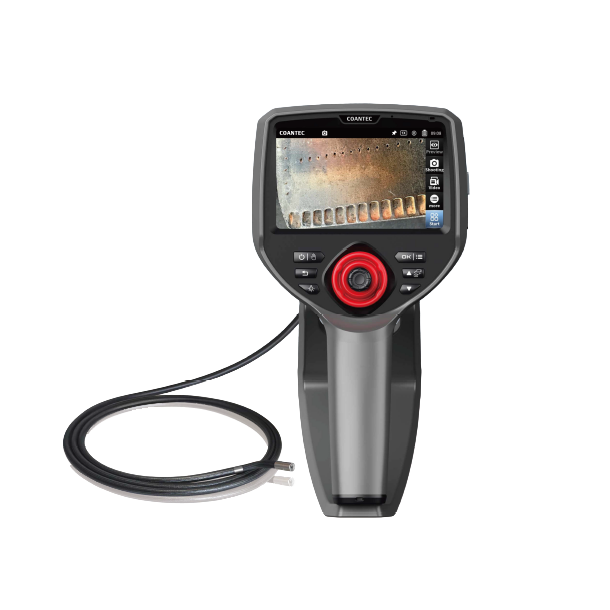
See exactly what’s happening inside pipes, engine blocks, ducting, and other confined spaces with the Coantec M40 industrial videoscope. Its 6mm probe delivers a crisp 2-megapixel (1920×1080) image through an 85° field of view, with 10–100mm short-focus optics built for close-quarters detail. Pick the cable length that suits the job — 1.5m, 3m, 5m, or 10m — and inspect with confidence. IP67-rated probe, magnetic-mount ready, backed by Rapid-Tech’s local support.
 M40 BROCHURE
When You Can’t See the Problem, You Can’t Fix It
There’s a particular kind of frustration that comes with knowing something’s wrong inside a system you can’t get eyes on. A gurgling drain that won’t clear with a standard snake. An engine that’s making a noise nobody can diagnose from the outside. A duct run that might be clogged with years of dust, or might not be — and the only way to find out used to mean cutting a hole, pulling a panel, or calling in a specialist just to have a look.
For electricians, mechanics, HVAC techs, and maintenance crews across Australia, that kind of guesswork costs time and money. Every unnecessary teardown is billable hours lost to a job that a five-minute camera inspection could have avoided. And when the fault genuinely is buried deep in a pipe, a bore, or a piece of machinery, the wrong tool means you’re back to square one — probe too thick to fit, cable too short to reach, image too dark or too blurry to actually tell you anything useful.
This is exactly the gap the Coantec M40 videoscope is built to close.
A Purpose-Built Tool for Confined-Space Inspection
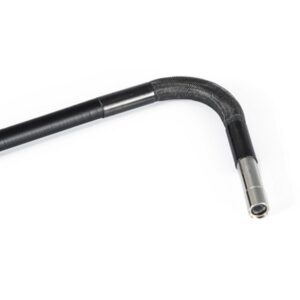
The M40 is an industrial-grade videoscope — sometimes called a borescope or inspection camera — designed around a 6mm-diameter probe that’s slim enough to slip into narrow bores, pipework, and mechanical assemblies most standard cameras can’t reach. Rather than being a single fixed unit, the M40 uses a modular probe system, which is why it’s sold as a variable product across four cable lengths: 1.5m, 3m, 5m, and 10m. You choose the reach your job actually needs, without paying for cable length that’s just going to sit coiled on the bench.
At the core of every M40-60 series probe is a 2-megapixel (1920×1080) image sensor paired with 10–100mm short-focus optics and an 85° field of view — Coantec’s 6mm tube is also offered with a longer 15mm-to-infinity focus range and a wider 120° FOV, but the M40-6015/6030/6050/6100 SKUs are specifically the short-focus, 85° configuration, tuned for close-in work. That’s the kind of inspection where the probe tip is going to be sitting just centimetres from the surface you’re examining, whether that’s the inside wall of a pipe, a weld seam, or an internal engine component — and the 85° field of view means you’re not just seeing a pinhole of detail directly ahead, but enough context around the point of interest to orient yourself inside the cavity. A fixed LED at the probe tip lights the inspection point directly, so you’re not relying on ambient light inside a dark pipe or cavity.
All of that image data feeds back to a handheld unit built around a 5-inch HD touchscreen (800×480 resolution), so you’re reviewing footage on a proper screen in real time — not squinting at a phone held awkwardly next to a pipe opening. The controller supports 4× digital zoom during live inspection, with still images able to be zoomed up to 5× afterwards to check fine detail, plus 90°/180°/270° image flip. A built-in tracking cross-cursor with scale also lets you take rough on-screen measurements of what you’re looking at, rather than just eyeballing it. None of that sounds dramatic until you’re on a job where the inspection point doesn’t present itself “the right way up” — being able to flip the image and measure a gap or a crack on the spot saves you repositioning the probe just to get your bearings.
Built for the Conditions You Actually Work In
Confined-space inspection rarely happens in clean, dry conditions. Pipes are wet. Engine bays are oily. Drains are, well, drains. The M40’s probe carries an IP67 ingress protection rating, so it’s built to shrug off moisture, dust, and oil contamination, and to tolerate brief accidental immersion — the kind of wet, grimy conditions plumbing, drainage, and mechanical inspection work actually involves. The tube itself is a tungsten-wire-braided, wear-resisting sheath, so it’s built to be dragged through rough bores and tight bends repeatedly without the outer casing giving out. The probe tip is also rated to handle temperatures from -20°C to 70°C, so it copes with genuinely hot inspection points — a warm engine bay or duct run — not just room-temperature pipework.
On the handheld unit itself, a high-strength aluminium alloy quick-release probe connector is engineered for improved heat dissipation — Coantec states roughly triple the heat dissipation efficiency of a standard connector — which supports more stable performance if you’re running the unit continuously across a full day of inspections rather than short bursts. The main unit weighs approximately 0.89kg including base and battery, which keeps it manageable for one-handed operation and extended handheld use without the fatigue that comes from a heavier, bulkier inspection camera. The handheld unit itself is designed for a -10°C to 50°C operating range, with 15–90% relative humidity tolerance — comfortable across most Australian workshop and site conditions.
Power comes from a built-in, replaceable 5000mAh lithium battery rated for 4+ hours of continuous use — enough to get through a typical inspection run without a mid-job recharge, and with the option to carry a spare battery for back-to-back jobs. Charging is via Type-C (which also handles data transfer to a PC), and the unit also outputs to Mini-HDMI if you want to run footage to an external monitor for a client or a larger crew to see. A quick-release magnetic base is also included, letting you set the handheld unit down on any ferrous surface — a vehicle chassis, a steel frame, a machine housing — so you’ve got both hands free to manoeuvre the probe itself, which matters a lot more than it might sound like on paper once you’re actually threading a probe through a tight bend.
Documentation That Actually Holds Up
An inspection is only as useful as the record you can produce afterwards. The M40 captures photos and video in JPEG, BMP, and MP4 formats, with support for on-screen annotation and time stamps, and switchable colour, black-and-white, or negative-film display modes plus 0–9 level brightness adjustment for awkward lighting inside a cavity. Footage is saved to 32GB of internal storage, backed up by an 8GB TF card supplied in the box (32GB cards available as an optional upgrade), so you’re not stuck juggling files off a nearly-full memory card mid-job. That means you can mark up exactly where a defect sits, note the time of capture, and hand over footage or stills that stand up as evidence — whether that’s for a compliance report, a warranty claim, an insurance assessment, or simply proving to a customer that the blockage really was as bad as you said it was. More than ten system languages are supported on the interface, which is a practical plus for multi-technician teams or training environments where not everyone’s first language is English.
What’s in the Box
Every M40-60 series unit ships as a complete kit, not just a bare probe: a standard hard instrument case, the handheld unit with battery installed, the quick-release magnetic base, an 8GB TF card, a card reader, and a Type-C charging cable with adaptor for direct charging. If your job calls for it, a non-magnetic base, an HDMI cable, and a 32GB TF card upgrade are all available as optional extras — worth asking about at the time of quote if you know you’ll need them.
Choosing Your Cable Length
Because the M40-60 series is built around a common 6mm probe head, 2MP sensor, and 85° field of view, the decision that actually matters is reach:
- M40-6015 (1.5m cable) — suited to shorter-run inspections: small appliance internals, compact machinery, shallow drain runs, and bench-based diagnostic work where you don’t need a long lead getting in your way.
- M40-6030 (3m cable) — a practical mid-length option for general trade use: engine bays, HVAC ducting sections, standard domestic and light commercial plumbing runs.
- M40-6050 (5m cable) — built for longer horizontal runs and multi-storey access, such as extended drainage lines, longer HVAC duct sections, and larger plant or vessel inspections.
- M40-6100 (10m cable) — the long-reach option for extended pipeline runs, deep bore inspection, underground drainage, and industrial plant work where the inspection point is simply a long way from where you can stand.
All four share the same 10–100mm short-focus optics, 85° FOV, and 2-megapixel imaging, so the footage quality and close-up detail is consistent regardless of which cable length the job calls for — you’re only trading off on reach, not image performance.
Where the M40 Earns Its Keep
Coantec’s own application notes for the M40 series span aerospace component inspection, automotive engine and transmission diagnostics, power generation (boiler pipelines, heat exchangers, transformer oil tanks, wind turbine gearboxes), petrochemical pipeline and tank inspection, rail transit component checks, construction inspection of drainage and ventilation systems, pressure vessel and boiler safety assessment, and technical education and training use. For most Australian trade and maintenance customers, that translates to more everyday jobs: drain and plumbing diagnostics, HVAC duct inspection, automotive and small engine diagnostics, and general mechanical or structural inspection where getting eyes inside a cavity beats guessing from the outside.
Backed by Rapid-Tech
Buying an inspection camera sight-unseen from an overseas marketplace listing means you’re on your own if something doesn’t work as expected, or if you’re not sure which cable length actually suits your job. Rapid-Tech stocks the M40-60 series locally, can talk you through which variant fits your application before you commit, and is on hand for support after the sale — not just at the point of purchase. If you need a quote, or you’re not sure whether the 3m or 5m cable is the right call for your job, get in touch and we’ll help you get the right kit sorted the first time.
TECHNICAL SPECIFICATIONS
| Specification | Value | Why It Matters |
|---|---|---|
| Probe diameter | 6.0mm | Slim enough to access narrow bores, pipework, and mechanical cavities that larger probes can’t enter |
| Image sensor | 2 megapixel, 1920×1080 | Delivers clear, usable detail for identifying defects, blockages, and wear on-screen |
| Field of view (FOV) | 85° | Wide enough field to keep the inspection point in context, not just a narrow tunnel view |
| Focus range (depth of field) | 10–100mm (short focus) | Optimised for close-in inspection where the probe tip sits centimetres from the target surface |
| Illumination | Fixed LED at probe tip | Lights the inspection point directly, without relying on ambient light inside a dark cavity |
| Cable length options | 1.5m / 3m / 5m / 10m | Match reach to the job — short-run diagnostics through to long pipeline and bore inspection |
| Probe articulation | 360° omnidirectional, mechanical joystick control | Manoeuvre around bends and through cavities without needing to reposition the whole unit |
| Tube construction | Tungsten-wire-braided, wear-resisting sheath | Withstands repeated dragging through rough bores and tight bends without the casing failing |
| Probe ingress protection | IP67 | Protected against dust and moisture, and brief accidental immersion — suited to wet, oily, and dusty inspection environments |
| Tip operating temperature | -20°C to 70°C | Copes with genuinely hot inspection points, not just room-temperature pipework |
| Host operating temperature / humidity | -10°C to 50°C, 15–90% RH | Comfortable across typical Australian workshop and site conditions |
| Display | 5-inch HD touchscreen, 800×480 | Review footage clearly on-site instead of a cramped phone screen |
| Digital zoom | 4× real-time zoom; stills zoomable up to 5× afterwards | Magnify fine detail live, then check it again more closely on a captured image |
| Image flip | 90° / 180° / 270° | Reorient the live image on the spot when the inspection point isn’t “the right way up” |
| Measurement aid | Tracking cross-cursor with scale | Take a rough on-screen measurement of a gap, crack, or defect without extra tools |
| Display modes | Colour / black-and-white / negative film, 0–9 brightness levels | Adjust for awkward lighting or low-contrast surfaces inside a cavity |
| Recording formats | JPEG / BMP (image), MP4 (video) | Photo and video capture suited to reports, warranty claims, and compliance documentation |
| Annotation | On-screen time stamps and annotation | Mark defect locations and capture times directly onto stills and footage |
| Storage | 32GB internal + 8GB TF card supplied (32GB card optional) | Enough on-board capacity to get through a job without swapping cards mid-inspection |
| Battery | Built-in replaceable 5000mAh lithium (3.7V) | 4+ hours of continuous inspection use per charge |
| Charging / data | Type-C (charging + data transfer), Mini-HDMI out, TF card slot | Charge on-site, transfer footage to a PC, or output to an external monitor |
| Main unit weight | Approx. 0.89kg (incl. base and battery) | Manageable for one-handed operation over extended inspection sessions |
| Product size | 295 × 140 × 80mm | Compact enough for a tool bag or ute console |
| Probe connector | High-strength aluminium alloy, quick-release | Improved heat dissipation for more stable performance during extended use |
| Mounting | Quick-release high-strength magnetic base | Frees both hands to manoeuvre the probe once the handheld unit is set down |
| Interface languages | 10+ system languages | Supports multi-technician teams and training environments |
| Standard accessories | Hard case, magnetic base, battery, 8GB TF card, card reader, Type-C charge cable + adaptor | Complete kit out of the box, ready to use |
| Optional accessories | Non-magnetic base, HDMI cable, 32GB TF card | Available to add at time of quote if your job needs them |
Cable Length Variants
| SKU | Probe Diameter | Cable Length | Focus Range | FOV | Sensor |
|---|---|---|---|---|---|
| M40-6015 | 6mm | 1.5m | 10–100mm short focus | 85° | 2MP |
| M40-6030 | 6mm | 3m | 10–100mm short focus | 85° | 2MP |
| M40-6050 | 6mm | 5m | 10–100mm short focus | 85° | 2MP |
| M40-6100 | 6mm | 10m | 10–100mm short focus | 85° | 2MP |
What is the Coantec M40 videoscope used for? The Coantec M40 is an industrial videoscope (borescope) used to visually inspect the inside of pipes, ducting, engine components, and other confined spaces that can’t be accessed directly. It’s used across plumbing and drainage, HVAC, automotive and small engine diagnostics, and industrial maintenance for tasks like locating blockages, checking weld seams, and diagnosing internal faults without dismantling equipment.
Is the Coantec M40 probe waterproof? The M40 probe carries an IP67 ingress protection rating, meaning it’s protected against dust and moisture and can tolerate brief accidental immersion — suitable for wet, oily, and dusty inspection environments such as drainage lines and damp pipework. It is not rated for continuous or deep underwater use.
What’s the difference between the M40-6015, M40-6030, M40-6050, and M40-6100? All four share the same 6mm probe diameter, 2-megapixel sensor, 10–100mm short-focus optics, and 85° field of view. The only difference is cable length: 1.5m, 3m, 5m, and 10m respectively. Choose based on how far the inspection point is from where you’ll be standing or operating the handheld unit.
How far can the M40 probe reach? Reach depends on the SKU selected. The M40-6015 offers 1.5m, the M40-6030 offers 3m, the M40-6050 offers 5m, and the M40-6100 offers 10m of probe cable — covering everything from short bench-based diagnostics to long pipeline and bore inspection runs.
Can the M40 probe bend around corners? Yes. The probe supports 360° omnidirectional articulation via mechanical control, allowing it to be manoeuvred around bends and through cavities rather than only travelling in a straight line.
Does the M40 record video and photos? Yes. It captures photos and video in JPEG, BMP, and MP4 formats, with on-screen time stamping and annotation support for documentation and reporting purposes.
How long does the M40 battery last? The built-in 5000mAh lithium battery provides 4 or more hours of continuous use per charge, and the battery is replaceable for extended field use.
What temperature range can the M40 probe handle? The probe tip is rated from -20°C to 70°C, so it can be used on genuinely hot inspection points such as an engine bay or duct run, not just room-temperature pipework. The handheld unit itself is rated for -10°C to 50°C operating conditions and 15–90% relative humidity.
What’s included when you buy the Coantec M40? Each unit ships as a complete kit: hard instrument case, handheld unit with battery, quick-release magnetic base, 8GB TF card, card reader, and a Type-C charging cable with adaptor. A non-magnetic base, HDMI cable, and 32GB TF card are available as optional extras.
| Weight | 0.3 kg |
|---|---|
| Modele | M40-6015, M40-6030, M40-6050, M40-6100 |
Be the first to review “Coantec M40 6mm Videoscope | IP68 Borescope Camera”
You must be logged in to post a review.
TECHNICAL SPECIFICATIONS
| Specification | Value | Why It Matters |
|---|---|---|
| Probe diameter | 6.0mm | Slim enough to access narrow bores, pipework, and mechanical cavities that larger probes can’t enter |
| Image sensor | 2 megapixel | Delivers clear, usable detail for identifying defects, blockages, and wear on-screen |
| Field of view (FOV) | 85° | Wide enough field to keep the inspection point in context, not just a narrow tunnel view |
| Focus range | 10–100mm (short focus) | Optimised for close-in inspection where the probe tip sits centimetres from the target surface |
| Cable length options | 1.5m / 3m / 5m / 10m | Match reach to the job — short-run diagnostics through to long pipeline and bore inspection |
| Probe articulation | 360° omnidirectional, mechanical control | Manoeuvre around bends and through cavities without needing to reposition the whole unit |
| Probe ingress protection | IP68 | Rated for moisture, oil contamination, and submerged conditions |
| Display | 5-inch HD touchscreen, 800×480 | Review footage clearly on-site instead of a cramped phone screen |
| Digital zoom / rotation | Real-time 4× zoom, 0°–270° image rotation | Magnify fine detail and reorient the live image without repositioning the probe |
| Recording formats | JPEG / BMP / MP4 | Photo and video capture suited to reports, warranty claims, and compliance documentation |
| Annotation | On-screen time stamps and annotation | Mark defect locations and capture times directly onto stills and footage |
| Battery | Built-in replaceable 5000mAh lithium | Roughly 4 hours of continuous inspection use per charge |
| Main unit weight | Approx. 0.89kg (incl. base and battery) | Manageable for one-handed operation over extended inspection sessions |
| Probe connector | High-strength aluminium alloy, quick-release | Improved heat dissipation for more stable performance during extended use |
| Mounting | Quick-release high-strength magnetic base | Frees both hands to manoeuvre the probe once the handheld unit is set down |
| Interface languages | 10+ system languages | Supports multi-technician teams and training environments |
Cable Length Variants
| SKU | Probe Diameter | Cable Length | Focus Range | FOV | Sensor |
|---|---|---|---|---|---|
| M40-6015 | 6mm | 1.5m | 10–100mm short focus | 85° | 2MP |
| M40-6030 | 6mm | 3m | 10–100mm short focus | 85° | 2MP |
| M40-6050 | 6mm | 5m | 10–100mm short focus | 85° | 2MP |
| M40-6100 | 6mm | 10m | 10–100mm short focus | 85° | 2MP |
Q: Which cable length should I choose for general trade use? A: For most day-to-day plumbing, HVAC, and mechanical diagnostic work, the 3m (M40-6030) or 5m (M40-6050) cable lengths cover the majority of jobs. If you’re mainly doing short-run, bench-based inspection, the 1.5m (M40-6015) is more manageable and easier to control. For long pipeline, bore, or industrial plant work, step up to the 10m (M40-6100).
Q: Can I use the M40 in wet or oily conditions? A: Yes. The probe is IP68-rated, so it’s built to handle moisture, oil contamination, and submerged environments such as drains, tanks, and wet pipework.
Q: Does the M40 come with different probe diameters? A: The M40-60 series covers the 6mm probe diameter. Coantec’s broader M40 platform supports other probe diameters as separate product lines — speak to Rapid-Tech if your application needs a different probe size.
Q: What’s included with the handheld unit? A: The handheld controller includes the 5-inch HD touchscreen display, built-in 5000mAh lithium battery, and quick-release magnetic base. The probe (in your selected cable length) connects via the quick-release aluminium alloy connector.
Q: Is the footage suitable for compliance or warranty reports? A: The M40 records JPEG, BMP, and MP4 files with on-screen time stamps and annotation, which supports documentation for internal reporting, warranty claims, and customer sign-off. If you require inspection footage to meet a specific compliance standard, confirm those requirements with Rapid-Tech before purchase, as certification requirements vary by industry and application.
Q: Can I get a quote before ordering? A: Yes — contact Rapid-Tech for a quote on any M40-60 series SKU, and our team can help confirm which cable length suits your application.
Borescope Inspection Camera Video Inspection Camera | TvbTech H5806AL 5.8mm Articulating Video BorescopeRelated Products

Next day delivery
Finance services
Price Match
Technical support
Product training
Calibration servises
Need help? Call our support team 1800 358 531
Reviews
There are no reviews yet.